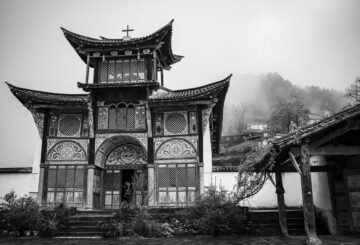
Church in the mountains
Zachary Tang
In the mountains of the Nujiang region, China, the Catholic faith has been shaped by generations of isolation and woven into local custom and ritual.


In the mountains of the Nujiang region, China, the Catholic faith has been shaped by generations of isolation and woven into local custom and ritual.
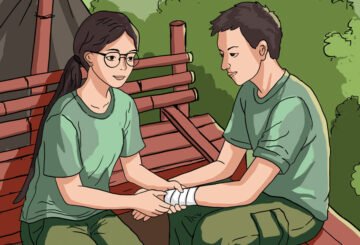
A former teacher turned resistance medic supports civilians and fighters in the revolution against the Myanmar military junta.
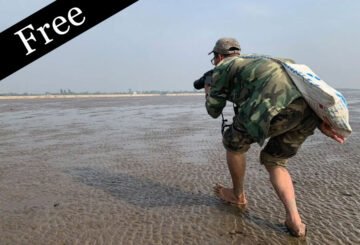
A father and son travel to experience Vietnam through the birds that call it home, even if only for a little while.
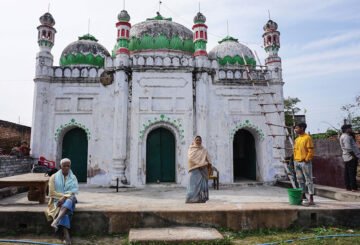
There are no longer any Muslim families in Mari in eastern India, yet the Hindu residents continue tending to their village’s empty mosque.
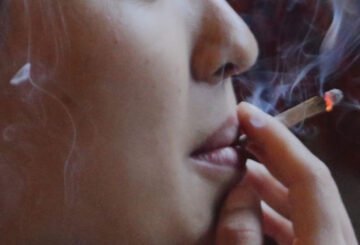
Chinese law allows the state to punish its citizens for consuming cannabis outside its borders, but many young Chinese citizens see Thailand as a safe haven for mind-altering experiments.
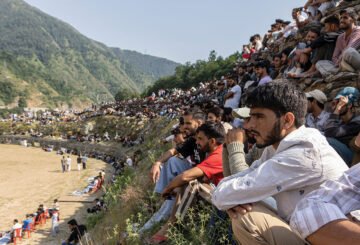
After years of internet disruptions, a generation of Kashmiri cricket commentators is turning village matches into digital broadcasts, and building livelihoods through a connection they once lived without
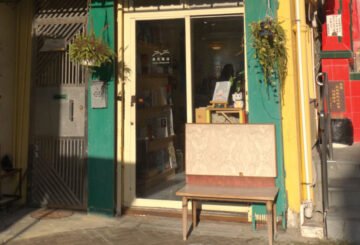
Independent bookstores opening on Hong Kong’s islands not only offer good reads, but also operate as third spaces that serve their local communities.
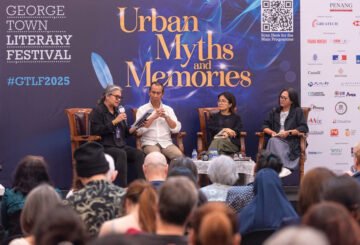
In media partnership with the 2026 George Town Literary Festival.

This is what you have to do to navigate life in Vietnam: accept that things are precarious and constantly vulnerable to change.

Rather than imposing a narrative or privileging the human perspective, Jeanne Penjan Lassus’s works attune to the rhythms, temporality, and micro-activities of a place—observing plants, animals, and environmental shifts with patience and openness.
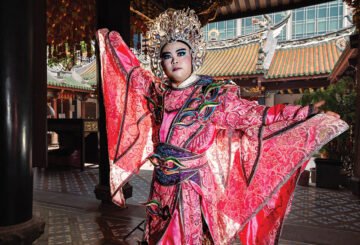
In Singapore, Chinese street opera survives not through preservation alone; it also requires constant recreation and regeneration.
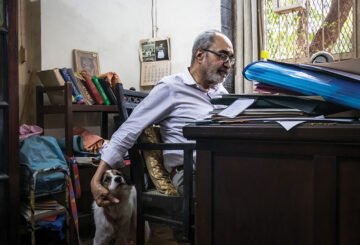
Despite its closure, Parsiana remains an archive of cultural memory, journalistic courage, and collective identity, ensuring that future generations will not be left with a historical void.

The story of Philippine music post-Marcos is not one of political liberation but of a transition from the chains of censorship to the cushioned shackles of commercialism.
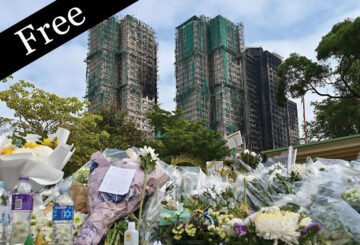
Hongkongers’ defence of bamboo scaffolding in the aftermath of the Tai Po fire wasn’t just about a material; it became part of efforts to defend the things that make the city what it is.
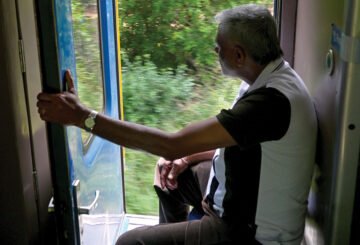
Sri Lanka’s railways aren’t just conveyances with spectacular views; they’re also an integral part of the country’s story.
Kashmir has lived many seasons of erasure: newspapers censored, cable channels muted, voices disappearing overnight. But books linger in the physical world longer than speeches or tweets.
A trip across Timor-Leste turns into a lesson on its history, its people, and its hope for the future.
In Aceh, hip-hop is more than just a genre; it’s also an opportunity to express pride in one’s homeland and pay homage to tradition.
“The mountains are high and the emperor far away.” Reckonings from a borderland—on walls, my friend J, and choosing a life in diaspora.
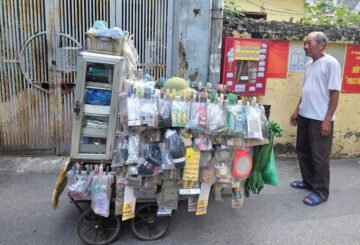
Street cries in Vietnam are more than simple calls of commerce; they form an urban soundscape—a way of sensing time, place, and season.
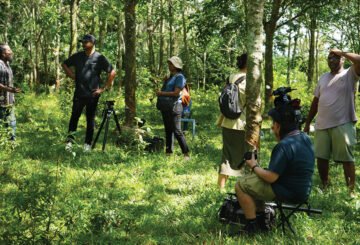
The documentary Araro Ariraro traces the history of Tamil plantation labour in Malaysia through folk songs.

Indonesians were already furious at their government, seen as out-of-touch at a time of economic hardship. After an armoured police vehicle ran over a young delivery rider, they became unstoppable.

Hakamata Iwao is believed to have been the world’s longest-serving death row prisoner. For more than half a century, his sister Hideko has never given up on him.
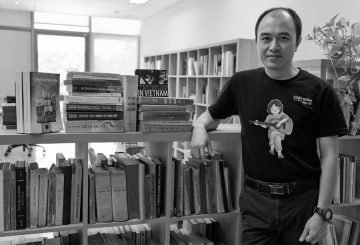
In a nondescript office on a university campus in Taipei, Trịnh Hữu Long maintains one of the world’s most extensive collections of Vietnamese banned books.

An exhibition in Pattani brings art collectives from three countries together to create dialogue on communal work and solidarity, encouraging people to look beyond stereotypes of Thailand’s deep south.

In Bengali culture, ilish is deeply intertwined with identity, memory and celebration. But the fish has also been caught up in questions of trade, diplomacy and politics between India and Bangladesh.
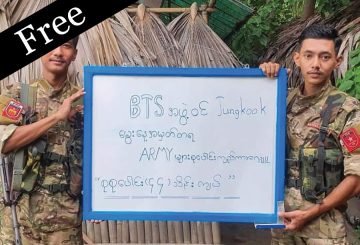
In a world that often overlooks the power of young people online, fan communities have emerged as an unseen engine of revolution in Myanmar

Neighbourhood conversations, sights and sounds in Shivajinagar.
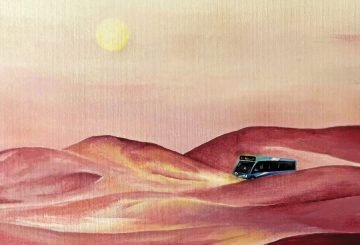
Attempting to rebuild their relationship after her coming out, a daughter finds a momentary connection with her mother over Sanmao’s Stories of the Sahara.

On not coming to terms with the past in Indonesia.

A historian journeys to České Budějovice in Bohemia in search of the archive of Filipiniana left behind by Ferdinand and Friedrich Blumentritt.

When families affected by extrajudicial killings in the Philippines speak and shed tears of sorrow and anger in front of legislators and flashing cameras, they’re finally able to transform shame into outrage.

Khieu Ponnary, once called the “mother” of the Khmer Rouge, had seemingly vanished from history while the regime was at its height.

Forty years after the world’s worst industrial disaster in Bhopal, activists and survivors are still struggling for justice and accountability.

Andrew Lam had never set out to be the preeminent chronicler of the global Vietnamese diaspora, but realised that “when I spoke up for those that couldn’t, I found my tongue”.

Publishing in Cambodia is still a fledgling, fragile industry, but it’s growing fast.

“Apart from illustrating how invested the authorities still are in shaping the official story of Vietnam’s wars of liberation, my experience at Thế Giới also revealed an almost religious faith in the power of the written word.”

Did the man who inspired a character in Joseph Conrad’s novels leave behind a fortune in a Swiss bank?

While the voices and expressions in Chinese rock have come from Chinese musicians, outsiders have consistently injected know-how and resources into the country’s marginalised underground musical movements.

Young people from Myanmar are being forced to choose between survival and service in a conflict they had no say in and strongly object to.