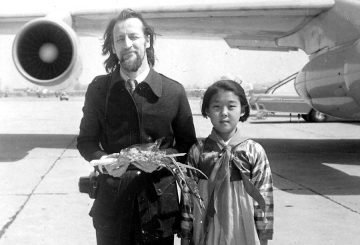
North Korean visits
John Gittings
John Gittings, formerly the Guardian’s East Asia editor, looks back on multiple trips to North Korea, from 1976 to 2001.


John Gittings, formerly the Guardian’s East Asia editor, looks back on multiple trips to North Korea, from 1976 to 2001.

Street 200 in Phnom Penh is where people come together with a common passion for cinema.

The Hong Kong elite are said to be interested only in making money and not in universal values like democracy, human rights and the rule of law. But that’s not true.

As a lead bookseller at The Book Cow, I’m not merely selling pages filled with words; I’m at the crossroads where books meet real life.

Noise can be a powerful tool of protest but also healing, its cathartic value directly correlated with its loudness.

It had been four years since I last returned to Hanoi. I told myself that I’d never loved this city I had wanted to escape. But time may have helped heal old wounds.
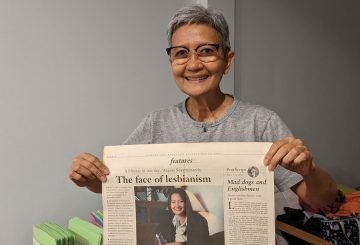
The Anjaree Archive preserves material collected over the decades by one of Thailand’s first advocacy groups for gender and sexual rights. But can an archive also tell the story of its own messy creation?

Could distance runner Soh Rui Yong’s absence from Singapore’s national team point to something bigger about how things work? He thinks this could be a “good opportunity” to ask questions.
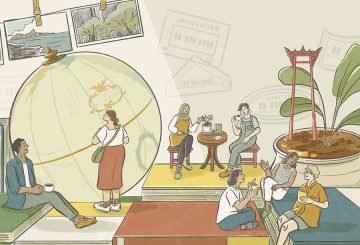
Yo and Noom choose their books, in English and Thai, with care and purpose to ensure that Passport Bookshop has a clear identity and its patrons a quality read.

It is especially important to pay attention to Myanmar right now, but the future of Burmese-language instruction in English is uncertain. Joe Freeman speaks with linguist Justin Watkins about his work.

It’s hard to pin down exactly how to describe Đinh Nhung and what she does. Her work has spanned art installations, photography, curation and the compilation of lexicons of queerness in Vietnam.
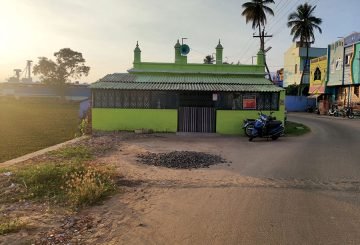
Hindu-Muslim relations are worsening across India. There have been no rumblings of communal strife in Kadayanallur yet, but news from elsewhere creates ripples of anxiety and worry.

What happens in a border town when the border is closed? Bryony Lau travels to Muse in Myanmar’s northeast and reflects on its history and the effects of the Covid-19 pandemic.
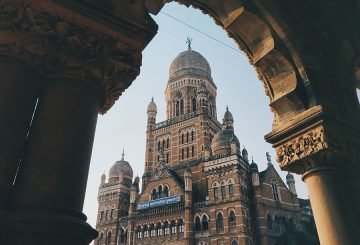
It is impossible to mention Mumbai without alluding to its former name, Bombay. Radhika Oberoi reflects on reading Salman Rushdie’s writing about the city.

Mak Yong encompasses elements of dance, drama, storytelling, music and ritual, and is a women-centred folk tradition nurtured by community bonds.

‘Tò-uat’ means ‘turn left’ in Taiwanese Hokkien—a signal of political orientation rather than literal direction—and the bookstore’s website describes itself as “Taiwan’s only social movement–focused bookstore”.

Seulki Lee talks to Raphael Rashid about identity, belonging, and the things that people don’t want to acknowledge or discuss in South Korea.

A bookshop in Phnom Penh adapts to the times
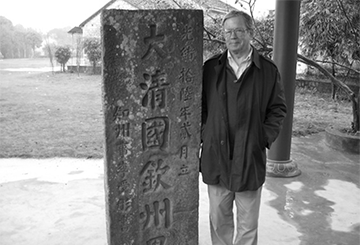
Vietnamese studies loses a pioneer

A kidnapping hasn’t deterred Lam Wing-kee from opening a new bookshop

Sihanoukville has long had a seamy underbelly

An interview with Wang Gungwu

Neighbourhood democracy in Yogyakarta
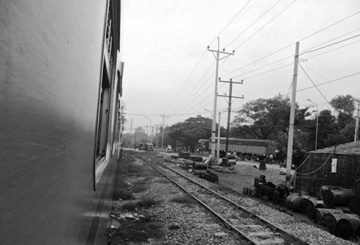
Some would prefer to go to Mandalay by plane, boat or bus, but I chose to go by train, like Paul Theroux
The secret to my success was my grandfather and his Nissan Langley
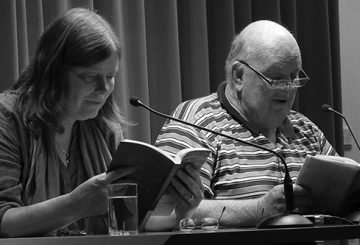
The Australian poet Les Murray remembered
Music was his passion and his legacy

In 1994, Michael Karnavas went in search of the great Vietnamese writer

Roh Hoe-chan campaigned stoically against corruption

A family scattered by politics

Returning to Malaysia on the eve of an historic election