When the tigers become rats
Jake Adelstein
With Yakuza: A 400-Year History of the Japanese Underworld, Andrew Rankin provides the clearest and best-sourced narrative history of the yakuza in English.


With Yakuza: A 400-Year History of the Japanese Underworld, Andrew Rankin provides the clearest and best-sourced narrative history of the yakuza in English.

When BTS refused to submit their music to the Grammys for consideration, artists worldwide were filled with pride but also envy. Many know that to walk away from the table, one must first be invited to sit down.

As authoritarian control makes it increasingly difficult to engage in ‘hard’ resistance and confront power directly, fiction can step in to tease out the things that might otherwise go unsaid.

More than thirty years after the first rave, Taiwan’s rave scene is once again booming, thanks to a surging global interest in electronic and techno music and a new generation of social media–savvy organisers.

Michelle Cho and Joe Lim of Singing Beetle on the company’s first K-pop group, 1VERSE, and their vision of a space that looks out for artists’ happiness, mental health, and ability to make a sustainable living.
Read together, three books on China take us through short-lived periods of openness, political shifts, and reminders that present realities may not last forever.
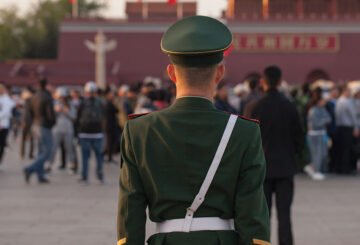
Tiananmen Square is a major tourist attraction, but it also carries a far greater political meaning. While working as a fixer for a foreign production crew, a young Beijing native reflects on memory, presence, and silence.

Works like Blood Dawn: World War II and the Making of Modern Asia highlight how prone people everywhere can be to excess, even violence, as they pursue competing political visions and ambitions.

For the Tibetan community in London, the upcoming Chinese mega-embassy at Royal Mint Court is just another physical manifestation of the surveillance and climate of fear they have to navigate.
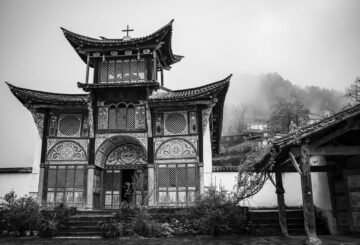
In the mountains of the Nujiang region, China, the Catholic faith has been shaped by generations of isolation and woven into local custom and ritual.

Chinese law allows the state to punish its citizens for consuming cannabis outside its borders, but many young Chinese citizens see Thailand as a safe haven for mind-altering experiments.
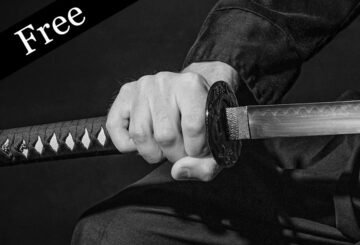
The three volumes of Eiji Yoshikawa’s Musashi: The Novel contain a rollicking yarn with a cast of colourful characters that swirls about its nucleus, Musashi, with curious and often calamitous results.

Independent bookstores opening on Hong Kong’s islands not only offer good reads, but also operate as third spaces that serve their local communities.
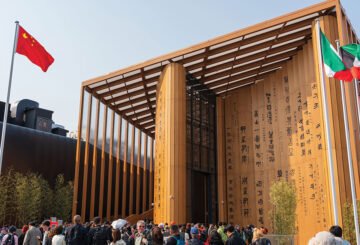
Uyghur dance performances are invariably showcased by Chinese officials in an attempt to show that everything in Xinjiang is ‘normal’. It’s a move that, through its absurdity, creates even more unease.

While Lee Yuri’s stories don’t feel explicitly political, the decades of loss experienced by Korean society stream like a current beneath her characters, who are reacting to their increasingly commodified, high-pressure society.

Is the twenty-first century an Asian one? According to former Singaporean diplomat Bilahari Kausikan, this is entirely the wrong question to be asking.

A trainee and the tattoo artists that she works with in a studio in Seoul reflect on craft, self-expression, and how upcoming changes in legislation will impact the evolution of both the culture and industry of tattooing in Korea.
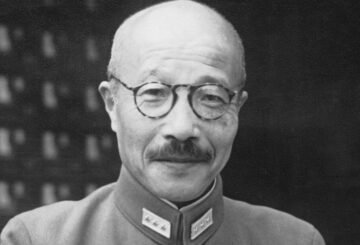
Is Tojo Hideki a “Great Man” who single-handedly determined the course of history, or is he merely a character in a bigger story, a reflection of many crashing political and social forces?

Packed with prose, poetry, stories, and reportage, Ocean, as Much as Rain is essential reading for all Tibetans and for anyone who wants to understand what it means to live under colonial occupation.
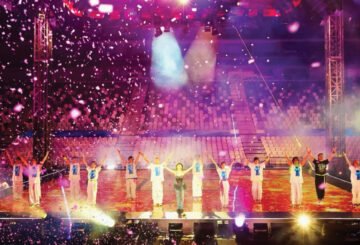
Even if you declare yourself politically apathetic, politics still has a way of seeking you out and banging on your door.
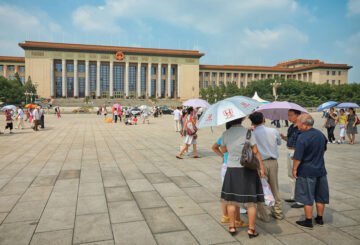
China has resumed the role that it occupied for most of the last two millennia—until the nineteenth century—as the world’s dominant economic force.

With Tibetan Sky, Ning Ken has written a novel that’s self-aware, complex, and genre-defying. It tackles a few myths about Tibet, while passing over some uncomfortable truths.
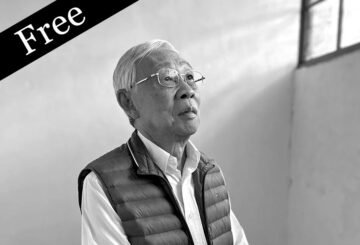
Fred Chin’s story is as much as a firsthand account of a dark time in Taiwanese history as it is a cautionary tale of the cruelty of unchecked authoritarian power.

Hongkongers’ defence of bamboo scaffolding in the aftermath of the Tai Po fire wasn’t just about a material; it became part of efforts to defend the things that make the city what it is.
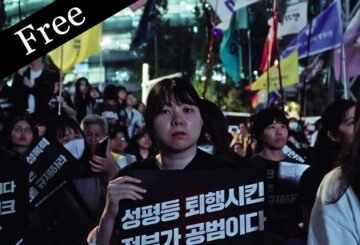
By making Kintsugi, Lim Ji-soo found a way to tell her story of surviving sexual assault.
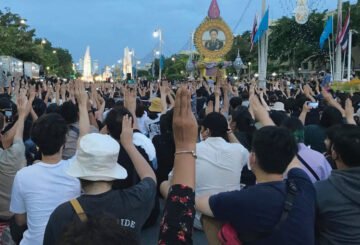
We don’t know how history will remember or talk about the Milk Tea Alliance. But it isn’t the only recent manifestation of transnational solidarity with the youth at its core.
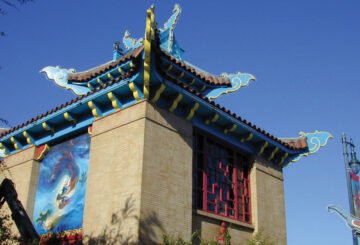
Tyrus Wong’s extraordinary 106 years on earth, told in meticulous detail by Karen Fang, is a story of resilience and triumph.
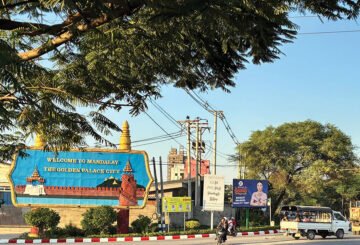
“The mountains are high and the emperor far away.” Reckonings from a borderland—on walls, my friend J, and choosing a life in diaspora.
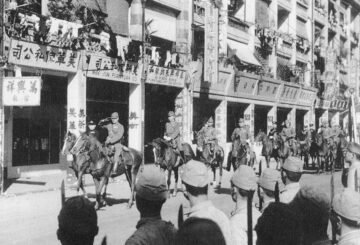
With When Sleeping Women Wake, Emma Pei Yin takes her place in a long-running and constantly evolving tradition of Chinese female-centred historical fiction.

A poem from Rianka Mohan

Cybercrime is a big business, and some of its leading perpetrators are playing a cat-and-mouse game with the authorities in Southeast Asia.

Hakamata Iwao is believed to have been the world’s longest-serving death row prisoner. For more than half a century, his sister Hideko has never given up on him.

As discussions of a so-called nuclear power renaissance resurface, Return to Fukushima pushes us to (re)consider not only the ways we live but also the exploitative systems through which energy is produced and consumed.

The conceit of Chris Horton’s Ghost Nation is that most of the world treats Taiwan like it doesn’t exist, and he makes the case that Taiwan deserves bolder recognition.
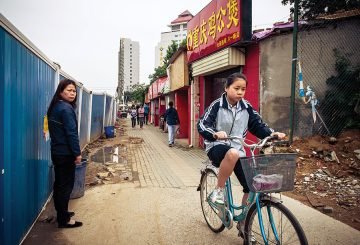
For English language readers outside China, these translations of The Running Flame and Soft Burial help to reframe Fang Fang as a writer of more than Wuhan Diary.

As an attempt to preserve what is gone, Shen Fu’s writing endures as a reminder to treasure what we still have and what we will someday mourn.

Despite enduring humiliation, punishment, and incarceration, Xi Zhongxun’s loyalty to the Party—and even his “emotional attachment” to Mao Zedong—never wavered.

Filipino Hongkongers are generally excluded from the city’s self-understanding as an Asian metropolis with a distinct cultural heritage, but the historical ties between Hong Kong and the Philippines run deep.

With both humanist insight and historical precision, Paul P. Mariani shows how Bishop Louis Jin Luxian was, above all, a Jesuit of his time.

“As Freud has said, if we don’t mourn, we’ll be trapped forever in melancholy as a violent site. That, to me, is a worldwide symptom”