

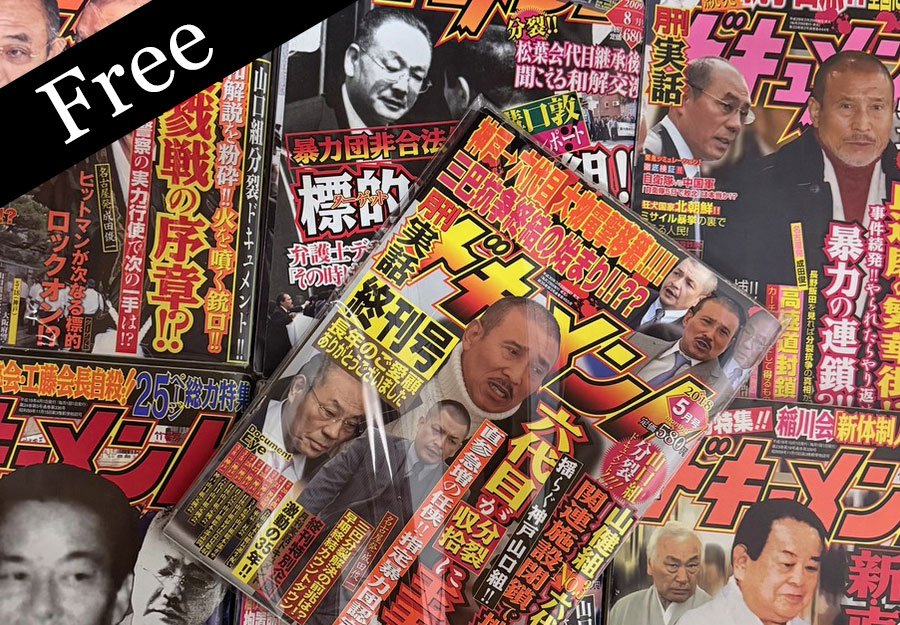
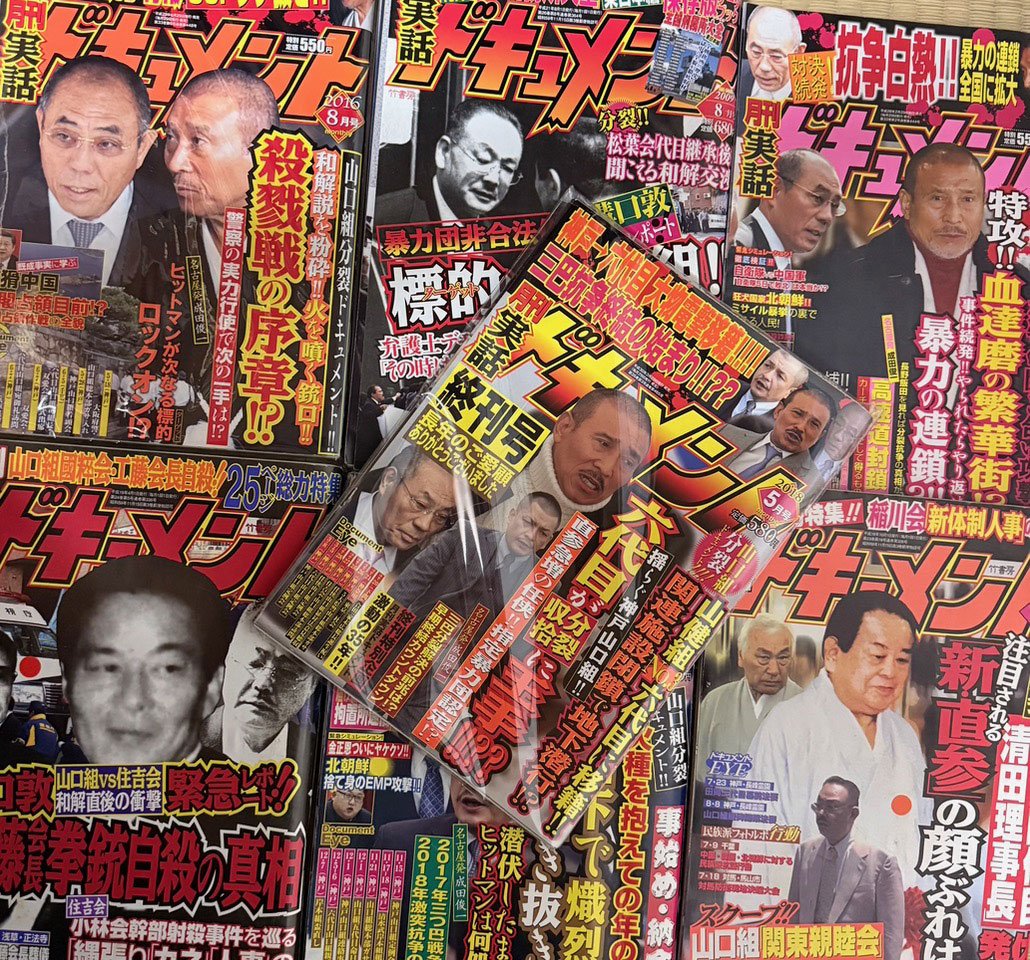
Yakuza: A 400-Year History of the Japanese Underworld
Andrew Rankin
Basic Books: 2026
.
Every few years, someone announces that the Japanese organised crime groups known as the yakuza are finished. Every few years, a book tries to explain what, exactly, has been dying.
Many people still assume “the yakuza” are one monolithic criminal organisation ruling Japan from the shadows. That’s completely wrong. They are more than twenty separate criminal organisations. And they have never lived in the shadows.
Andrew Rankin has probably written the best explanation yet of their unusual character:
Japanese underworld analysts tend to regard the yakuza as a uniquely Japanese phenomenon, and so they dislike the term Japanese mafia. Criminologists in the West have defined a mafia as an organized crime group that specializes in protection: A mafia supplies and sells protection and aggressively tries to monopolize the supply of protection within specific fields of business, both legal and illegal. Understood in that way, the yakuza groups surely constitute a Japanese variety of mafia. There are some types of crimes that yakuza almost never commit, such as armed robbery, kidnapping for ransom, and murder for hire. Regarding protection rackets, however, yakuza ambition knows no bounds. At one time or another, the yakuza have penetrated almost every industry in Japan, from fish markets to geisha agencies, including pachinko parlors, garbage collecting, sumo wrestling, speedboat racing, property development, and pornography.
More from Mekong Review
-

A poem from Jake Dennis
-
Death and life in a Tokyo neighbourhood
-

In Tokyo, it’s never clear whether you are in a lockdown or not
- Tags: Andrew Rankin, Issue 45, Jake Adelstein, Japan
