

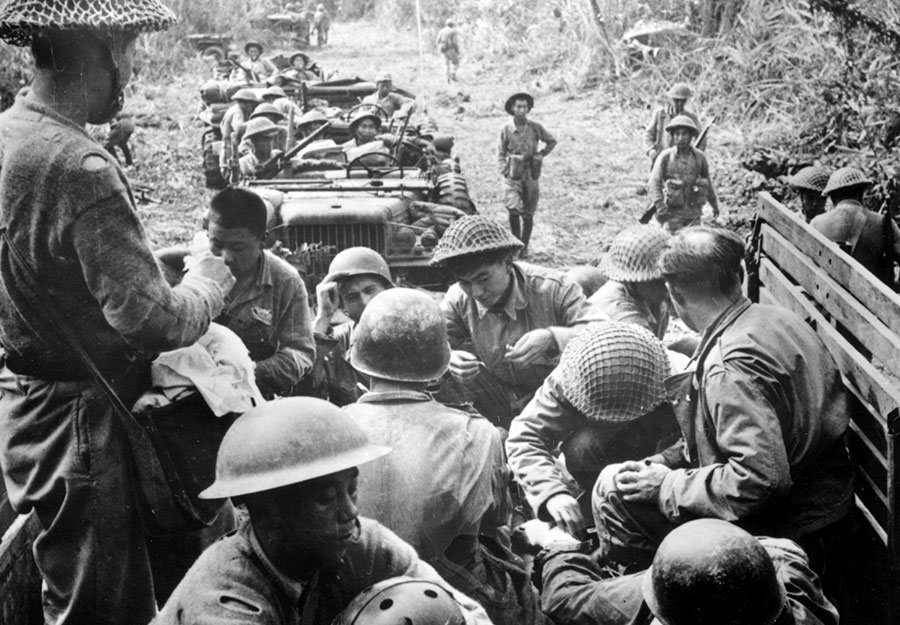

Blood Dawn: World War II and the Making of Modern Asia
Hans van de Ven
Basic Books: 2026
.
Hans van de Ven’s Blood Dawn: World War II and the Making of Modern Asia serves as a useful reminder of the messiness, bloodiness, and contingency surrounding the creation of the contemporary state system in Asia as the world has come to know it. The book depicts the transformation of a world characterised by colonialism and empire to one of modern states characterised by internal centralisation and external autonomy. Importantly, Blood Dawn comes at a time when the world is again contemplating a possible shift in organising principles. Whether the potential changes that currently loom on the horizon will actually come to pass, or look as dramatic as the events of the early to mid-twentieth century, remains a matter of debate. That is a reality at ease with the ideas in Blood Dawn, since the volume constantly highlights the fact that nothing is preordained or an unfolding of some historical materialist script. Instead, developments tend to be conditional and variable, even if they in the end prove monumental.
Blood Dawn begins with the British interventions in India and Qing China, along with the expansion of Dutch control over the East Indies in the eighteenth and nineteenth centuries, and ends with the 1955 Bandung Conference. Between these events, van de Ven takes readers through various empire-building projects in Asia by the British, Dutch, French, Americans, and Japanese. He ends with the rise of nationalism and the emergence of independent postcolonial states in the wake of the Second World War and the shadow of the Cold War.
More from Mekong Review
-

A poem from Rianka Mohan
-
How tea fuelled Western colonial endeavour
-

Shanghai has undergone three transformations in three years. First, it turned itself into a bubble, then it clamped down hard, monitoring every resident’s movements. Finally, it bounced back to normalcy, almost as if the previous years had been a fever dream.
- Tags: China, Hans van de Ven, India, Indonesia, Issue 45, Ja Ian Chong