
The braves
Desmond Sham
Among the Braves is an attempt to tell the story and struggles of a city, through the lives of the people who have been active in a decades-long movement for democracy.


Among the Braves is an attempt to tell the story and struggles of a city, through the lives of the people who have been active in a decades-long movement for democracy.
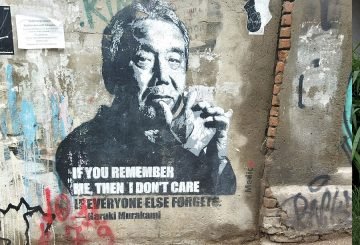
Beyond healing himself, Haruki Murakami, through his stories, has grown more interested in helping others heal.
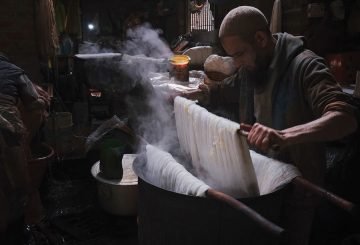
The ancient practice of dyeing yarn in Kashmir used to be the source of livelihood for hundreds of families, but modern techniques and tools have slowly pushed the tradespeople into the margins.
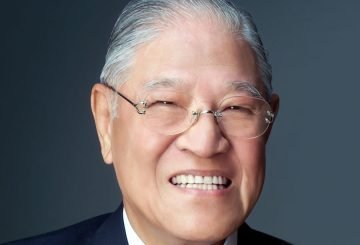
Many Taiwanese have developed a new sense of self, proud of the island’s unique history, and Lee Teng-hui played a key role in that process.
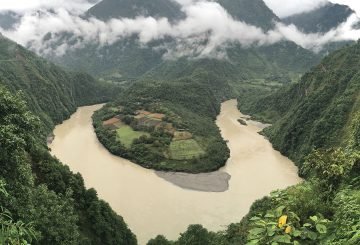
The Kawa Karpo is one of the most sacred mountains in Tibetan Buddhism. A 250-kilometre circumambulation is completed by thousands of pilgrims every year.

As a mainland Chinese kid, I saw Hong Kong portrayed on TV as the epicentre of capitalism and sophistication; Hong Kong in real life, when I finally got to see and feel it for the first time, was much more than that.

The Panthay Rebellion is a cautionary tale of what can go wrong when a central government is absorbed in its own priorities, leading to ethnic stereotyping and distrust between communities.

In Hieyoon Kim’s Celluloid Democracy: Cinema and Politics in Cold War South Korea, South Korean cinema is seen as part of a broader democratic social movement.

In eleven short stories, Prasanthi Ram probes the lives and relationships of nine women, exploring the narratives of love (or hate) that we develop within ourselves, alongside the ones shared with our families.

A poem by Yago Tse.

Both The Sales Girl and If Only I Could Hibernate are contemporary coming-of-age stories set in Ulaanbaatar that thwart most viewers’ expectations of Mongolian cinema.

An interview with Mike Chinoy about covering China for almost half a century, and his new book, Assignment China: An Oral History of American Journalists in the People’s Republic.

The Chinese Communist Party has “restructured the social order and silenced the people on the ground. Now they’re trying to extend their hands overseas, to silence overseas activists,” Christopher Mung says from the UK.
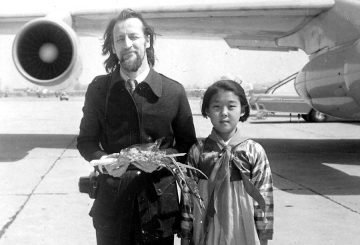
John Gittings, formerly the Guardian’s East Asia editor, looks back on multiple trips to North Korea, from 1976 to 2001.

The Hong Kong elite are said to be interested only in making money and not in universal values like democracy, human rights and the rule of law. But that’s not true.

Hafsa Kanjwal contends that Bakshi Ghulam Mohammed’s state-building practices helped strengthen India’s hold over Kashmir while also enabling modernisation, which paradoxically reinforced a sense of alienation rather than reconciliation.
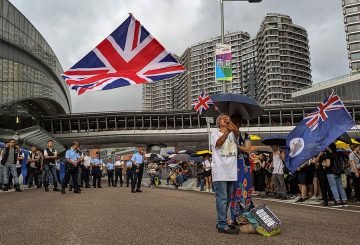
One of the interesting ideas thrown up in Hong Kong a few years back has been a certain nostalgia for the late colonial period. But how enlightened was colonial public policy-making?
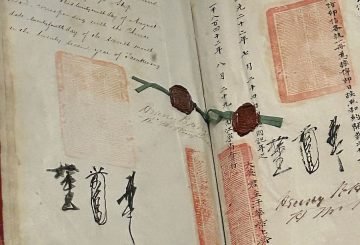
For Hongkongers, the British Museum exhibition became a space for those living through the ongoing destruction of their home to make sense of their own lives.

Saadat Hasan Manto knew that it was not for him to analyse the multitudes people contain, and that often spill out from us without warning.

The story of Hong Kong has long been subject to the whims of outsiders’ imaginations. Almost nowhere in these narratives is Hong Kong a city for the seven million residents.
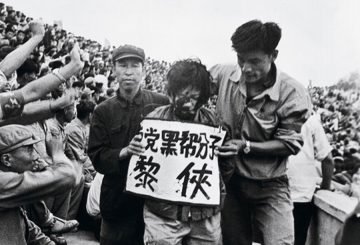
What a country doesn’t collectively talk about can often be more important than what it does. Tania Branigan’s book reveals the complexities of remembering the Cultural Revolution.

For much of her adult life, Bacani has been known for her photojournalism. But she has extended her practice considerably—a constant reinvention.

Since participating in a protest in China puts one’s safety in jeopardy, using a blank sign serves as a form of plausible deniability. It’s also consistent with the complex reality of memory and historical events in China.

Shanghai has undergone three transformations in three years. First, it turned itself into a bubble, then it clamped down hard, monitoring every resident’s movements. Finally, it bounced back to normalcy, almost as if the previous years had been a fever dream.

A controversy—involving questions of privacy, consent, autonomy and censorship—began to develop around the documentary To My Nineteen-Year-Old Self, one that starkly parallels the Hong Kong government’s relationship with the youth.

A sordid saga of greed, corruption, desperate despots and out-of-control dam-building corporations—propelling the rapid demise of the Mekong River.
A poem by Anthony Tao
A poem from Jake Dennis
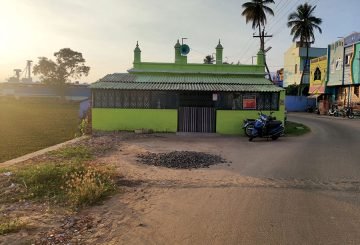
Hindu-Muslim relations are worsening across India. There have been no rumblings of communal strife in Kadayanallur yet, but news from elsewhere creates ripples of anxiety and worry.

Chiang Kai-shek might have put in place measures that eventually led to Taiwan’s economic miracle, but political freedom for the Taiwanese was the last thing on his mind.

What Philip J. Stern offers is a reflection on the nature of power—how organisations created to share risks and raise capital for economic activities ended up becoming a dominant force.

Scot Marciel spent most of his time in service focused on one region. In Imperfect Partners, he brings readers through the evolution of US involvement and interest in Southeast Asia from Reagan through Trump.

Fiona Sze-Lorrain’s novel Dear Chrysanthemums offers a provocative look at the defining events of the past half-century of Chinese history.

Unable to write openly about repression, Uyghur writer Perhat Tursun resorted to symbolism, invoking visceral descriptions in his novel The Backstreets to convey a sense of disconnect and despair.

Esther Yi’s debut novel grapples with social disconnectivity and fanaticism through an esoteric tale of a woman who falls desperately for a K-pop star and goes on a journey to integrate him into her life.

A short story by Katrina Yu.

Baek Sehee writes: “The world tends to focus too much on the very bright or the very dark.” She steers clear of both extremes in her book. For this alone, it merits attention.

More than a conventional detective story, The Soul of Beijing unfolds into a vivid portrayal of the bustling metropolis, filled with colourful characters from all walks of life.
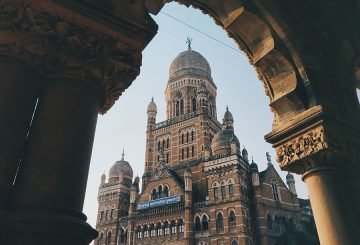
It is impossible to mention Mumbai without alluding to its former name, Bombay. Radhika Oberoi reflects on reading Salman Rushdie’s writing about the city.

‘Tò-uat’ means ‘turn left’ in Taiwanese Hokkien—a signal of political orientation rather than literal direction—and the bookstore’s website describes itself as “Taiwan’s only social movement–focused bookstore”.