
Stating the obvious
Seulki Lee
Seulki Lee talks to Raphael Rashid about identity, belonging, and the things that people don’t want to acknowledge or discuss in South Korea.


Seulki Lee talks to Raphael Rashid about identity, belonging, and the things that people don’t want to acknowledge or discuss in South Korea.

Murong Xuecun fled China after writing his book Deadly Quiet City: Stories from Wuhan, COVID’s Ground Zero. Today, he’s living in exile in Australia. It was never obvious that his life would go on such a trajectory. Kevin Yam chats to him about his writing and his choices.

The neighbourhood around Huaxin Street in Taipei is known as Little Burma. Multiple generations have sunk their roots into this neighbourhood. It’s not a question of assimilation, but a mix of everything to create a new and complex political identity.
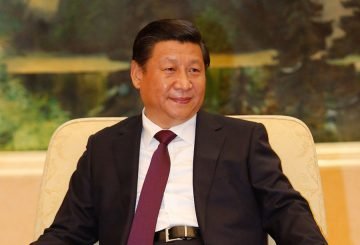
While his predecessors chose to downplay China’s power, Xi Jinping has led an overhaul of China’s domestic political landscape and foreign policy. A review of Beijing’s Global Media Offensive: China’s Uneven Campaign to Influence Asia and the World by Joshua Kurlantzick.

What can a government achieve when given maximum access to public data? Josh Chin and Liza Lin of the Wall Street Journal do a deep dive into the impact of China’s panopticon in Surveillance State: Inside China’s Quest to Launch a New Era of Social Control.

In Ajoomma, a Singaporean-South Korean co-production directed by He Shuming, an auntie travels to South Korea to visit the shooting locations of her favourite K-dramas… but gets far more than she’d bargained for.

A poem in commemoration of Bleak House Books, an independent bookshop in Hong Kong, which ceased operations in October 2021. The store is set to reopen in upstate New York in the spring of 2023.

Ducky Tse was an established photographer in Hong Kong when, at the age of fifty, he decided to uproot and relocate to Taiwan. He bought a van and refurbished it, driving it around the country. Through his photographs, he reflects on a new chapter of his life.

The repressive era of Xi Jinping is often contrasted with the 1980s, when the question of what China could become seemed remarkably open. But it is during the fourteen years between 1978 and 1992, delineated in Julian Gewirtz’s Never Turn Back: China and the Forbidden History of the 1980s, that the foundations for Xi’s rule were laid.

A diary kept by Esther Kim to document her early months in Taipei, and her interactions with people from different backgrounds who have gathered to learn Mandarin.

Twenty-five years after the death of the great Japanese actor Toshiro Mifune, a re-appraisal of a film that has been unjustly neglected.
An Australian activist takes on China

Life in the new Hong Kong

32 years of Hong Kong’s only French language bookshop

The Chinese Communist Party consolidates it’s power
Chinese – and Taiwanese – identity in the New World

The spy novel in the ‘Chinese century’

China’s popular prints beguile and enchant
Cho Nam-joo puts Korean society under the spotlight

A poem from Ivan Stacy

The roadside artist and his subject

Davy Chou’s latest film, Return to Seoul

An anthology of Tang poetry

An interview with author Dung Kai-cheung

The year China discovered social media

China is not just changing institutions in Hong Kong
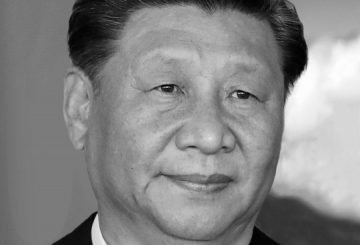
The enigma remains
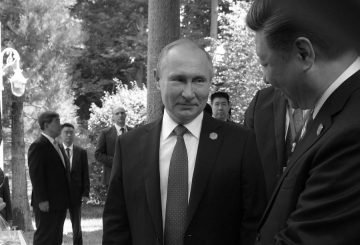
Western attitudes towards China are full of contradictions

Charting the miracle on the Han

How coconuts conquered the world

Poetry from Lok Man Law

Once upon a time in China
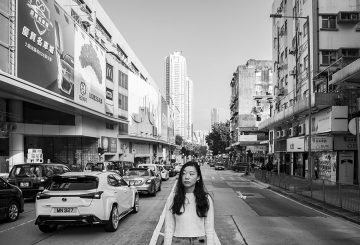
A memoir of a city and its people

An interview with Yan Lianke

First the Brits, now the Chinese

The legend of the Chinese typewriter

Anything but diplomatic
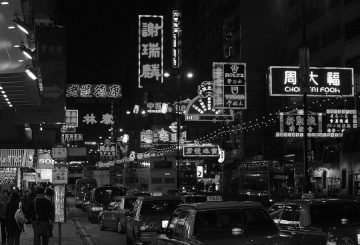
Dung Kai-cheung’s disappearing Hong Kong
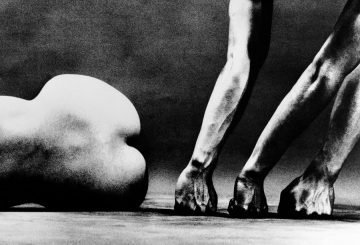
Turning photography into art in Japan