

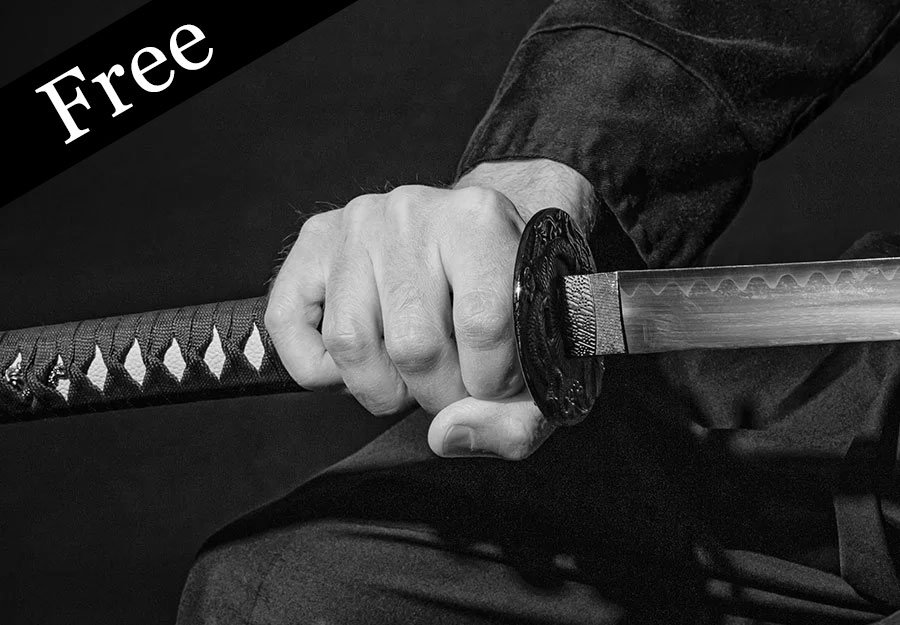
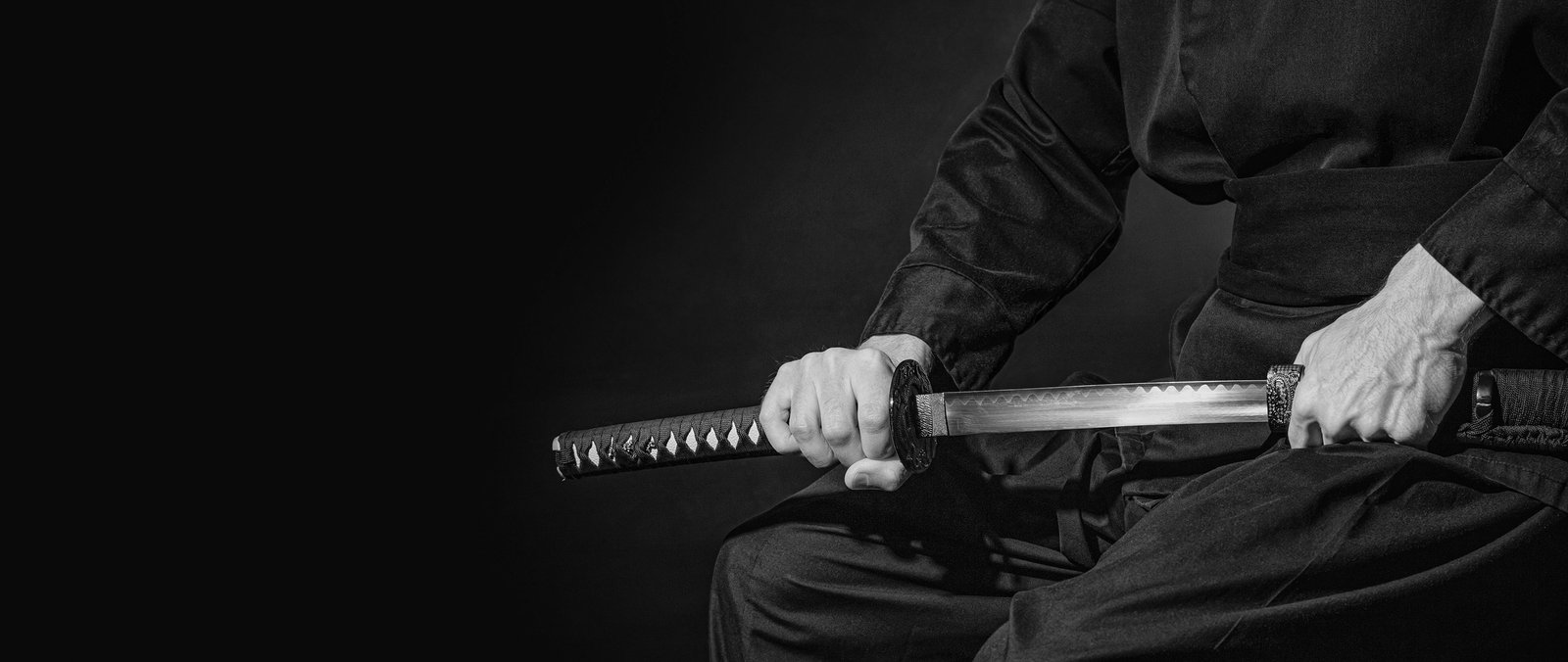
Musashi: The Novel (Books One to Three)
Eiji Yoshikawa, translated by Alexander Bennett
Tuttle Publishing: 2026
.
On a frigid January morning, I boarded a train from the samurai castle town of Himeji and journeyed west into the mountainous hinterland of Okayama Prefecture. Changing to a one-carriage diesel locomotive at the small town of Sayo, I continued on through long tunnels and deep valleys until, at a lonely siding, the train stopped. The sole passenger, I disembarked at the village of Miyamoto.
“Miyamoto Village lay silent,” writes Eiji Yoshikawa in the early pages of Musashi: The Novel, his sprawling samurai epic about the wandering swordsman, Miyamoto Musashi, whose search for life’s meaning takes him through the deep valleys, castle towns, and snow-bounded hinterlands of western Japan. Miyamoto Village did indeed lie silent as I trudged towards it—its traditional homesteads all but submerged in fresh snow, wooden shrines and temples groaning under the weight of the drifts.
Readers needn’t travel so far for a taste of rural Japanese antiquity. While Yoshikawa, who completed Musashi in 1939, has done those hard yards and spared you the trouble, it is Alexander Bennett, an Antipodean martial artist and scholar, whose translation of the original manuscript in its entirety now gives international readers access to the atmosphere and thrills of Japan’s greatest samurai tale.
This new unabridged version is no light undertaking. Told over three volumes, it comes in at a hefty 1,696 pages. But there are plenty of reasons to make the commitment. For one, it is a rollicking yarn with a cast of colourful characters. The settings are ever-changing; from rural hamlets, snowy mountain passes, and bamboo forests, to hectic city streets with brothels, boozy taverns, temples, and dojos, the reader is whisked along at a lively clip. This is feudal Japan in the early Edo Period—about 400 years ago—a time when the country was transitioning from civil war to an era of peace, order, and artistic freedom. Alongside martial arts, Yoshikawa also gives us cultural practices such as tea ceremonies, calligraphy, and flower arrangement—arts which samurai of yore engaged in to strengthen their mental discipline and build character.
Miyamoto Musashi was a real person who lived from 1594 to 1645. His name is known to all Japanese—if not as ‘Kensei (sword saint)’, then as a folk hero whose legendary strength and skill are still revered. Kids emulate his Niten Ichi-ryū (Two Heavens as One) style of swordsmanship with chanbara foam swords; brands of kitchen knives, health supplements, home security systems, and even automotive parts are named after him. My local hardware store is called “Musashi”.
Yoshikawa has been instrumental in all of this, of course, popularising historical fiction with his reimagining of the lives of famous samurai figures in works like Taiko and The Heike Story—inspiring countless movies, TV dramas, and manga. Bennett’s new translation of Musashi—more than four decades after Charles S. Terry’s version—is sure to extend that popularity to an international readership.
Bennett is aptly qualified. A resident of Kyoto who lectures on Japanese history and culture at a university in Osaka, he holds multiple black belts in kendo, iaido, and naginata, among others. He is also editor-in-chief of Kendo World, an English-language publication on Japanese martial arts. So, when he states in his introduction that Musashi is “more than just a tale; it’s a meaningful interpretation of Japan’s cultural and philosophical heritage”, I’m inclined to believe him.
Musashi’s plot is epic but not unwieldy, charting the legendary swordsman’s physical and spiritual journey across the three volumes, each named after Godai (五大), the five great elements of Japanese Buddhist philosophy which represent the universe.
Musashi: Book One – Earth, Water and Fire begins on the corpse-strewn plains of Sekigahara, the site of Japan’s most decisive battles between the Eastern and Western warring states. We are introduced to the teenage ruffian, Takezō, and his hapless childhood friend, Matahachi, who, seeking adventure and glory, have sadly ended up on the losing side.
The two friends escape. Returning to Miyamoto Village, Takezō meets Takuan, a monk who forces him to take a long hard look at himself:
“You have natural brawn and a dash of boldness, but you’re woefully lacking in brains. You’ve mastered the brutish side of martial arts, all bashing and smashing, but haven’t so much as dabbled in wisdom or virtue.”
Takuan bestows on him a new name—Miyamoto Musashi—and implores the young man to make something of himself. Though still reckless, ignorant, and immature, Musashi sets out to become the best swordsman in the land. The first volume establishes this central quest, introduces a supporting cast—Musashi’s allies, enemies, and a love interest, Ōtsū, a young woman from his village. Through duels with scoundrels and dojo sensei alike, it gives us a taste of even greater trials to come.
In the age of foot power, Yoshikawa ensures readers appreciate the pain it might have taken to wander the land in a pair of straw sandals with a heavy sword on your back:
“Beyond Tatsuno, Harima’s gateway, the journey became entirely mountainous, the Sakushu Road winding endlessly through the rugged hills… A watery moon hung low over the oak treetops, and the mountains in the distance were clothed in a white mist.”
Musashi: Book Two – Wind and Ether then depicts Musashi’s rise as a wandering swordsman. As he challenges and defeats respected martial artists, his reputation grows. But rather than satisfy him, these victories feel empty. The first of many truths dawns on him: talent, strength, and skill alone do not a well-balanced human make.
There’s a scene in which Musashi happens upon a famous tea master in a snow-covered field. By way of invitation, the simple pleasures of cha-no-yu (way of tea) are revealed. To his surprise, its simplicity and need for ‘empty-mindedness’ mirror the way of the sword. Such moments teach Musashi that there’s more to life than coshing folk with a wooden sword.
The final volume—Musashi: Book Three – Moon, Sun & Perfect Clarity—builds to the climactic duel between Musashi and his archnemesis, the suave but cruel swordmaster, Sasaki ‘Ganryū’ Kojiro. It’s a scene based on a real-life encounter on a small windswept island in western Japan, immortalised by Toei and Toho movie studios and sketched by manga artists many times over. Musashi has reached the end of his ‘journey’ and, as if to emphasise his embrace of simplicity, humility, and an unfettered mind, he carves himself a wooden sword from an oar on the boat ride over. As with most rumbles, it all begins with the gaze:
“Eyes are windows to the soul—and at this moment, the profound differences in the intellect, perception, and inner states were reflected in the two sets of eyes: Ganryū’s stare confronting Musashi’s unwavering gaze.”
Ironically, a fight to the death is what it takes to make Musashi realise that there’s no glory in violence.
In all of this, a strong whiff of Joseph Campbell’s The Hero with a Thousand Faces prevails. This hero’s journey—a universal story pattern that begins with a call to action, followed by a trial by ordeals, rebirth, and ultimately triumph over adversity—echoes other great epics like Homer’s The Odyssey, Hermann Hesse’s Siddhartha, and the original Star Wars trilogy.
The final volume neatly ties up the mess of loose ends Musashi has left in his wake: he makes amends for past missteps with friends and foes and, in one bittersweet scene, professes his love for Ōtsū. Unfortunately, he’s bound by the way of the sword, and cannot commit to anything more until the outcome of his duel with Ganryū is decided.
As an unabridged version of the original Yoshikawa manuscript, Bennett’s translation is both fresh and vigorous. He flavours the characters’ dialogue with cheeky Antipodean-isms like “shitstorm”, “g’day”, “bugger”, “bummer”, “bloke”, “too right, mate”, and the classic “yeah-nah”—a liberty I appreciate as a fellow Antipodean writer. My favourite is: “What the fugu are you bleating on about?”
Yet, nary a fugu I saw as I traipsed through the virgin snow that had blanketed Miyamoto Village during the night, finally emerging in front of Musashi Shrine at the top of a stone stairway. Inside, housed in a purpose-built rack, dozens of bamboo kendo swords, called shinai, had been placed; each one inscribed with the name and school of its owner who had also made the pilgrimage.
After paying my respects, I stepped outside and into a grove of giant cedar trees where a banner, slung from a bamboo pole, flapped lazily in the mountain breeze. It bore the kanji characters “鍛錬”, meaning “to forge” and “refine”—a fitting mantra for anyone seeking self-betterment and strength to face the maladies of the modern world head on.
I’m sure Musashi would have agreed.

More from Mekong Review
-

A poem from Jake Dennis
-
Death and life in a Tokyo neighbourhood
-

In Tokyo, it’s never clear whether you are in a lockdown or not
- Tags: Eiji Yoshikawa, Issue 44, Japan, Simon Rowe
