

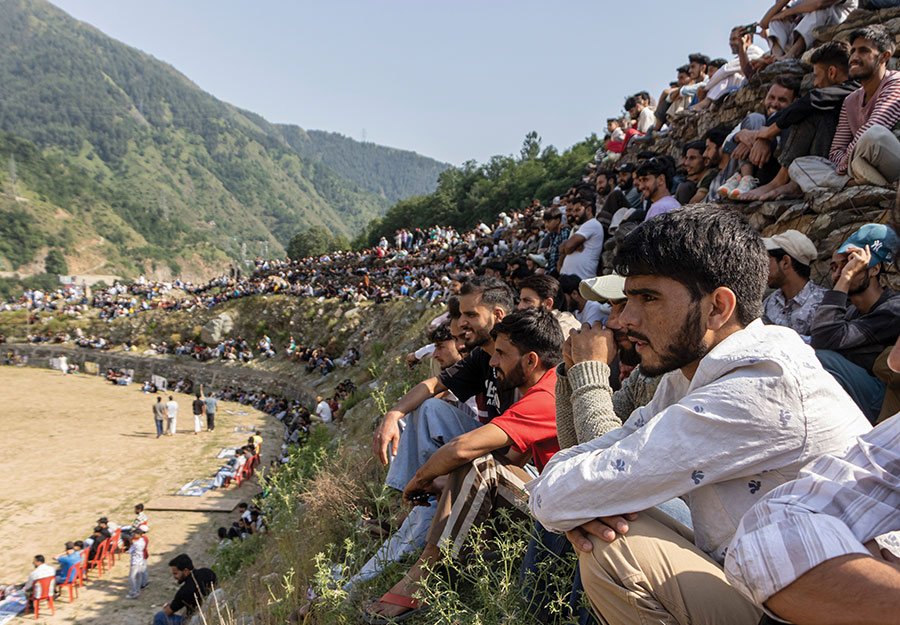
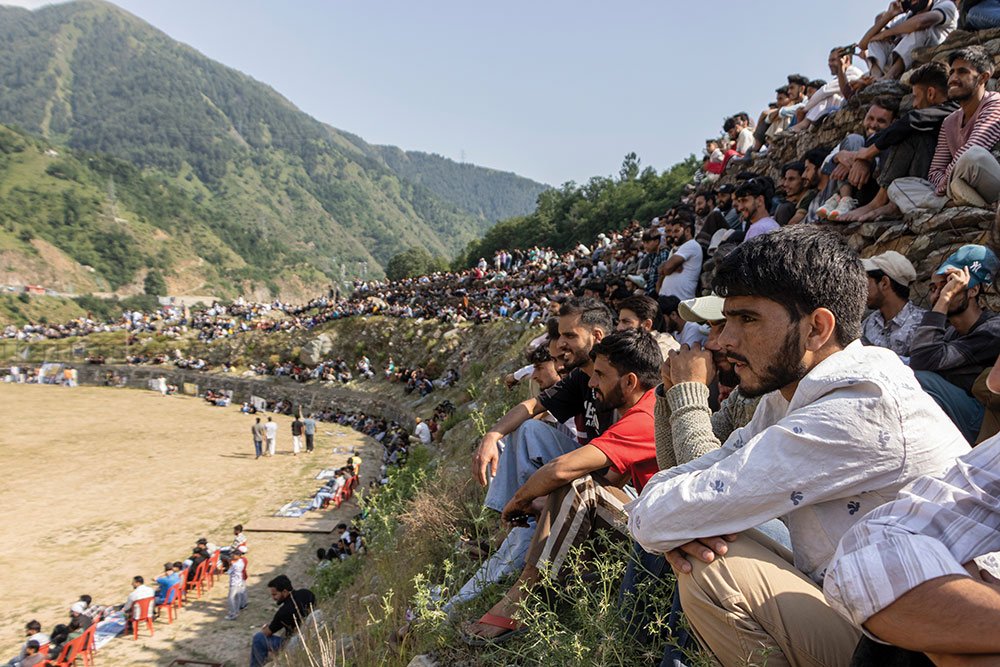
A cool breeze sweeps down from the Pir Panjal mountains, cutting through the summer heat over a cricket ground in Banihal, a town tucked into the hills of Jammu and Kashmir. Thousands of spectators have spread themselves across grassy slopes and rocky outcrops overlooking the field. Some sit under pine trees, others stand shoulder-to-shoulder along the boundary rope. Children climb up small ridges to get a better view.
The cricket match has drawn a crowd, but another attraction is holding the people’s attention. A voice rings out over loudspeakers fixed to metal poles: “The ball has gone out of sight. What a magnificent shot!”
The commentator stops briefly, then switches languages: “The power, the action, and the technique reminds you of the great Sachin Tendulkar!”
More from Mekong Review
-
Hafsa Kanjwal contends that Bakshi Ghulam Mohammed’s state-building practices helped strengthen India’s hold over Kashmir while also enabling modernisation, which paradoxically reinforced a sense of alienation rather than reconciliation.
-

Kashmir has lived many seasons of erasure: newspapers censored, cable channels muted, voices disappearing overnight. But books linger in the physical world longer than speeches or tweets.
-

Saadat Hasan Manto knew that it was not for him to analyse the multitudes people contain, and that often spill out from us without warning.