The nostalgia of the colonised
Ting-Jen Kuo
Taiwan is constantly forced to assert its own identity and presence. Yet this struggle hasn’t made it impervious to colonial hangovers.
Gankhuugiin Purevbat was never keen to claim credit, but his contribution to the rebirth of Mongolian Buddhism and the decolonisation of Mongolia cannot be denied.
The rich traditions of Adat Perpatih in Negeri Sembilan demonstrate how deeply rooted customs can evolve while maintaining their core values.
Creating Feeding Ghosts, a graphic memoir, was the only way Tessa Hulls could think of to repair her relationship with her mother and make sense of the responsibilities borne by each generation.
Using the photographic archive to rethink Myanmar’s past.
A focus on Singaporean authors, coupled with the fact that bookstores in the city have found it increasingly difficult to survive, makes Book Bar feel like an anomaly.
An interview with the founder and director of the Ubud Writers & Readers Festival
When Witit Chanthamarit was a child, independent bookstores were not the rarity they are today. In opening Vacilando, he hopes to recapture the sense of community he’d felt before.
A conversation with Korean queer author and contemporary artist Ibanjiha on their art of humour and succeeding through the heteronormative and hyper-capitalist social order of South Korea.
The poet Kyi Zaw Aye once asked, “How can we encounter true love in times of war?” Since the 2021 coup in Myanmar, some couples have been trying to find their own answers.
Although democracy and media freedoms are declining in India, filmmaker Vinay Shukla seeks to inspire people to show up courageously to create a better society for everyone.
At a time in which large bookstores have fallen to pressures like Hong Kong’s sky-high rents, gentle books survives as a nimble pop-up for used English-language books.
“Every time I’m here in Taiwan, I get to unpack a bit more of my family’s murky history.”
The arts can remind us of our connections to home and nature as we are propelled forward by development projects that prioritise profit over nurturing rootedness and well-being.
Bali is home to a thriving community of local artists with international pedigrees, all actively working from the island, opening their studios to visitors and fostering a local art community.
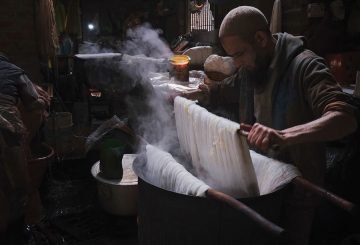
The ancient practice of dyeing yarn in Kashmir used to be the source of livelihood for hundreds of families, but modern techniques and tools have slowly pushed the tradespeople into the margins.
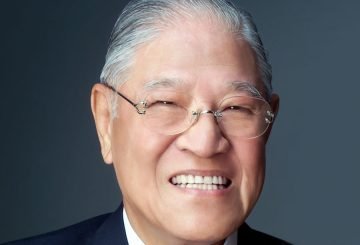
Many Taiwanese have developed a new sense of self, proud of the island’s unique history, and Lee Teng-hui played a key role in that process.
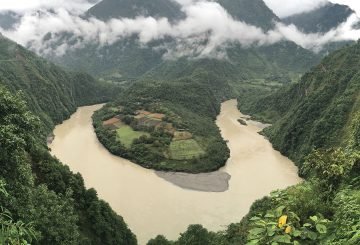
The Kawa Karpo is one of the most sacred mountains in Tibetan Buddhism. A 250-kilometre circumambulation is completed by thousands of pilgrims every year.
As a mainland Chinese kid, I saw Hong Kong portrayed on TV as the epicentre of capitalism and sophistication; Hong Kong in real life, when I finally got to see and feel it for the first time, was much more than that.
Living in Indonesia most of my life, I’ve always felt that I might be visibly ‘too Chinese’. In fact, Indonesia’s tricky relationship with its ethnic Chinese population began all the way back to the Dutch occupation.
Like a magnificent tortoise, my aunt, the long-time Singaporean activist Constance Singam, ambles towards us to meet my children for the first time.
An interview with Mike Chinoy about covering China for almost half a century, and his new book, Assignment China: An Oral History of American Journalists in the People’s Republic.
The Chinese Communist Party has “restructured the social order and silenced the people on the ground. Now they’re trying to extend their hands overseas, to silence overseas activists,” Christopher Mung says from the UK.
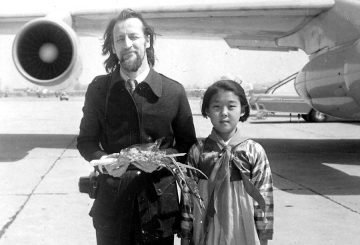
John Gittings, formerly the Guardian’s East Asia editor, looks back on multiple trips to North Korea, from 1976 to 2001.
Street 200 in Phnom Penh is where people come together with a common passion for cinema.
The Hong Kong elite are said to be interested only in making money and not in universal values like democracy, human rights and the rule of law. But that’s not true.
As a lead bookseller at The Book Cow, I’m not merely selling pages filled with words; I’m at the crossroads where books meet real life.
Noise can be a powerful tool of protest but also healing, its cathartic value directly correlated with its loudness.
It had been four years since I last returned to Hanoi. I told myself that I’d never loved this city I had wanted to escape. But time may have helped heal old wounds.
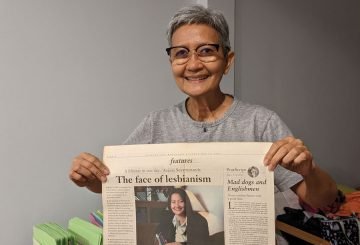
The Anjaree Archive preserves material collected over the decades by one of Thailand’s first advocacy groups for gender and sexual rights. But can an archive also tell the story of its own messy creation?
Could distance runner Soh Rui Yong’s absence from Singapore’s national team point to something bigger about how things work? He thinks this could be a “good opportunity” to ask questions.
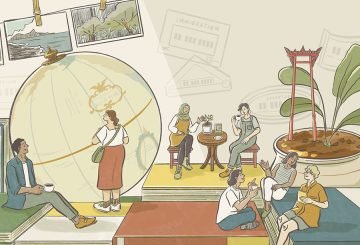
Yo and Noom choose their books, in English and Thai, with care and purpose to ensure that Passport Bookshop has a clear identity and its patrons a quality read.
It is especially important to pay attention to Myanmar right now, but the future of Burmese-language instruction in English is uncertain. Joe Freeman speaks with linguist Justin Watkins about his work.
It’s hard to pin down exactly how to describe Đinh Nhung and what she does. Her work has spanned art installations, photography, curation and the compilation of lexicons of queerness in Vietnam.
Hindu-Muslim relations are worsening across India. There have been no rumblings of communal strife in Kadayanallur yet, but news from elsewhere creates ripples of anxiety and worry.
What happens in a border town when the border is closed? Bryony Lau travels to Muse in Myanmar’s northeast and reflects on its history and the effects of the Covid-19 pandemic.
It is impossible to mention Mumbai without alluding to its former name, Bombay. Radhika Oberoi reflects on reading Salman Rushdie’s writing about the city.
Mak Yong encompasses elements of dance, drama, storytelling, music and ritual, and is a women-centred folk tradition nurtured by community bonds.
‘Tò-uat’ means ‘turn left’ in Taiwanese Hokkien—a signal of political orientation rather than literal direction—and the bookstore’s website describes itself as “Taiwan’s only social movement–focused bookstore”.
Seulki Lee talks to Raphael Rashid about identity, belonging, and the things that people don’t want to acknowledge or discuss in South Korea.