

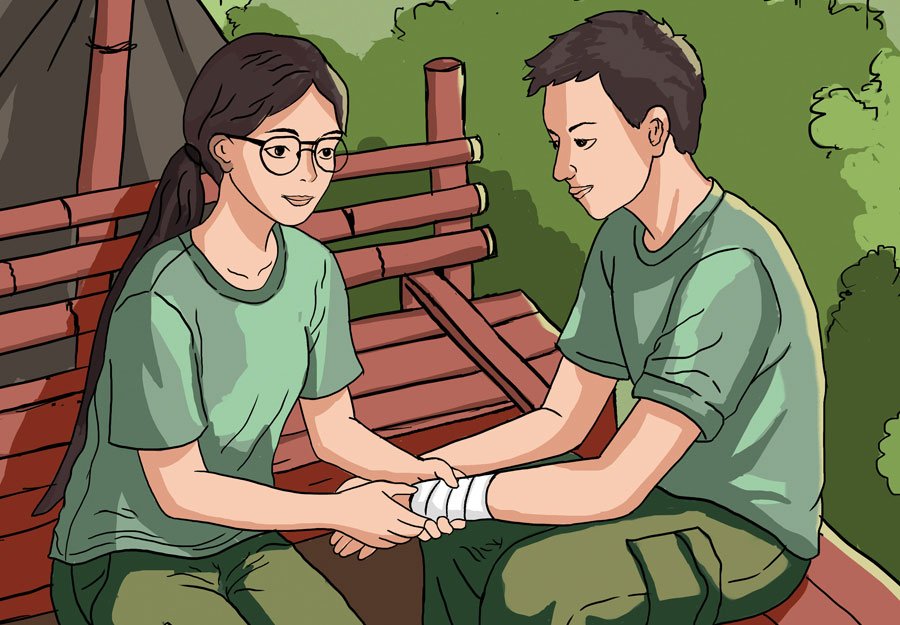
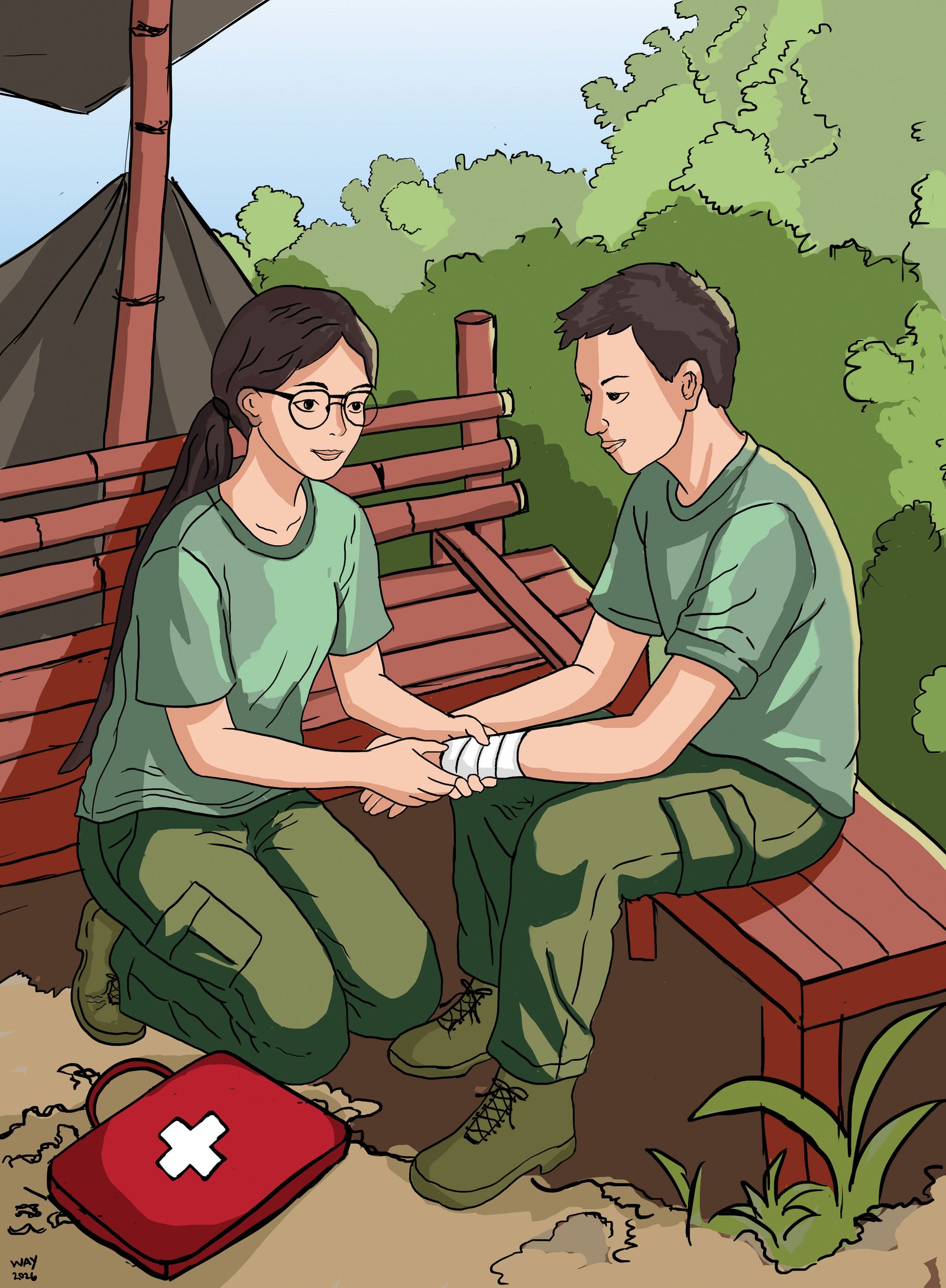
I am a frontline medic,” says thirty-two-year-old Ma Hnin (her revolutionary name) as she sits on a bamboo bench at a pro-democracy resistance camp on the border of Bago Region and Karen State, Myanmar. “This revolution will only succeed if we do it. It has to include us.” With long black hair, glasses, and a loose-fitting T-shirt, she seems far removed from the stereotypical image of a rebel medic working in a warzone.
Ma Hnin lives in a camp, hidden along a dirt road, that serves as a coordination point for forces fighting Myanmar’s military junta, which seized power in an illegal coup on 1 February 2021. Earlier that morning, a Y-12 surveillance aircraft and a Myanmar military jet fighter had flown overhead and dropped at least two bombs near the frontline—a reminder that, even in moments of relative calm, the threat of attack is never far away.
Since the earliest days of the return to military rule, Ma Hnin has been part of the resistance movement. After participating in the nationwide Civil Disobedience Movement and anti-coup protest, she joined the People’s Defense Force (PDF) as a medic. The PDF serves as the armed wing of Myanmar’s National Unity Government, the civilian administration established by elected lawmakers ousted by the military coup, ethnic representatives, and democracy activists.
More from Mekong Review
-

A poem from Maung Day
-
A poem by Maung Htike Aung.
-
The Burmanisation of language in Myanmar
- Tags: Issue 44, John Quinley III, Myanmar, Philip Bahardu, Way