

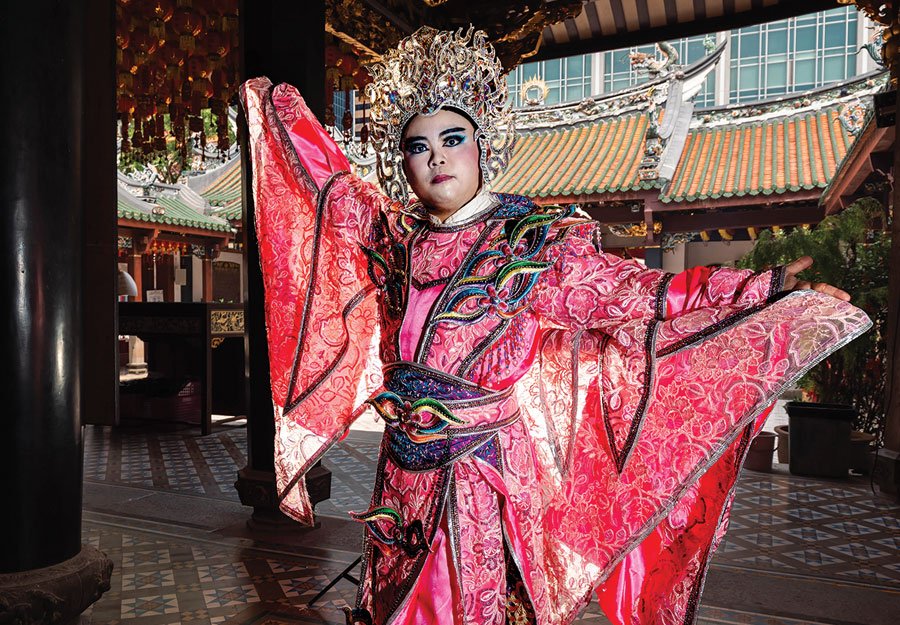
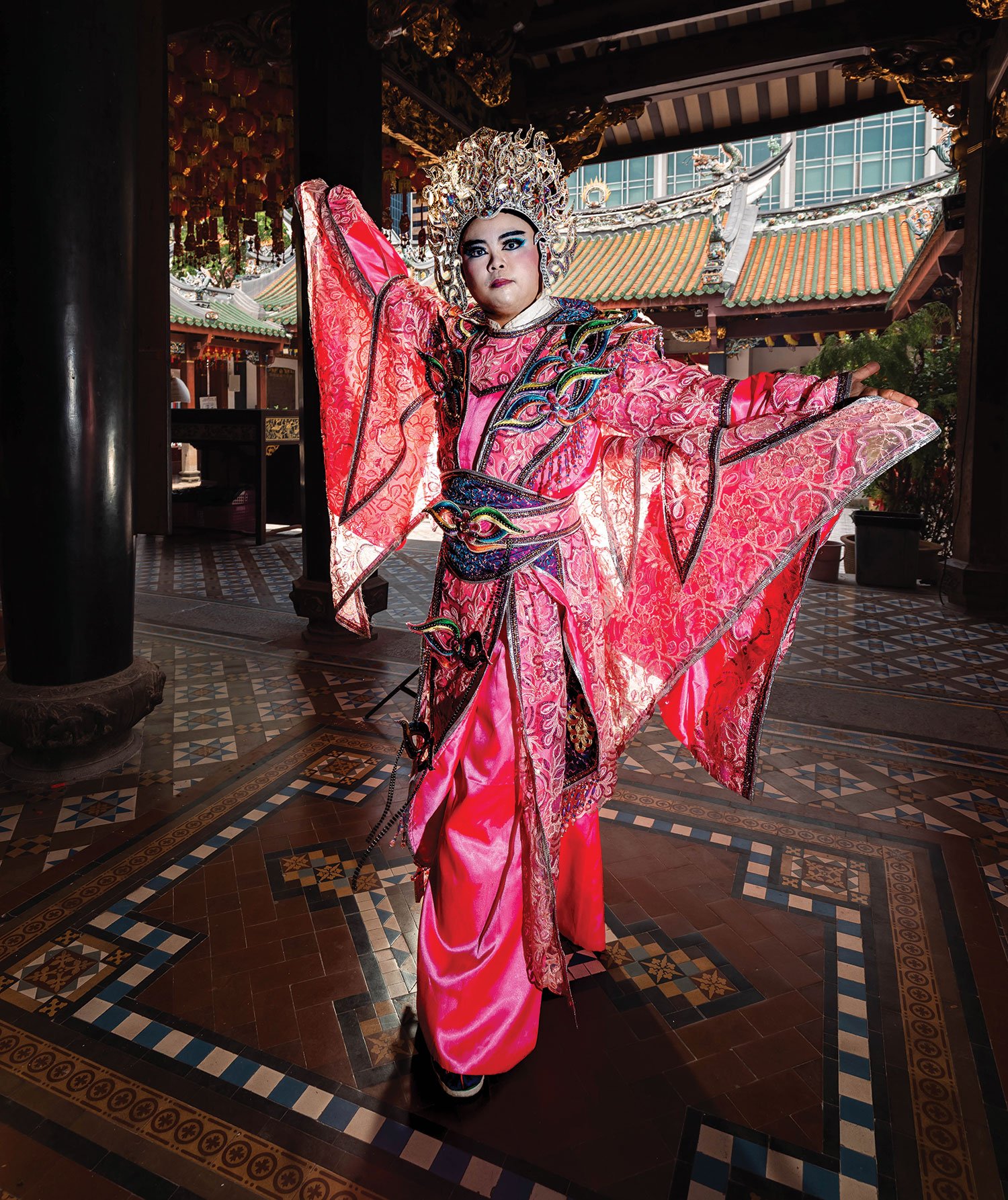
If we stop, it will disappear,” Alex Goh says. “It’s as simple as that.”
On certain nights in Singapore, a stage appears where there was none. Metal scaffolding rises in the late afternoon. Fluorescent tubes and coloured bulbs are strung overhead. Costumes arrive in plastic garment bags, folded and refolded from previous nights. By dusk, a carpark, a temple forecourt, or an open field has shifted into something else: an open-air theatre. The ground is uneven. The lighting is harsh. The sound carries unpredictably. And yet, the transformation is complete. There’s no formal announcement. No ticketing system. Only those who know, come.
When the first notes begin, another Chinese street opera unfolds. What’s performed isn’t just a story but the continuation of an art form that has travelled across seas, taken root in new environments, and adapted itself continuously to stay alive. The story of gezai opera (歌仔戲) is, in many ways, a history of movement: of people, dialects, melodies, and lived traditions traveling across the Minnan-speaking world. It’s a genre shaped not by a single origin point, but by centuries of migration and artistic exchange, carried across the water from southern Fujian to Taiwan by communities who transported their songs like essential cargo.
More from Mekong Review
-
Is the twenty-first century an Asian one? According to former Singaporean diplomat Bilahari Kausikan, this is entirely the wrong question to be asking.
-
The taste of home
-
There is only one place to eat this
- Tags: Angela Sim, Issue 43, Singapore