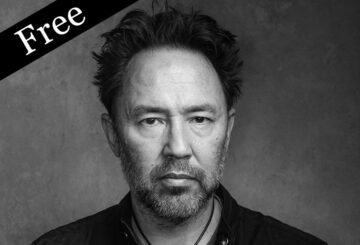
Stand and fight
Calum Stuart
The way Daniel York Loh, a London-based actor of Singaporean and British heritage, sees it, there’s no way anyone can resist rising facism simply by being ‘reasonable’ and ‘sensible’.


The way Daniel York Loh, a London-based actor of Singaporean and British heritage, sees it, there’s no way anyone can resist rising facism simply by being ‘reasonable’ and ‘sensible’.
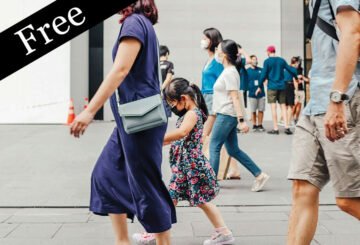
Singapore proudly declares itself a “pro-family” nation. But in Unease: Life in Singapore Families, Teo You Yenn uncovers a sense of unease among Singaporean parents from all walks of life.
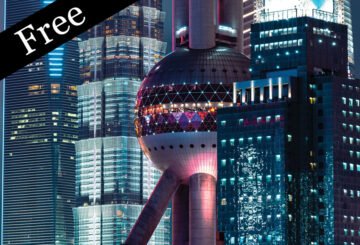
Is the twenty-first century an Asian one? According to former Singaporean diplomat Bilahari Kausikan, this is entirely the wrong question to be asking.
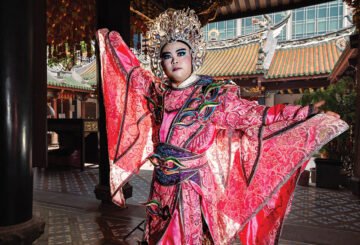
In Singapore, Chinese street opera survives not through preservation alone; it also requires constant recreation and regeneration.
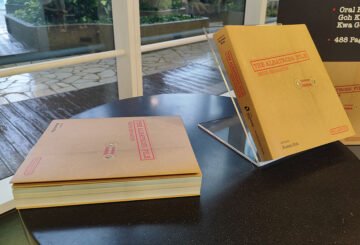
The publication of The Albatross File: Inside Separation is very welcome for those with an interest in the Singapore story—though less for the hitherto secret documents it reproduces and more for the hitherto secret oral histories.

In Singapore, queerness is considered an aberration—it jams up the works, causes panic and confusion. Numerous accounts of in-person discrimination support this, especially when it comes to hair.
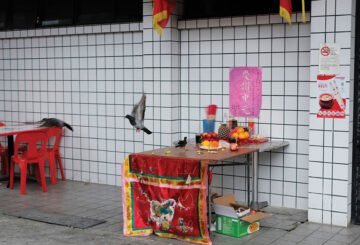
A short story by Liv.
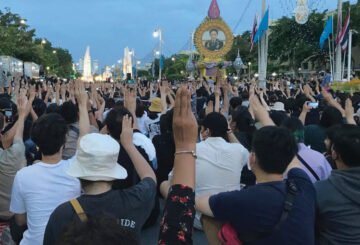
We don’t know how history will remember or talk about the Milk Tea Alliance. But it isn’t the only recent manifestation of transnational solidarity with the youth at its core.
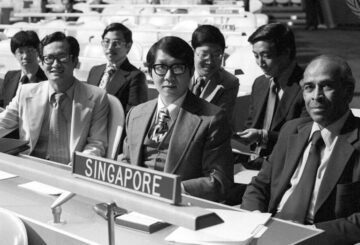
An idealistic and highly personal approach to foreign policy is what sets Tommy Koh apart from many of his fellow luminaries in Singapore’s diplomatic sphere.

By writing poetry from death row, Pannir Selvam Pranthaman sets out to prove that he’s more than just a condemned prisoner.

A short story by Justina Lim.

How does one love a world that is increasingly fractured? A reflection on curating at Objectifs and participating in the artistic projects by Chu Hao Pei and Arie Syarifuddin in Singapore.

Waves Rising beautifully commemorates Ho Poh Fun’s life’s work, perhaps feeling like it needed to smoothen out some things bubbling just under the surface.

A comic by Juliette Yu-Ming Lizeray, reflecting on her shifting relationship with hope.

David Graeber’s notion of “total bureaucratisation” isn’t just a fitting analytical tool for global contemporary life; it also mirrors, with uncanny accuracy, the paradoxes of Singapore’s cultural policy.

Rebecca Toh, the founder of Casual Poet Library, on carefree wandering and taking one’s time.

Did the man who inspired a character in Joseph Conrad’s novels leave behind a fortune in a Swiss bank?
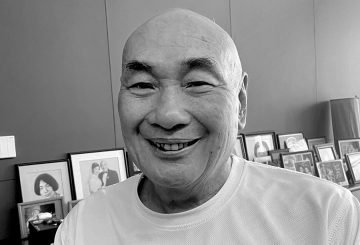
Singaporean actor Lim Kay Siu on the differences between acting in Hollywood and in Singapore, the power of theatre to raise public awareness of important issues, and getting political on live streams while playing a ukulele.

We’re all just finding ways to relieve the anxieties of living in a world that’s spinning out of control.
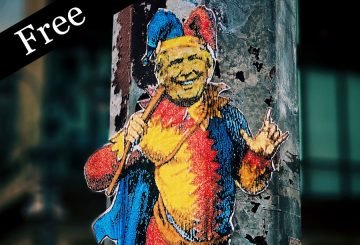
How to score points when the score-board always changes?

While the bulk of the book focuses on diplomacy, Living the Asian Century can also be read as an introduction to the governance style of Singapore’s first generation of leaders as seen through Mahbubani’s eyes.

Despite having held a number of important portfolios as a minister in the city-state’s early years, S. Rajaratnam’s legacy remains largely obscured in Singapore’s public imagination.
Instead of asking what is or how to be one’s authentic self under capitalism, Peripathetic is curious about whether capitalism leaves us with any room for authenticity at all.

The lesson in Ganapathy’s book is salient and applicable to societies beyond Singapore: working class ethnic minorities disenfranchised by dominant societal structures often find themselves enmeshed with criminal justice institutions.

Poetry from Brandon K. Liew and Daryl Lim Wei Jie 林伟杰

Like many in Singapore, artists exist on a strange monochromatic spectrum—the lighter side provides access to opportunities and awards, the darker potentially leading to loss of employment. How should one navigate this space?

A focus on Singaporean authors, coupled with the fact that bookstores in the city have found it increasingly difficult to survive, makes Book Bar feel like an anomaly.

That animals and plants have been inserted, in increasingly powerful ways, in historical narratives represents a powerful challenge to human-centred accounts that have long been dominant.

A poem from Eileen Chong

Eileen Chong’s poetry defies national categories, making its way into cracks and crevices like an orchid in cement, grown beautiful and a little wild.

In his films, Singaporean director Daniel Hui seeks out peripheral figures, tending to them with the kind of attention usually reserved for prominent historical figures.

The works featured in Joanne Leow’s monograph, Counter-Cartographies: Reading Singapore Otherwise, are examples of (mostly) Singaporeans who refuse to conform to top-down formulations of how to live on this island.

Amid Southeast Asia’s array of noodle dishes, bak chor mee doesn’t have the exalted status of pho or pad thai. Nevertheless, it’s a beloved staple dish consumed by Singaporeans, and even became a political statement once.

As the forest and the tiger vanish, the myths that enchant them evolve and find their way into other vernaculars beyond folklore and popular beliefs.

A piece of flash fiction by Linda Collins and Noelle Q. de Jesus. Commissioned as part of a collaboration between RMIT’s nonfiction/lab and Mekong Review.

bani haykal’s work embodies durational labour, culminating in serial ruminations on topics that keep him awake at night—capitalism, environmental protection, widening inequality divides.

In Southeast Asia, the short story has perhaps been more significant than the novel: it is portable, more easily translated and it also migrates.

In the two novellas, journeys depart from or hope to return to “an eastern port” (Singapore) but instead they both disappear into the obscurities of the seas.

Like a magnificent tortoise, my aunt, the long-time Singaporean activist Constance Singam, ambles towards us to meet my children for the first time.
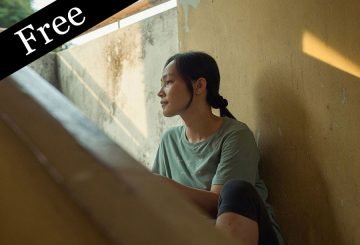
Both Oasis of Now and Tomorrow Is a Long Time are meditations on love, time and space.