

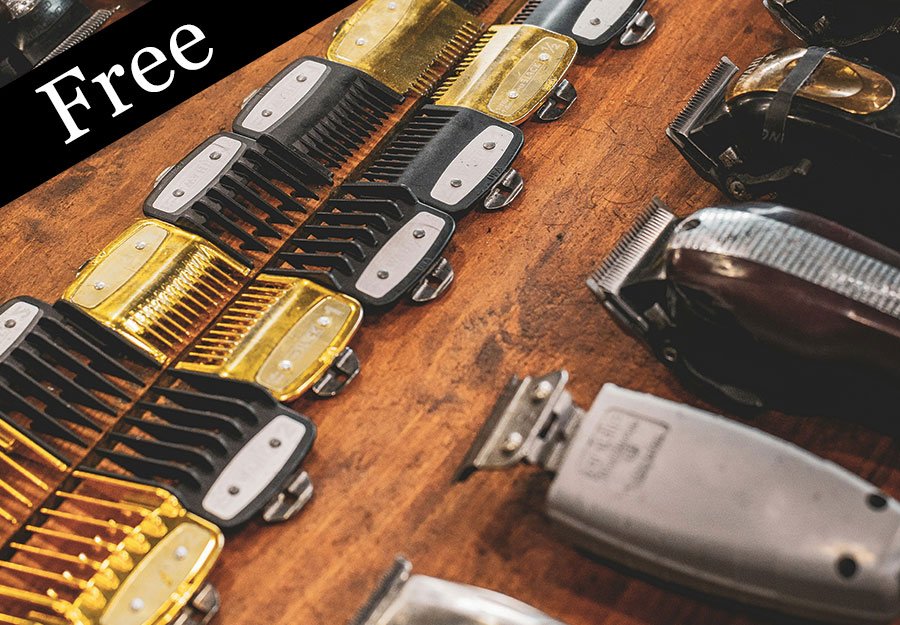
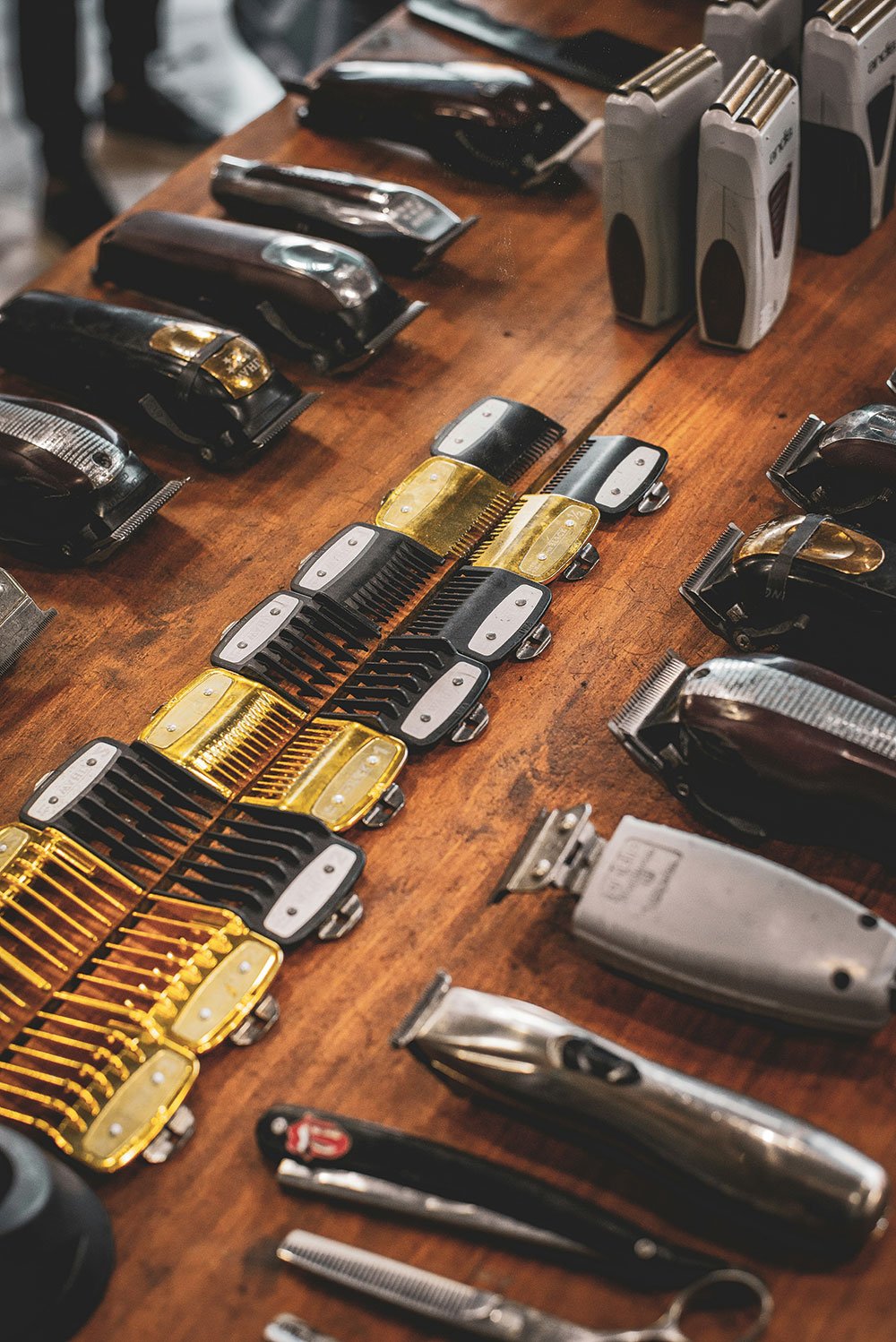
In 1972, the Singaporean government announced a policy that sounded like a villainous plot in a children’s cartoon: Operation Snip Snip. Cue the dramatic music. If it sounds juvenile, it’s because it was. Determined to eradicate the sinister, odious forces of “hippieism”, the government set out on a mission to give every long-haired man a sensible haircut. Beards were fair game, too, even for people who didn’t live in Singapore. Travellers were stopped at immigration with a warning: snip snip, or you can’t stay. Some acquiesced, with the rationale that they would “do as the Romans do”. Others, namely musicians who had signed agreements with nightclubs to perform in the city-state, were less forgiving. They found it ludicrous, as most of us would today. The people who profited most? Barbers. M. Kandasamy, a barber with a shop near Singapore’s checkpoint, said he saw more business that year than he ever had in his twenty-year career. He even hiked his prices—from S$1.20 to S$1.50—and stayed open hours later than his usual closing time. Another barber, Mahmud bin Haji Ahmad, described similar changes to his business as droves of young men came in for the state-mandated chop.
While Operation Snip Snip itself may be a thing of the past, the driving idea behind it remains: that one’s appearance is somehow closely linked to their morality and ability to abide by Singapore’s laws. When reflecting on Snip Snip in 1972, S. Rajaratnam, the foreign minister at the time, laid it out clearly: long hair was “one of the symbols to which hippies attach great importance” and, by mandating that men cut their hair, “[the government] would be deterring many young people who are just being fashionable from being drawn into what is basically an obscene and pernicious lifestyle”. Strong words for hippies.
Decades later, the same ideology can be found in the queer and gender non-conforming experience. Same-sex marriage isn’t recognised in Singapore, and media censorship prevents LGBTQ+ people and their relationships from being represented positively. Section 377A of the Penal Code, the law criminalising sex (even if consensual) between men, was only repealed in 2022, with the conclusion that “gay people deserve dignity, respect, acceptance”. Yet they can’t get married, can’t access the same social benefits as their peers, can’t be recognised as the parents of their children, and continue to be stigmatised in the media, in society, in schools, and in the workplace.
In 2022, the Housing and Development Board (HDB) posted a seemingly innocuous two-panel comic on its Facebook page. In the first panel, titled ‘My parents at age 29’, a couple is seen doing laundry on bamboo poles that hang outside their window. The second panel—‘My parents at age 65’—depicts the same couple, now with wrinkles on their faces and glasses, doing their laundry on a retractable rack. The comic, intended to promote the new, safer, and less taxing method of drying clothes, attracted comments about something else entirely: some thought the couple, each depicted with long bangs flopping over their foreheads, looked like two women. “Are we being infiltrated by liberal ideals covertly?” asked Iris Koh, a local anti-vaccine campaigner. Hours later, HDB replaced the image. One of the characters now had much shorter hair than their counterpart, seemingly in an attempt to make them more distinguishably male. HDB added a statement: “Arising from feedback, we improved the graphics to avoid misunderstanding surrounding the characters featured in the graphic.”
Queerness of any kind, real or perceived, is considered an aberration—it jams up the works, causes panic and confusion. Numerous accounts of in-person discrimination support this, especially when it comes to hair. Queer and trans people are told to grow out or cut their hair at work, are eyeballed in restrooms and told to leave, are bullied physically and emotionally in school, are misgendered and mocked.
Hope, then, is a precious resource. The first time I walked into what became my go-to barbershop, the receptionist looked confused. Yes, she confirmed, I had an appointment, but I must be mistaken. “We only cut men’s hair,” she explained. “This is a place for men. I…” Everything inside me threatened to bubble up and froth over. I stood firm, voice steady, and calmly explained that I had an appointment. My hair was short, too, I added, so it was unclear why it would be a problem.
The receptionist continued to eye me shiftily, clearly on the verge of kicking me out, until one of the barbers emerged from the back of the shop. “What’s the problem?” he asked, and the receptionist gestured vaguely in my direction. “She…” I cannot remember if I rolled my eyes, or whether I let the fear in them shine through instead. Please. Please, just let me sit down. Just get this done and I will be gone.
The barber nodded and motioned for me to sit down, not exactly addressing the receptionist, mumbling something to the effect of, “It’s fine.” I walked to the chair, relief and anxiety pressing tightly against my skin.
Years later, the shop would open another branch closer to my home—I started going there instead, booking an appointment with no preference for a particular stylist.
The first time I walked in, a woman with hair cropped close to her head, with the exception of spiky bangs falling over her eyes, ushered me in. We rarely spoke, except for when I recited my script: undercut, trim the top, number three on the sides. The haircuts were swift and skillful. Each time, I stroked the sides and back, marvelling at how little it took to feel like myself again.
When I let my hair grow out too long, Alyx would gently admonish me: “How long never cut already?” During one of our rare conversations, she surveyed my frame, my cropped black T-shirt and high-waisted green shorts. “You must eat more, very skinny,” she said, her expression remaining serious as I laughed in response. I looked forward to seeing her each month.
It’s likely not a surprise that openly queer or LGBTQ+ friendly barbershops are not a thing in Singapore. Instead, Reddit pages like r/sglgbt provide some suggestions of salons or barbers that are accommodating and friendly, but it’s all by word of mouth. One particular stylist at a certain salon will actually give you the feminine cut you want, not what they think you want. A certain shop has a barber with a pride flag at her station, go find her. This salon, they won’t give you a pixie cut instead of an undercut. The tips represent quiet solidarities, networks formed by people just trying to get a damn trim. For queer people, it’s often the simplest of errands that has to be engineered in this way, that has to be manoeuvred around with skill and precision, lest the wrong person’s sensibilities are threatened.
It’s not just Reddit, though: before social media, queer communities created and found vital lifelines online, and continue to do so. UtopiaAsia, a website with a quintessential 1990s design, provides useful information for “Asia’s Gay & Lesbian Community” when travelling: basic background on a country’s history and current context when it comes to LGBTQ rights, the state of the country’s gay scene, which hotels are gay-friendly, and more. The listings are personal, snarky, and playfully crude, perhaps providing an additional layer of certainty that real people are behind the posts. Before social media, websites like these—a subheading on UtopiaAsia reminds readers that the website has been around for three decades—were likely one of the most up-to-date sources of information for queer people to travel safely and joyfully. The fact that UtopiaAsia is still somewhat active is a testament to the strength of online networks as real locations of solidarity. I might not know you personally, these websites seem to say, but I want you to be safe and happy.
Months after we first met, Alyx motioned to speak to me before I left the shop. She talked about how the shop was changing hands, and that she didn’t know if the new owner would keep her on. I apologised, wished her all the best, and took her phone number in case she returned.
I don’t know whether I’ll see Alyx again, or when it might be appropriate for me to text and ask if she might be around for another side-shave. I got a haircut by another barber at the shop; it was perfectly fine, but he seemed not to know what to make of me, shifting nervously and hesitating over whether to pat aftershave into my neck. I’m lucky that I’ve not been met with hostility in barbershops or elsewhere in public for some years now. I think of every trans and gender non-conforming person in this country for whom that might be different. I think of kids hacking at their locks with scissors in secret. I think of incarcerated women, their heads shorn, shunted into male prisons and at the mercy of a violent system. I then think of us in the spaces where we may finally be ourselves: young men defiantly headbanging at punk shows, long, sweaty hair flung into the air. Strangers complimenting each other at queer parties and drag shows, touching the sides of fresh fades and grinning. I even think about the original couple from that HDB comic, smiling gently as they hang up their clothes. Maybe I’ll see Alyx next month, her face placid, pop hits playing quietly in the background. A completely unremarkable ritual.

More from Mekong Review
-
The publication of The Albatross File: Inside Separation is very welcome for those with an interest in the Singapore story—though less for the hitherto secret documents it reproduces and more for the hitherto secret oral histories.
-
In Singapore, Chinese street opera survives not through preservation alone; it also requires constant recreation and regeneration.
-
Is the twenty-first century an Asian one? According to former Singaporean diplomat Bilahari Kausikan, this is entirely the wrong question to be asking.
- Tags: Issue 43, RMIT, Singapore, Varsha Sivaram
