
“I is another”
Sasha Han
In his films, Singaporean director Daniel Hui seeks out peripheral figures, tending to them with the kind of attention usually reserved for prominent historical figures.


In his films, Singaporean director Daniel Hui seeks out peripheral figures, tending to them with the kind of attention usually reserved for prominent historical figures.

With little transparency, top-down literary censorship in Vietnam is complex, capricious and contingent upon those implementing the ‘rules’.

Politics, memory, love, obsession and death… all can become fertile material for a writer like Veeraporn Nitiprapha.

The works featured in Joanne Leow’s monograph, Counter-Cartographies: Reading Singapore Otherwise, are examples of (mostly) Singaporeans who refuse to conform to top-down formulations of how to live on this island.
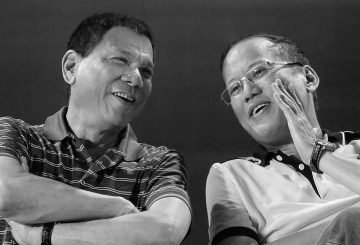
How did the Philippines descend into a demagogic dystopia? How can one explain the rise of the proto-fascist ideology of Dutertismo? And what are the lessons for democracies in the twenty-first century?

A short story by Ayesha Khan

Americans like to think that the most cruel excesses of colonialism are reserved for the histories of the British or the French, but Kim A. Wagner draws connections between American behaviour in the Philippines and the tactics of other colonial powers.

Not many Vietnamese books keep track of the experience of living under suffocating communism in the North or keeping up with the get-rich-quick sentiment dominant in the South. Thuận’s Elevator in Sài Gòn captures this with nuance and peculiarity.

Abhishek Mehrotra recounts his experience with the Indian adoption system as he and his partner bring their daughter home.

Hong Kongers from the Indian subcontinent, the Philippines and Indonesia have lived in the city for a long time. Yet Asian minority Hong Kongers often end up segregated from ethnic Chinese children in the education system.
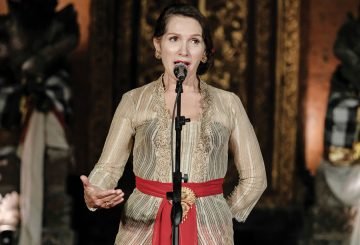
An interview with the founder and director of the Ubud Writers & Readers Festival

Taeyeon Song reflects on what Glasgow taught her about being Korean.

The Buddermokan shrine in Sittwe is said to have been built in 1756. It has since survived colonialism, war and Nature—a stubborn relic of history in a hostile environment that wanted it gone.

When rising sea levels threaten to submerge the gravesite of his father, a young man is forced to return to his hometown and confront the dilemma between honouring his father’s dying wishes or to give in to nature.

Amid Southeast Asia’s array of noodle dishes, bak chor mee doesn’t have the exalted status of pho or pad thai. Nevertheless, it’s a beloved staple dish consumed by Singaporeans, and even became a political statement once.

In the celebrated writer’s short story collection, human brittleness and the everydayness of identity play out in quiet episodes beneath the crumbling gaze of the Eternal City.

“Einstein saw space and time as an intrinsically linked existence: how the passing of time is relative to the space we inhabit, which is to say, how we find meaning in our lives depends greatly on where we stand.”

When Witit Chanthamarit was a child, independent bookstores were not the rarity they are today. In opening Vacilando, he hopes to recapture the sense of community he’d felt before.
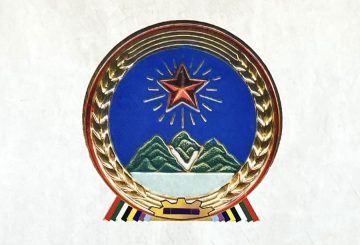
Bertil Linter’s book on the Wa isn’t merely a fascinating look at a little-penetrated hermit kingdom; it’s also a case study of how China manipulates the politics of its border zones in pursuit of global ambitions.

In Vanessa Chan’s The Storm We Made, a family is undone by a secret betrayal during the British and then Japanese colonisation of Malaya.

Over a quarter of a century, Malaysiakini grew from a scrappy start-up to a Malaysian media institution. In some ways, to know the history of this news portal is to know the history of modern Malaysia.

The Uyghurs: Kashgar Before the Catastrophe and Under the Mulberry Tree: A Contemporary Uyghur Anthology are testament to the power of memory as resistance against crackdown and erasure.

A poem from Faiz Ahmad Faiz
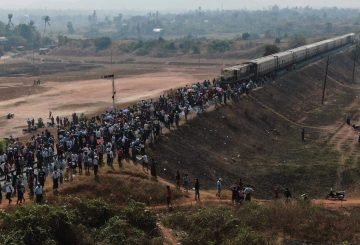
Clare Hammond, author of On the Shadow Tracks, did not love the trains she rode. But her exploration of Myanmar’s dilapidated tracks reveals the link between the railways and the military’s power, while documenting the lives on and around ramshackle trains.
A poem by Alyza Taguilaso
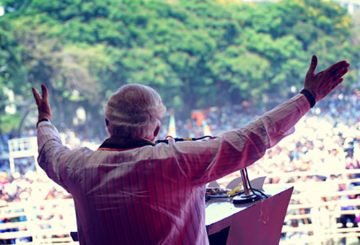
India goes to the polls mid-April in a huge democratic exercise that will take over a month. But the nature of Indian society and democracy has changed quite fundamentally in the past decade.

A conversation with Korean queer author and contemporary artist Ibanjiha on their art of humour and succeeding through the heteronormative and hyper-capitalist social order of South Korea.

Gordon Conochie’s book amounts to perhaps the most detailed autopsy yet of the death of Cambodia’s democracy.

The poet Kyi Zaw Aye once asked, “How can we encounter true love in times of war?” Since the 2021 coup in Myanmar, some couples have been trying to find their own answers.

As the forest and the tiger vanish, the myths that enchant them evolve and find their way into other vernaculars beyond folklore and popular beliefs.

Decades after the end of Suharto’s New Order regime in Indonesia, a collective nostalgia for the supposed ‘good old days’—driven by historical revisionism and propaganda—is influencing contemporary Indonesian politics.

Anne Stevenson-Yang recounts the heady giddiness of Chinese economic growth, but concludes that what had once seemed to last forever has turned out to be little more than an illusion.
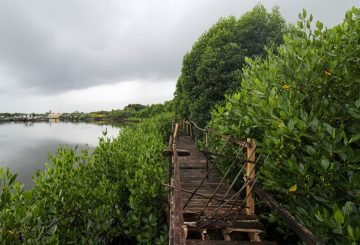
The destruction wrought by Typhoon Haiyan will never be forgotten by Filipinos—even if some valuable lessons still haven’t been learned a decade later.

Although democracy and media freedoms are declining in India, filmmaker Vinay Shukla seeks to inspire people to show up courageously to create a better society for everyone.
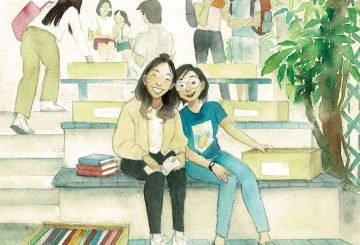
At a time in which large bookstores have fallen to pressures like Hong Kong’s sky-high rents, gentle books survives as a nimble pop-up for used English-language books.

“Every time I’m here in Taiwan, I get to unpack a bit more of my family’s murky history.”

In their respective books, Ian Johnson and Louisa Lim look at China’s underground historians of one kind or another.

A short story by Lý Văn Sâm, translated from Vietnamese by Ryan Nelson and Khanh Hoa Le.

A piece of flash fiction by Linda Collins and Noelle Q. de Jesus. Commissioned as part of a collaboration between RMIT’s nonfiction/lab and Mekong Review.
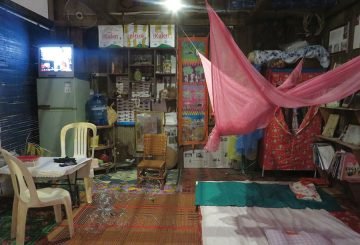
The arts can remind us of our connections to home and nature as we are propelled forward by development projects that prioritise profit over nurturing rootedness and well-being.