Claiming home
Carolyn Nash
Ava Chin’s memoir is a story of roots dismissed and homes denied.
Nature provides expressive backdrops for Han Kang’s fiction; while she chronicles human frailty and barbarity, she also allows the light to seep in through the foliage.
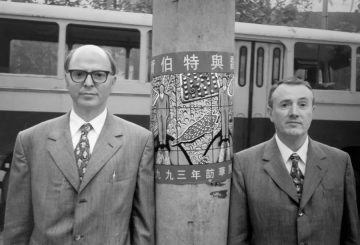
Among a post-Tiananmen flurry of activity, Gilbert & George, the British duo who’d been a dominant force in the UK’s 1980s art scene, made a trail to China and inspired many looking to break free of their constraints.
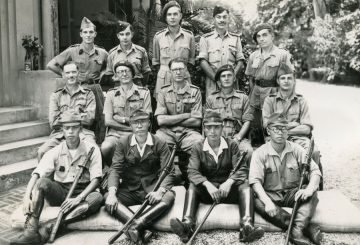
Lieutenant Colonel E.D. Murray—“Moke” to friends and fellow officers—knew nothing about Cambodia, but for a few brief weeks towards the end of 1945, he was, in his own words, its “uncrowned king”.
Both Patricia Evangelista and Neferti X.M. Tadiar’s books question what it means to be human. While some are valued because of their contribution to capitalism, those who are less productive in the profit-making sense are treated as disposable.
Few who encounter Pas-ta’ai, the ritual to the “little people”, and the complex, sometimes contradictory, folklore associated with it are unmoved. Some even become obsessed with unravelling the ceremony’s mysterious origins.
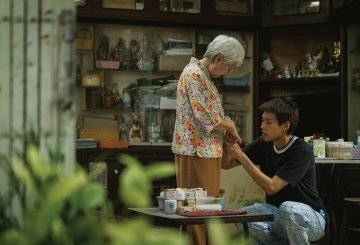
Beyond the reality of family relationships, How To Make Millions Before Grandma Dies paints a portrait of Thai Chinese culture that’s at once singular and relatable.
Instead of asking what is or how to be one’s authentic self under capitalism, Peripathetic is curious about whether capitalism leaves us with any room for authenticity at all.
The lesson in Ganapathy’s book is salient and applicable to societies beyond Singapore: working class ethnic minorities disenfranchised by dominant societal structures often find themselves enmeshed with criminal justice institutions.
For a relatively slim volume, Lio Mangubat’s Silk, Silver, Spices, Slaves: Lost Tales from the Philippine Colonial Period, 1565–1946 covers a broad swath of Philippine history.
Indonesia’s National Library may not contain a lot on West Papua, but five books, reviewed by Andreas Harsono, describe its tormented history.
Theroux’s Burma Sahib is a novel about awakenings: sexual, political and literary. Filling a historical void with fiction, Theroux invents and probes every nook and cranny of Orwell’s life in Burma.
Thae Yong-ho’s book, a must read for the dedicated band of North Korea watchers, reminds us of the millions still struggling to survive between the 38th Parallel and the Yalu River.
Zhou Enlai might have attempted to temper some of Mao Zedong’s worst excesses, but he did not have the courage to defy Mao when it counted the most.
Hai Fan’s Delicious Hunger doesn’t focus on major historical milestones, but it doesn’t mean that the experiences described in this collection of short stories are inconsequential—quite the opposite.
She Wanted to be a Beauty Queen is a good read for anyone, but, together with supplementary material like George Quinn’s comprehensive afterword, is an especially terrific resource for students of Indonesian or Southeast Asian literature.
That animals and plants have been inserted, in increasingly powerful ways, in historical narratives represents a powerful challenge to human-centred accounts that have long been dominant.
Eileen Chong’s poetry defies national categories, making its way into cracks and crevices like an orchid in cement, grown beautiful and a little wild.
The works featured in Joanne Leow’s monograph, Counter-Cartographies: Reading Singapore Otherwise, are examples of (mostly) Singaporeans who refuse to conform to top-down formulations of how to live on this island.
How did the Philippines descend into a demagogic dystopia? How can one explain the rise of the proto-fascist ideology of Dutertismo? And what are the lessons for democracies in the twenty-first century?
Americans like to think that the most cruel excesses of colonialism are reserved for the histories of the British or the French, but Kim A. Wagner draws connections between American behaviour in the Philippines and the tactics of other colonial powers.
Not many Vietnamese books keep track of the experience of living under suffocating communism in the North or keeping up with the get-rich-quick sentiment dominant in the South. Thuận’s Elevator in Sài Gòn captures this with nuance and peculiarity.
In the celebrated writer’s short story collection, human brittleness and the everydayness of identity play out in quiet episodes beneath the crumbling gaze of the Eternal City.
In Vanessa Chan’s The Storm We Made, a family is undone by a secret betrayal during the British and then Japanese colonisation of Malaya.
Over a quarter of a century, Malaysiakini grew from a scrappy start-up to a Malaysian media institution. In some ways, to know the history of this news portal is to know the history of modern Malaysia.
The Uyghurs: Kashgar Before the Catastrophe and Under the Mulberry Tree: A Contemporary Uyghur Anthology are testament to the power of memory as resistance against crackdown and erasure.
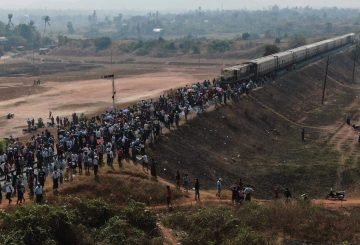
Clare Hammond, author of On the Shadow Tracks, did not love the trains she rode. But her exploration of Myanmar’s dilapidated tracks reveals the link between the railways and the military’s power, while documenting the lives on and around ramshackle trains.
Gordon Conochie’s book amounts to perhaps the most detailed autopsy yet of the death of Cambodia’s democracy.
As the forest and the tiger vanish, the myths that enchant them evolve and find their way into other vernaculars beyond folklore and popular beliefs.
Anne Stevenson-Yang recounts the heady giddiness of Chinese economic growth, but concludes that what had once seemed to last forever has turned out to be little more than an illusion.
In their respective books, Ian Johnson and Louisa Lim look at China’s underground historians of one kind or another.
The transnational reproduction of Chinggis worship in Mongolia is part of a concerted effort to bring back an identity-defining practice.
Throughout ancient China, mortuary cultures had been evolving for thousands of years before the Qin dynasty, even long before the date of the oldest extant form of systematic Chinese writing.
In short vignettes, Y-Dang Troeung gives a compelling account of the journey which brought her family from Cambodia’s Kampong Thom to white rural Canada, beyond the feel-good newspaper headlines.
The China-Australian Migration Corridor delves deep into historical foundations, contemporary trends and policy considerations related to movement between China and Australia.
The Second Link curates writing that moves beyond the “exhausted metaphors and dusty tropes” of the longstanding rivalry between Malaysia and Singapore.
Susann Pham’s Vietnam’s Dissidents is a bold piece of empirical work and a welcome and timely addition to the literature on contemporary Vietnam.
The End of August centres voices rarely heard in English-language fiction—Koreans living in Japanese-occupied Korea and the zainichi Korean diaspora of Japan.
Among the Braves is an attempt to tell the story and struggles of a city, through the lives of the people who have been active in a decades-long movement for democracy.
The twenty-six films screening in Retrospective: Wang Sha & Ye Feng are a testament to the legendary comedians’ breadth both as solo performers and a beloved pair.