
A tale of two homes
Emma Pei Yin
The China-Australian Migration Corridor delves deep into historical foundations, contemporary trends and policy considerations related to movement between China and Australia.


The China-Australian Migration Corridor delves deep into historical foundations, contemporary trends and policy considerations related to movement between China and Australia.

The Second Link curates writing that moves beyond the “exhausted metaphors and dusty tropes” of the longstanding rivalry between Malaysia and Singapore.
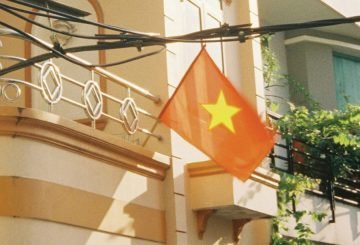
Susann Pham’s Vietnam’s Dissidents is a bold piece of empirical work and a welcome and timely addition to the literature on contemporary Vietnam.

The End of August centres voices rarely heard in English-language fiction—Koreans living in Japanese-occupied Korea and the zainichi Korean diaspora of Japan.

Among the Braves is an attempt to tell the story and struggles of a city, through the lives of the people who have been active in a decades-long movement for democracy.

The twenty-six films screening in Retrospective: Wang Sha & Ye Feng are a testament to the legendary comedians’ breadth both as solo performers and a beloved pair.

The Panthay Rebellion is a cautionary tale of what can go wrong when a central government is absorbed in its own priorities, leading to ethnic stereotyping and distrust between communities.

In Southeast Asia, the short story has perhaps been more significant than the novel: it is portable, more easily translated and it also migrates.

In the two novellas, journeys depart from or hope to return to “an eastern port” (Singapore) but instead they both disappear into the obscurities of the seas.

In Hieyoon Kim’s Celluloid Democracy: Cinema and Politics in Cold War South Korea, South Korean cinema is seen as part of a broader democratic social movement.

In eleven short stories, Prasanthi Ram probes the lives and relationships of nine women, exploring the narratives of love (or hate) that we develop within ourselves, alongside the ones shared with our families.
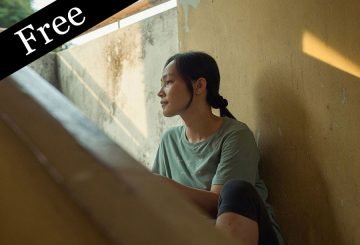
Both Oasis of Now and Tomorrow Is a Long Time are meditations on love, time and space.

Both The Sales Girl and If Only I Could Hibernate are contemporary coming-of-age stories set in Ulaanbaatar that thwart most viewers’ expectations of Mongolian cinema.

Hafsa Kanjwal contends that Bakshi Ghulam Mohammed’s state-building practices helped strengthen India’s hold over Kashmir while also enabling modernisation, which paradoxically reinforced a sense of alienation rather than reconciliation.
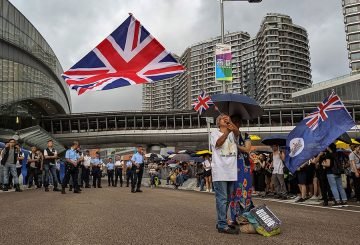
One of the interesting ideas thrown up in Hong Kong a few years back has been a certain nostalgia for the late colonial period. But how enlightened was colonial public policy-making?

Touching that sensitive Cambodian topic of land ownership and dispossession, Further and Further Away questions the nature of relationships entertained with the land.

What unfolds in Pulp III: An Intimate Inventory of the Banished Book is Shubigi Rao’s documentation of her encounters with texts in varying formats that, at some point in the past, confronted ‘banishment’.

Set in Singapore, catskull is a “neo-noir thriller meets coming-of-age mystery” that explores the violence of the city and the many forms that it takes: physical, racial, institutional.

What sets Rachel Heng’s historical fiction apart is how she moves beyond this understanding of History (with a capital H) by showing how grand events are mediated by everyday interactions.

Saadat Hasan Manto knew that it was not for him to analyse the multitudes people contain, and that often spill out from us without warning.
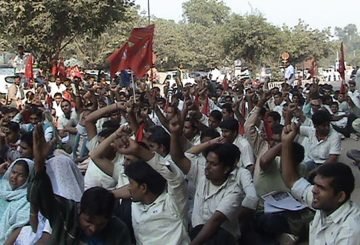
Japanese Management, Indian Resistance is an important work in understanding the larger ecosystem of foreign capital, more specifically that from East Asia, in India’s political-economic-social terrain.

Law-Yone’s penchant for the telling anecdote, the observation of, and connectivity to, the seemingly incidental, and the insight into the public and private personality makes this book a seminal contribution.

Shehan Karunatilaka’s Chats with the Dead is a darkly satirical novel with a good dose of the fatalistic humour Sri Lankans will find familiar.
In Now You See Us, Balli Kaur Jaswal has created a social world that magnifies the indignities and frustrations of everyday life as a migrant domestic worker in Singapore.
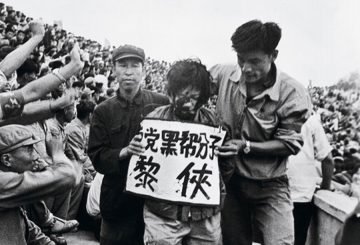
What a country doesn’t collectively talk about can often be more important than what it does. Tania Branigan’s book reveals the complexities of remembering the Cultural Revolution.

This could be After The Inquiry’s intention: to rile us up and stir a sense of indignation at a system in which the truth might not win out over politics and power

Janice Pariat chooses to manifest light in her writing across a ricocheting canvas that crisscrosses eras, characters in history, decisive philosophies in botany and momentous voyages.

Prism of Photography is an attempt to challenge the fixity of historical account, specifically the 6 October 1976 massacre at Thammasat University, through images.

In his memoirs, Burgess recalled Graham Greene telling him (not unkindly) that Time for a Tiger was an amusing but essentially frivolous book. Greene’s evaluation hasn’t stood the test of time.

It was hoped that social media would facilitate democracy. Today, we worry about misinformation polarising society and undermining democracy.

Lifting the stone on ‘Big Conservation’, Sarah Milne’s book demonstrates how conservation is inherently political—an effort to impose meaning on to landscape and people.

When Oliver Slow writes that the Myanmar military must return to the barracks, he presumably means they should only be in the barracks. Readers may wonder if they were ever so confined.

Chiang Kai-shek might have put in place measures that eventually led to Taiwan’s economic miracle, but political freedom for the Taiwanese was the last thing on his mind.

What Philip J. Stern offers is a reflection on the nature of power—how organisations created to share risks and raise capital for economic activities ended up becoming a dominant force.

Scot Marciel spent most of his time in service focused on one region. In Imperfect Partners, he brings readers through the evolution of US involvement and interest in Southeast Asia from Reagan through Trump.

Personal testimonies are always more powerful than hypothetical discussions, and Elaine Pearson’s extensive experience in investigating human rights abuses and advocating for positive changes serves as a practitioner’s handbook.

Fiona Sze-Lorrain’s novel Dear Chrysanthemums offers a provocative look at the defining events of the past half-century of Chinese history.

Unable to write openly about repression, Uyghur writer Perhat Tursun resorted to symbolism, invoking visceral descriptions in his novel The Backstreets to convey a sense of disconnect and despair.

Esther Yi’s debut novel grapples with social disconnectivity and fanaticism through an esoteric tale of a woman who falls desperately for a K-pop star and goes on a journey to integrate him into her life.

Queer Southeast Asia provides a multifaceted mosaic of the region, stretching for all to see the complexities that will always simmer beneath the volume’s name.