What is Asia?
Isaac Neo
Is the twenty-first century an Asian one? According to former Singaporean diplomat Bilahari Kausikan, this is entirely the wrong question to be asking.
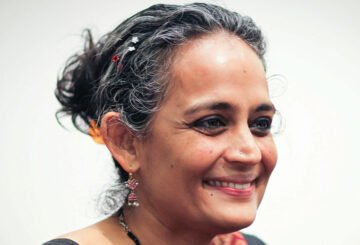
Mother Mary Comes To Me is Arundhati Roy’s most astute political act; in it, she fearlessly makes her most intimate confessions and, by doing so, reclaims the conditions under which she can be known.
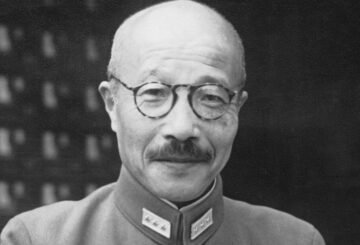
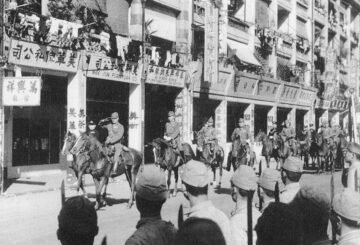
Is Tojo Hideki a “Great Man” who single-handedly determined the course of history, or is he merely a character in a bigger story, a reflection of many crashing political and social forces?
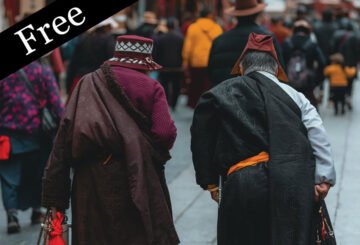
Packed with prose, poetry, stories, and reportage, Ocean, as Much as Rain is essential reading for all Tibetans and for anyone who wants to understand what it means to live under colonial occupation.
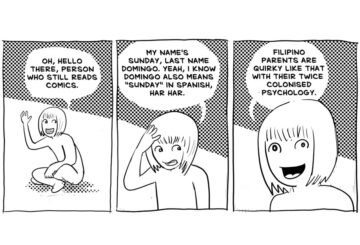
DELAY: A Comics Anthology is a timely salve in an era where artists are facing an existential battle against artificial intelligence and digitisation.
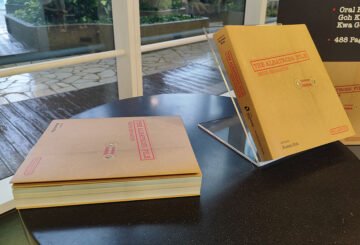
The publication of The Albatross File: Inside Separation is very welcome for those with an interest in the Singapore story—though less for the hitherto secret documents it reproduces and more for the hitherto secret oral histories.
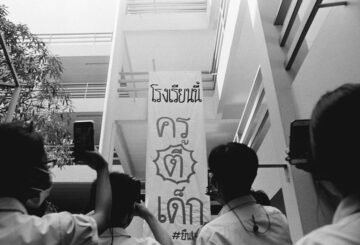
Arnold Is A Model Student shines a light on an unfair system, challenging the notion of what it means to be a “model” within such broken structures.
Chan Eng Thai the man may steel himself against disappointment by adopting the pose of a fatalist, but Chan the poet wields his words with a vigour that stubbornly defies the fading of the light.
By making Kintsugi, Lim Ji-soo found a way to tell her story of surviving sexual assault.
Ferdinand Magellan was a famous explorer, but Diaz makes it clear that his film isn’t some graceful portrait of the man.
There’s poignancy in the idea of artistic ambition sacrificed for something as fundamental as war. And Myanmar embroiled in civil war, it’s perhaps only natural that poets, like many of their countrymen, have taken up arms.
We don’t know how history will remember or talk about the Milk Tea Alliance. But it isn’t the only recent manifestation of transnational solidarity with the youth at its core.
Tyrus Wong’s extraordinary 106 years on earth, told in meticulous detail by Karen Fang, is a story of resilience and triumph.
With When Sleeping Women Wake, Emma Pei Yin takes her place in a long-running and constantly evolving tradition of Chinese female-centred historical fiction.
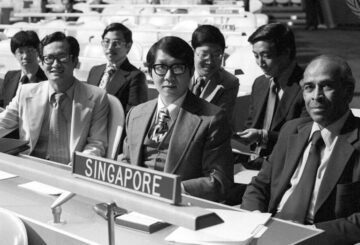
An idealistic and highly personal approach to foreign policy is what sets Tommy Koh apart from many of his fellow luminaries in Singapore’s diplomatic sphere.
Cybercrime is a big business, and some of its leading perpetrators are playing a cat-and-mouse game with the authorities in Southeast Asia.
Meeting with Pol Pot adds to Rithy Panh’s resume as the most prolific maker of films about the regime that took his family and terrorised his country.
By writing poetry from death row, Pannir Selvam Pranthaman sets out to prove that he’s more than just a condemned prisoner.
As discussions of a so-called nuclear power renaissance resurface, Return to Fukushima pushes us to (re)consider not only the ways we live but also the exploitative systems through which energy is produced and consumed.
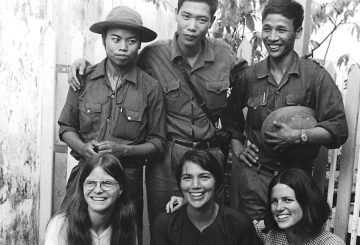
Claudia Krich’s Those Who Stayed: A Vietnam Diary is an invaluable primary source for those studying regime change, documenting firsthand the disintegration of the South Vietnamese government and the coalescence of a byzantine military administration in its wake.
The conceit of Chris Horton’s Ghost Nation is that most of the world treats Taiwan like it doesn’t exist, and he makes the case that Taiwan deserves bolder recognition.
The exploration of a character’s sexuality in Tash Aw’s latest novel has triggered backlash among conservatives in Malaysia, but pushing back in today’s fraught times is itself a complex undertaking.
For English language readers outside China, these translations of The Running Flame and Soft Burial help to reframe Fang Fang as a writer of more than Wuhan Diary.
As an attempt to preserve what is gone, Shen Fu’s writing endures as a reminder to treasure what we still have and what we will someday mourn.
Despite enduring humiliation, punishment, and incarceration, Xi Zhongxun’s loyalty to the Party—and even his “emotional attachment” to Mao Zedong—never wavered.
Stephen Simmons has produced an important record, with a wealth of historical information, that highlights the work of artists during the Sangkum era.
With both humanist insight and historical precision, Paul P. Mariani shows how Bishop Louis Jin Luxian was, above all, a Jesuit of his time.
Waves Rising beautifully commemorates Ho Poh Fun’s life’s work, perhaps feeling like it needed to smoothen out some things bubbling just under the surface.
Dina Zaman brings a lot from her past to Malayland, but she’s also firm in looking forward and seeking the humanness in Malaysia’s obsession for categories and othering.
If history is written by the victors, then literature is the rebellion of the defeated.
David Graeber’s notion of “total bureaucratisation” isn’t just a fitting analytical tool for global contemporary life; it also mirrors, with uncanny accuracy, the paradoxes of Singapore’s cultural policy.
Two group shows staged in Bangkok question mainstream Cold War narratives through contemporary art.
Dorothy Wai Sim Lau undertakes a nuanced interrogation of how fame, altruism and regional identity intersect in Asia’s transnational mediascape.
A review of two books on finding—or perhaps ‘freeing’ is a better word—one’s voice through acts of creation, whether it’s prose, poetry, painting, drawing or cooking.
You Must Take Part in Revolution combines powerful imagery with a compelling plot to convey the political turmoil we’ve experienced and might face in the near future.
In a new banner by Taring Padi and Noongar artists, the Noongar figures and Australian fauna and flora integrate with images from an rebellious Indonesian proletarian class in a bold synthesis, creating a dream-like, political logic.
Despite tofu’s lack of structural integrity, Russell Thomas notes that its versatility has given it the resilience to “stand up in a range of figurative and real-life settings”.
Kornel Chang, a diasporic Korean historian and author, paints a picture of a post-Second World War Korea searching for a singular vision of what independence looks like.
Simin Li’s book is a reminder that continuing assertions about the singularity of Chinese culture and politics belie the pluralism and diversity of the Sinophone tradition.
Shifting Horizons: The Generation of Emancipatory Architecture in Taiwan is a unique exhibition including the many aspects that make up architectural production and attempting to locate the formation of contemporary Taiwanese architecture.