
Merantau
Daryl Qilin Yam
Queer Southeast Asia provides a multifaceted mosaic of the region, stretching for all to see the complexities that will always simmer beneath the volume’s name.


Queer Southeast Asia provides a multifaceted mosaic of the region, stretching for all to see the complexities that will always simmer beneath the volume’s name.

A short story by Katrina Yu.

Baek Sehee writes: “The world tends to focus too much on the very bright or the very dark.” She steers clear of both extremes in her book. For this alone, it merits attention.

More than a conventional detective story, The Soul of Beijing unfolds into a vivid portrayal of the bustling metropolis, filled with colourful characters from all walks of life.
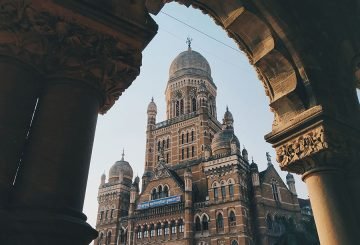
It is impossible to mention Mumbai without alluding to its former name, Bombay. Radhika Oberoi reflects on reading Salman Rushdie’s writing about the city.
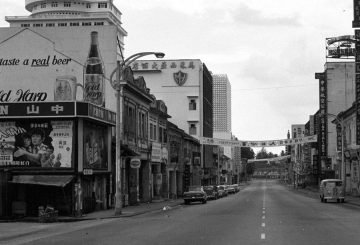
The publication of The Age of Goodbyes—the English translation of the award-winning novel by Li Zi Shu—was a celebrated event, eagerly awaited by connoisseurs and enthusiasts of Malaysian Chinese literature.

In Melody Kemp’s debut novel, Tree Crime, a young Lao teenager turns detective as a deadly virus circulates in her village. Marco Ferrarese reviews a story about the costs of ‘progress’ at the expense of natural ecosystems.

A short story by Akiya, translated by Adriana Nordin Manan.


Mak Yong encompasses elements of dance, drama, storytelling, music and ritual, and is a women-centred folk tradition nurtured by community bonds.
Poetry by Zakariya Amataya, translated by Preeyaporn Charoenbutra and Sunida Supantamart.

‘Tò-uat’ means ‘turn left’ in Taiwanese Hokkien—a signal of political orientation rather than literal direction—and the bookstore’s website describes itself as “Taiwan’s only social movement–focused bookstore”.

While the Myanmar military is responsible for the violence, Kaamil Ahmed points out in I Feel No Peace: Rohingya Fleeing Over Seas and Rivers that more parties are complicit in the exploitation and abuse of Rohingya refugees.

On 1 October 2022, 135 people lost their lives at Kanjuruhan Stadium in Malang, Indonesia, after police officers fired tear gas to disperse football fans. Bayu Dwityo Wicaksono and Faiz Nashrillah speak to a bereaved father and a survivor of the stadium crush.

Seulki Lee talks to Raphael Rashid about identity, belonging, and the things that people don’t want to acknowledge or discuss in South Korea.

Murong Xuecun fled China after writing his book Deadly Quiet City: Stories from Wuhan, COVID’s Ground Zero. Today, he’s living in exile in Australia. It was never obvious that his life would go on such a trajectory. Kevin Yam chats to him about his writing and his choices.

The neighbourhood around Huaxin Street in Taipei is known as Little Burma. Multiple generations have sunk their roots into this neighbourhood. It’s not a question of assimilation, but a mix of everything to create a new and complex political identity.
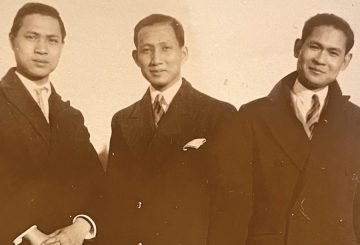
Through his maternal grandfather’s life and his own experiences, Will Nguyen reflects on how personal stories are documented in Vietnam, and the relationship between the diaspora and mainland Vietnamese.
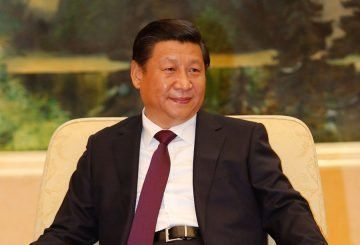
While his predecessors chose to downplay China’s power, Xi Jinping has led an overhaul of China’s domestic political landscape and foreign policy. A review of Beijing’s Global Media Offensive: China’s Uneven Campaign to Influence Asia and the World by Joshua Kurlantzick.

What can a government achieve when given maximum access to public data? Josh Chin and Liza Lin of the Wall Street Journal do a deep dive into the impact of China’s panopticon in Surveillance State: Inside China’s Quest to Launch a New Era of Social Control.

The ‘white saviour’ narrative is a common trope in transnational adoptions. In Somewhere Sisters: A Story of Adoption, Identity, and the Meaning of Family, Erika Hayasaki tells the story of three Vietnamese adoptees, and unpacks dominant assumptions about power, privilege and the meaning of family.

Some might dismiss graffiti as “rubbish”, but street art can tell a story about a city’s history, politics and culture. A review of Bangkok Street Art and Graffiti: Hope Full, Hope Less, Hope Well by Rupert Mann.

In Ajoomma, a Singaporean-South Korean co-production directed by He Shuming, an auntie travels to South Korea to visit the shooting locations of her favourite K-dramas… but gets far more than she’d bargained for.

The world uses a staggering amount of processor chips every year. The semiconductor industry is therefore not just a big deal in trade and commerce, but also in geopolitics. A review of Chip War: The Fight for the World’s Most Critical Technology by Chris Miller.

It is the whiggish conceit of a certain kind of cosmopolitan that cultural exchange breeds understanding. But it can just as well occasion contempt. The story Nile Green tells in How Asia Found Herself: A Story of Intercultural Understanding is a riot of intercultural misunderstanding and misperception.

In The Accidental Malay by Karina Robles Bahrin, protagonist Jasmine Leong—heiress of a Chinese family business dealing in pork products—discovers that she’s actually Malay Muslim. What ensues highlights the fraught nature of race, religion and politics in Malaysia.

A poem in commemoration of Bleak House Books, an independent bookshop in Hong Kong, which ceased operations in October 2021. The store is set to reopen in upstate New York in the spring of 2023.

Eighteen Singaporean poets write with a refreshingly mawkish-free assurance about crises of identity, neo-colonialism, the place of LGBTQ people in society and mummy-daddy issues in New Singapore Poetries, edited by Marylyn Tan and Jee Leong Koh.

In Voices: Essays Celebrating East and Southeast Asian Identity in Britain, edited by Helena Lee, Asians living in the UK ponder questions of identity, belonging, cultural cringe and family relationships.

Ducky Tse was an established photographer in Hong Kong when, at the age of fifty, he decided to uproot and relocate to Taiwan. He bought a van and refurbished it, driving it around the country. Through his photographs, he reflects on a new chapter of his life.

In a family that struggles to express affection physically or verbally, food has become a means of demonstrating connection, care, and a deep love.

Remembrance of indigenous histories and erasure is painful. But to remember politically and ethically, despite the ways memory has been dismissed or commodified, is to be hopeful and future-focused. Nabilah Husna on the power of indigenous memory.

Due to an outward appearance of bloodless harmony, the experience of racism in Singapore is akin to background noise that only minorities can hear. A review of Brown Is Redacted: Reflecting on Race in Singapore, edited by Kristian-Marc James Paul, Mysara Aljaru and Myle Yan Tay.

A short story by Kathrina Mohd Daud.

Written in the late 1950s while Mochtar Lubis was under house arrest, Twilight in Jakarta was smuggled overseas, translated by Clarie Holt, and published by Hutchinson & Co in 1963. A revised version by John McGlynn was published by the Lontar Foundation in 2014.

The repressive era of Xi Jinping is often contrasted with the 1980s, when the question of what China could become seemed remarkably open. But it is during the fourteen years between 1978 and 1992, delineated in Julian Gewirtz’s Never Turn Back: China and the Forbidden History of the 1980s, that the foundations for Xi’s rule were laid.
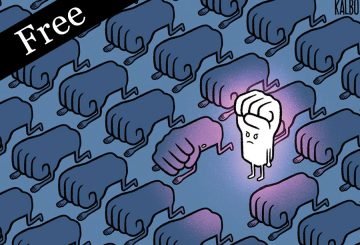
Amid the bloody war on drugs and the Covid-19 pandemic, political cartoonists in the Philippines, like Kevin Raymundo and Andoy Edoria, have produced hard-hitting work that has struck a chord with their fellow Filipinos.
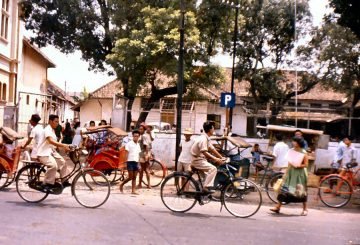
For those curious about Indonesian music, Padang Moonrise: The Birth of the Modern Indonesian Recording Industry (1955-69) is a fascinating portrait of a precarious young country trying to protect its cultural identity while opening itself to the world.

A diary kept by Esther Kim to document her early months in Taipei, and her interactions with people from different backgrounds who have gathered to learn Mandarin.

A profile of Kenny Chan, who worked at Books Kinokuniya from 2001 to 2019. Today, he continues to roam the aisles of the flagship Singapore store, and talks to Toh Ee Ming about his enduring love of reading.