
This is not the Galapagos
Robert Wood
Like a magnificent tortoise, my aunt, the long-time Singaporean activist Constance Singam, ambles towards us to meet my children for the first time.


Like a magnificent tortoise, my aunt, the long-time Singaporean activist Constance Singam, ambles towards us to meet my children for the first time.
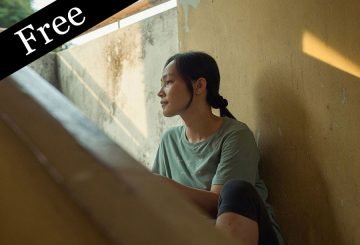
Both Oasis of Now and Tomorrow Is a Long Time are meditations on love, time and space.

In Maymyo Days: Forgotten Lives of a Burma Hill Station, Stephen Simmons does not dwell on the crusty stragglers of the Raj. He chooses to focus on those who made a lasting contribution of some kind, whether tangible, cultural or political.

Climate activists are still stumped by the question of how to ensure that public power results in real, meaningful change. At the same time, the climate movement is setting its sights further than ever.

Street 200 in Phnom Penh is where people come together with a common passion for cinema.

Touching that sensitive Cambodian topic of land ownership and dispossession, Further and Further Away questions the nature of relationships entertained with the land.

A short story by Damhuri Muhammad

The Indonesian film industry is often underrated and overlooked, but Timo Tjahjanto is one of its directors to have attracted international attention for his work.

What unfolds in Pulp III: An Intimate Inventory of the Banished Book is Shubigi Rao’s documentation of her encounters with texts in varying formats that, at some point in the past, confronted ‘banishment’.

Set in Singapore, catskull is a “neo-noir thriller meets coming-of-age mystery” that explores the violence of the city and the many forms that it takes: physical, racial, institutional.

Noise can be a powerful tool of protest but also healing, its cathartic value directly correlated with its loudness.

One does not need to understand communist ideology to become a member of the Communist Party of Vietnam. “All you need to do is to pass their test,” said one state employee.

Tracing a Khmer-language dictionary’s trajectory across the past century of Cambodian history offers insights into the ways language has been called on to construct—and to challenge—notions of national identity and community.

What sets Rachel Heng’s historical fiction apart is how she moves beyond this understanding of History (with a capital H) by showing how grand events are mediated by everyday interactions.

A poem by Jeric Olay.
A poem by Jeric Olay.

It had been four years since I last returned to Hanoi. I told myself that I’d never loved this city I had wanted to escape. But time may have helped heal old wounds.

Law-Yone’s penchant for the telling anecdote, the observation of, and connectivity to, the seemingly incidental, and the insight into the public and private personality makes this book a seminal contribution.
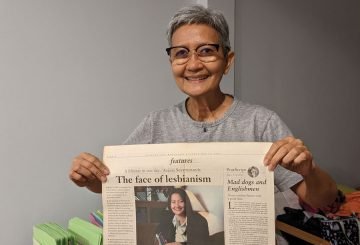
The Anjaree Archive preserves material collected over the decades by one of Thailand’s first advocacy groups for gender and sexual rights. But can an archive also tell the story of its own messy creation?
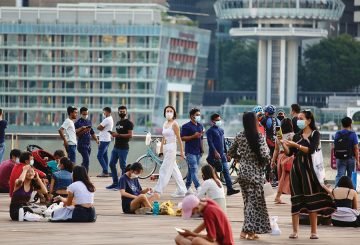
In Now You See Us, Balli Kaur Jaswal has created a social world that magnifies the indignities and frustrations of everyday life as a migrant domestic worker in Singapore.

Our growing Thai family, now into its fourth generation, has given us plenty of smiles and laughter… and outbursts of anger and stubbornness and exasperation.

This could be After The Inquiry’s intention: to rile us up and stir a sense of indignation at a system in which the truth might not win out over politics and power

Prism of Photography is an attempt to challenge the fixity of historical account, specifically the 6 October 1976 massacre at Thammasat University, through images.

Could distance runner Soh Rui Yong’s absence from Singapore’s national team point to something bigger about how things work? He thinks this could be a “good opportunity” to ask questions.

I’ve often come to forks while travelling. Do I stop where I had planned to arrive, or do I keep going? Maybe if I go on a bit further, I might find something I have never quite seen, in quite the same way, before.

Mae Sot, Thailand, provides the anonymity a Burmese peace activist needs, although not without guarded boundaries and precarious undercurrents to navigate
Poetry from Kulleh Grasi

A short story by Ngan Nguyen
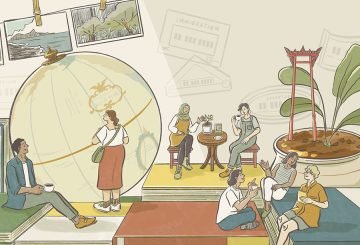
Yo and Noom choose their books, in English and Thai, with care and purpose to ensure that Passport Bookshop has a clear identity and its patrons a quality read.

It is especially important to pay attention to Myanmar right now, but the future of Burmese-language instruction in English is uncertain. Joe Freeman speaks with linguist Justin Watkins about his work.

It was hoped that social media would facilitate democracy. Today, we worry about misinformation polarising society and undermining democracy.

It’s hard to pin down exactly how to describe Đinh Nhung and what she does. Her work has spanned art installations, photography, curation and the compilation of lexicons of queerness in Vietnam.

Lifting the stone on ‘Big Conservation’, Sarah Milne’s book demonstrates how conservation is inherently political—an effort to impose meaning on to landscape and people.

When Oliver Slow writes that the Myanmar military must return to the barracks, he presumably means they should only be in the barracks. Readers may wonder if they were ever so confined.

What Philip J. Stern offers is a reflection on the nature of power—how organisations created to share risks and raise capital for economic activities ended up becoming a dominant force.

What happens in a border town when the border is closed? Bryony Lau travels to Muse in Myanmar’s northeast and reflects on its history and the effects of the Covid-19 pandemic.

Queer Southeast Asia provides a multifaceted mosaic of the region, stretching for all to see the complexities that will always simmer beneath the volume’s name.
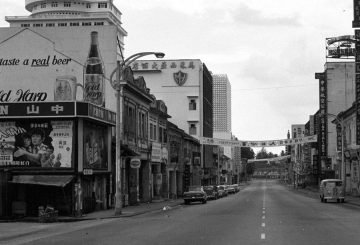
The publication of The Age of Goodbyes—the English translation of the award-winning novel by Li Zi Shu—was a celebrated event, eagerly awaited by connoisseurs and enthusiasts of Malaysian Chinese literature.

In Melody Kemp’s debut novel, Tree Crime, a young Lao teenager turns detective as a deadly virus circulates in her village. Marco Ferrarese reviews a story about the costs of ‘progress’ at the expense of natural ecosystems.

A short story by Akiya, translated by Adriana Nordin Manan.