
The ink that never dries
Alfian Sa’at
By writing poetry from death row, Pannir Selvam Pranthaman sets out to prove that he’s more than just a condemned prisoner.


By writing poetry from death row, Pannir Selvam Pranthaman sets out to prove that he’s more than just a condemned prisoner.

A poem by Pannir Selvam Pranthaman.
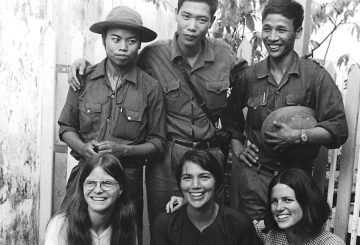
Claudia Krich’s Those Who Stayed: A Vietnam Diary is an invaluable primary source for those studying regime change, documenting firsthand the disintegration of the South Vietnamese government and the coalescence of a byzantine military administration in its wake.

A short story by Justina Lim.

The exploration of a character’s sexuality in Tash Aw’s latest novel has triggered backlash among conservatives in Malaysia, but pushing back in today’s fraught times is itself a complex undertaking.

How does one love a world that is increasingly fractured? A reflection on curating at Objectifs and participating in the artistic projects by Chu Hao Pei and Arie Syarifuddin in Singapore.

An encounter in Penang with a man named Kelvin D Loovi, who tells a story about his blue guitar.

Playing with nationalism is to take part in a risky game.

Stephen Simmons has produced an important record, with a wealth of historical information, that highlights the work of artists during the Sangkum era.

An exhibition in Pattani brings art collectives from three countries together to create dialogue on communal work and solidarity, encouraging people to look beyond stereotypes of Thailand’s deep south.

A look into the lives of Vietnamese workers in Myanmar’s scam centres.

A conversation with Saigon Soul Revival, a band “on a mission to bring back the raw, live sound of 1960s and 1970s Vietnamese rock and soul music”.

In the face of funding cuts and growing oppression, Cambodian reporters cling on to hope through memories of a golden age of journalism.

The Miss Universe franchise has been dismissed as a chauvinistic relic, but Thailand’s long-standing fixation with such pageants suggests that there are deeper implications.

Far from dismal or desolate, Lingga mornings reveal the everyday intimacies borne through connections near and far.

Waves Rising beautifully commemorates Ho Poh Fun’s life’s work, perhaps feeling like it needed to smoothen out some things bubbling just under the surface.

A comic by Juliette Yu-Ming Lizeray, reflecting on her shifting relationship with hope.

Banning books might bring the Malaysian government short-term political gain, but this restriction of access to different perspectives could have serious long-term repercussions.

On not coming to terms with the past in Indonesia.

Dina Zaman brings a lot from her past to Malayland, but she’s also firm in looking forward and seeking the humanness in Malaysia’s obsession for categories and othering.
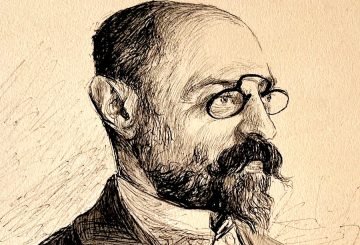
A historian journeys to České Budějovice in Bohemia in search of the archive of Filipiniana left behind by Ferdinand and Friedrich Blumentritt.

David Graeber’s notion of “total bureaucratisation” isn’t just a fitting analytical tool for global contemporary life; it also mirrors, with uncanny accuracy, the paradoxes of Singapore’s cultural policy.
A poem from Domar Batucan Recopelacion

Two group shows staged in Bangkok question mainstream Cold War narratives through contemporary art.

When families affected by extrajudicial killings in the Philippines speak and shed tears of sorrow and anger in front of legislators and flashing cameras, they’re finally able to transform shame into outrage.

Khieu Ponnary, once called the “mother” of the Khmer Rouge, had seemingly vanished from history while the regime was at its height.

Andrew Lam had never set out to be the preeminent chronicler of the global Vietnamese diaspora, but realised that “when I spoke up for those that couldn’t, I found my tongue”.

Dorothy Wai Sim Lau undertakes a nuanced interrogation of how fame, altruism and regional identity intersect in Asia’s transnational mediascape.

Rebecca Toh, the founder of Casual Poet Library, on carefree wandering and taking one’s time.

Publishing in Cambodia is still a fledgling, fragile industry, but it’s growing fast.

A review of two books on finding—or perhaps ‘freeing’ is a better word—one’s voice through acts of creation, whether it’s prose, poetry, painting, drawing or cooking.

“Apart from illustrating how invested the authorities still are in shaping the official story of Vietnam’s wars of liberation, my experience at Thế Giới also revealed an almost religious faith in the power of the written word.”

Did the man who inspired a character in Joseph Conrad’s novels leave behind a fortune in a Swiss bank?

In a new banner by Taring Padi and Noongar artists, the Noongar figures and Australian fauna and flora integrate with images from an rebellious Indonesian proletarian class in a bold synthesis, creating a dream-like, political logic.

Luise Ahrens, a Maryknoll nun and education innovator from the US, worked with seismic stamina for twenty-six years to build up higher education in Cambodia.

Young people from Myanmar are being forced to choose between survival and service in a conflict they had no say in and strongly object to.

A short story by Lia Tjokro.
A poem from Julienne Maui Castelo Mangawang
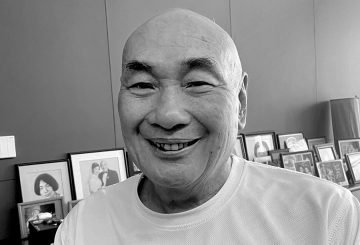
Singaporean actor Lim Kay Siu on the differences between acting in Hollywood and in Singapore, the power of theatre to raise public awareness of important issues, and getting political on live streams while playing a ukulele.

We’re all just finding ways to relieve the anxieties of living in a world that’s spinning out of control.