
The nostalgia of the colonised
Ting-Jen Kuo
Taiwan is constantly forced to assert its own identity and presence. Yet this struggle hasn’t made it impervious to colonial hangovers.


Taiwan is constantly forced to assert its own identity and presence. Yet this struggle hasn’t made it impervious to colonial hangovers.

Gankhuugiin Purevbat was never keen to claim credit, but his contribution to the rebirth of Mongolian Buddhism and the decolonisation of Mongolia cannot be denied.

Creating Feeding Ghosts, a graphic memoir, was the only way Tessa Hulls could think of to repair her relationship with her mother and make sense of the responsibilities borne by each generation.

Eileen Chong’s poetry defies national categories, making its way into cracks and crevices like an orchid in cement, grown beautiful and a little wild.

Hong Kongers from the Indian subcontinent, the Philippines and Indonesia have lived in the city for a long time. Yet Asian minority Hong Kongers often end up segregated from ethnic Chinese children in the education system.

Taeyeon Song reflects on what Glasgow taught her about being Korean.

The Uyghurs: Kashgar Before the Catastrophe and Under the Mulberry Tree: A Contemporary Uyghur Anthology are testament to the power of memory as resistance against crackdown and erasure.
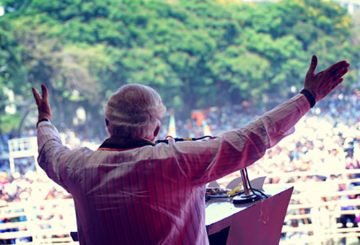
India goes to the polls mid-April in a huge democratic exercise that will take over a month. But the nature of Indian society and democracy has changed quite fundamentally in the past decade.

A conversation with Korean queer author and contemporary artist Ibanjiha on their art of humour and succeeding through the heteronormative and hyper-capitalist social order of South Korea.

Anne Stevenson-Yang recounts the heady giddiness of Chinese economic growth, but concludes that what had once seemed to last forever has turned out to be little more than an illusion.

Although democracy and media freedoms are declining in India, filmmaker Vinay Shukla seeks to inspire people to show up courageously to create a better society for everyone.
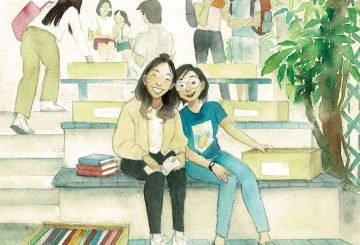
At a time in which large bookstores have fallen to pressures like Hong Kong’s sky-high rents, gentle books survives as a nimble pop-up for used English-language books.

“Every time I’m here in Taiwan, I get to unpack a bit more of my family’s murky history.”

In their respective books, Ian Johnson and Louisa Lim look at China’s underground historians of one kind or another.

The transnational reproduction of Chinggis worship in Mongolia is part of a concerted effort to bring back an identity-defining practice.

Throughout ancient China, mortuary cultures had been evolving for thousands of years before the Qin dynasty, even long before the date of the oldest extant form of systematic Chinese writing.

The China-Australian Migration Corridor delves deep into historical foundations, contemporary trends and policy considerations related to movement between China and Australia.

The End of August centres voices rarely heard in English-language fiction—Koreans living in Japanese-occupied Korea and the zainichi Korean diaspora of Japan.

Among the Braves is an attempt to tell the story and struggles of a city, through the lives of the people who have been active in a decades-long movement for democracy.
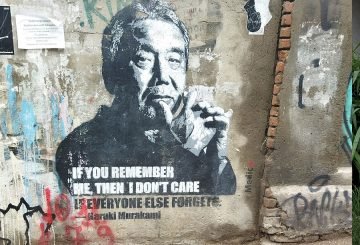
Beyond healing himself, Haruki Murakami, through his stories, has grown more interested in helping others heal.
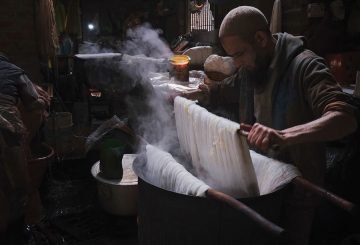
The ancient practice of dyeing yarn in Kashmir used to be the source of livelihood for hundreds of families, but modern techniques and tools have slowly pushed the tradespeople into the margins.
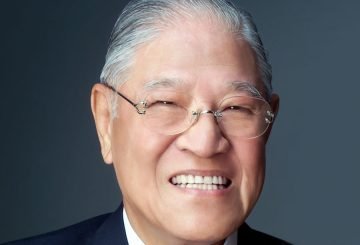
Many Taiwanese have developed a new sense of self, proud of the island’s unique history, and Lee Teng-hui played a key role in that process.
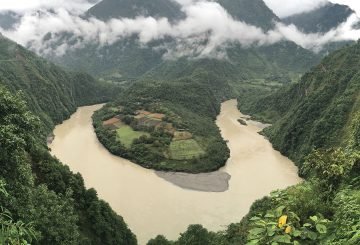
The Kawa Karpo is one of the most sacred mountains in Tibetan Buddhism. A 250-kilometre circumambulation is completed by thousands of pilgrims every year.

As a mainland Chinese kid, I saw Hong Kong portrayed on TV as the epicentre of capitalism and sophistication; Hong Kong in real life, when I finally got to see and feel it for the first time, was much more than that.

The Panthay Rebellion is a cautionary tale of what can go wrong when a central government is absorbed in its own priorities, leading to ethnic stereotyping and distrust between communities.

In Hieyoon Kim’s Celluloid Democracy: Cinema and Politics in Cold War South Korea, South Korean cinema is seen as part of a broader democratic social movement.

In eleven short stories, Prasanthi Ram probes the lives and relationships of nine women, exploring the narratives of love (or hate) that we develop within ourselves, alongside the ones shared with our families.

A poem by Yago Tse.

Both The Sales Girl and If Only I Could Hibernate are contemporary coming-of-age stories set in Ulaanbaatar that thwart most viewers’ expectations of Mongolian cinema.

An interview with Mike Chinoy about covering China for almost half a century, and his new book, Assignment China: An Oral History of American Journalists in the People’s Republic.

The Chinese Communist Party has “restructured the social order and silenced the people on the ground. Now they’re trying to extend their hands overseas, to silence overseas activists,” Christopher Mung says from the UK.
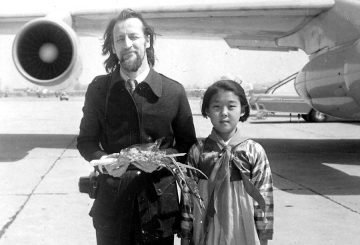
John Gittings, formerly the Guardian’s East Asia editor, looks back on multiple trips to North Korea, from 1976 to 2001.

The Hong Kong elite are said to be interested only in making money and not in universal values like democracy, human rights and the rule of law. But that’s not true.

Hafsa Kanjwal contends that Bakshi Ghulam Mohammed’s state-building practices helped strengthen India’s hold over Kashmir while also enabling modernisation, which paradoxically reinforced a sense of alienation rather than reconciliation.
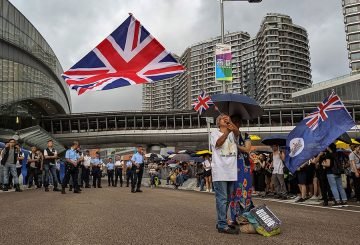
One of the interesting ideas thrown up in Hong Kong a few years back has been a certain nostalgia for the late colonial period. But how enlightened was colonial public policy-making?
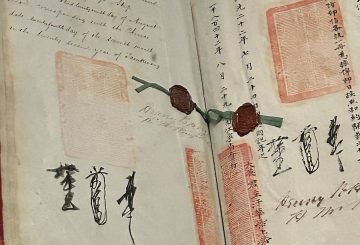
For Hongkongers, the British Museum exhibition became a space for those living through the ongoing destruction of their home to make sense of their own lives.

Saadat Hasan Manto knew that it was not for him to analyse the multitudes people contain, and that often spill out from us without warning.

The story of Hong Kong has long been subject to the whims of outsiders’ imaginations. Almost nowhere in these narratives is Hong Kong a city for the seven million residents.
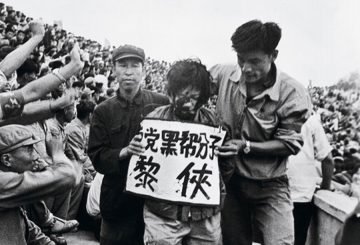
What a country doesn’t collectively talk about can often be more important than what it does. Tania Branigan’s book reveals the complexities of remembering the Cultural Revolution.

For much of her adult life, Bacani has been known for her photojournalism. But she has extended her practice considerably—a constant reinvention.