

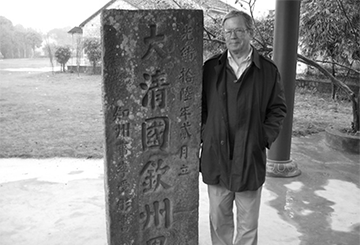
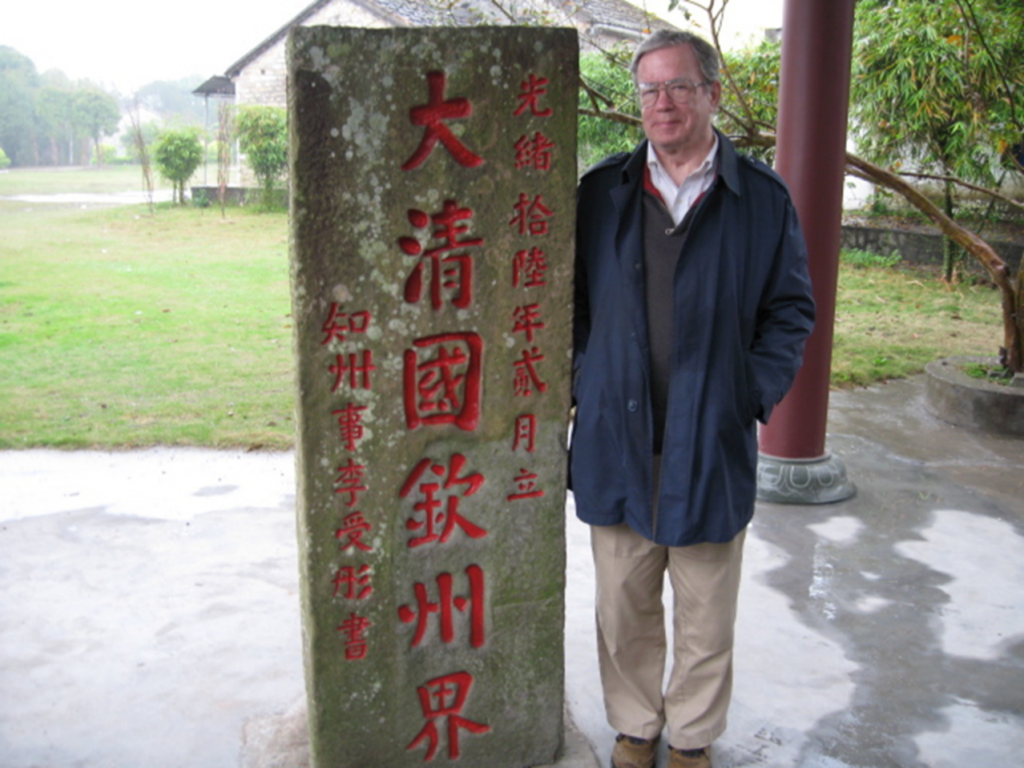
Photo: Laichen Sun
John Kremers Whitmore (1940–2020) was the pioneer of Vietnamese studies in the United States, not only because of his own research and publications but equally because he trained and nurtured new generations of young scholars. In the 1960s, Vietnamese studies in the United States hardly existed. There were anti-war academics, mostly specialising in American history, with a few having expertise in some Southeast Asian country other than Vietnam. But scholars who studied Vietnam as a country and not just as a war were exceedingly rare. Only one American was devoted to the study of Vietnam on its own terms, and that was John Whitmore.
John studied anthropology at Yale before studying Southeast Asian history at Cornell with O.W. Wolters. At that time both Yale and Cornell had strong programs in Southeast Asian studies. From Cornell, he took a professorial position in the Department of History at the University of Michigan, in Ann Arbor, which also had a strong Southeast Asian studies program. His interest and training in anthropology made him keenly interested in the social and cultural environments in which historical evidence arises. His doctoral dissertation, ‘The Development of Lê Government in Fifteenth-Century Vietnam’ (Cornell, 1968) was more than an institutional history of a dynastic regime. It focused on an era in the Vietnamese past that constituted a major shift in the structure and ideology of government and society. It was a deep dive into the Vietnamese past that would inspire his distinctive understanding of prior and subsequent eras. Through the years, he published books and articles on topics from the eleventh to the twentieth centuries, including law, family, social organisation, education, bureaucracy, administration, ideology, map-making, Buddhism, trade, economy, seaports, Chams and Vietnamese refugees in the United States. He became a mentor not only to those of us who studied with him in the 1970s but also to succeeding generations of specialists on Vietnam, who have been inspired by his writings, his encouragement and his friendship.
I studied with John from 1972 to 1976. At that time, a fairly large group of aspiring historians of Southeast Asia were gathered around him, including graduate students from Asia, some of whom later became prominent scholars in their home countries. John was an inspiring and nurturing mentor who set many of us on the career paths that we have followed ever since. He challenged his students with sharp questions, and he gave us a strong sense that what we were doing was important. He gave us confidence in our work. With his guidance, we published a collection of our revised graduate student papers in a book titled Explorations in Early Southeast Asian History. It was published forty-five years ago and has been reprinted several times.
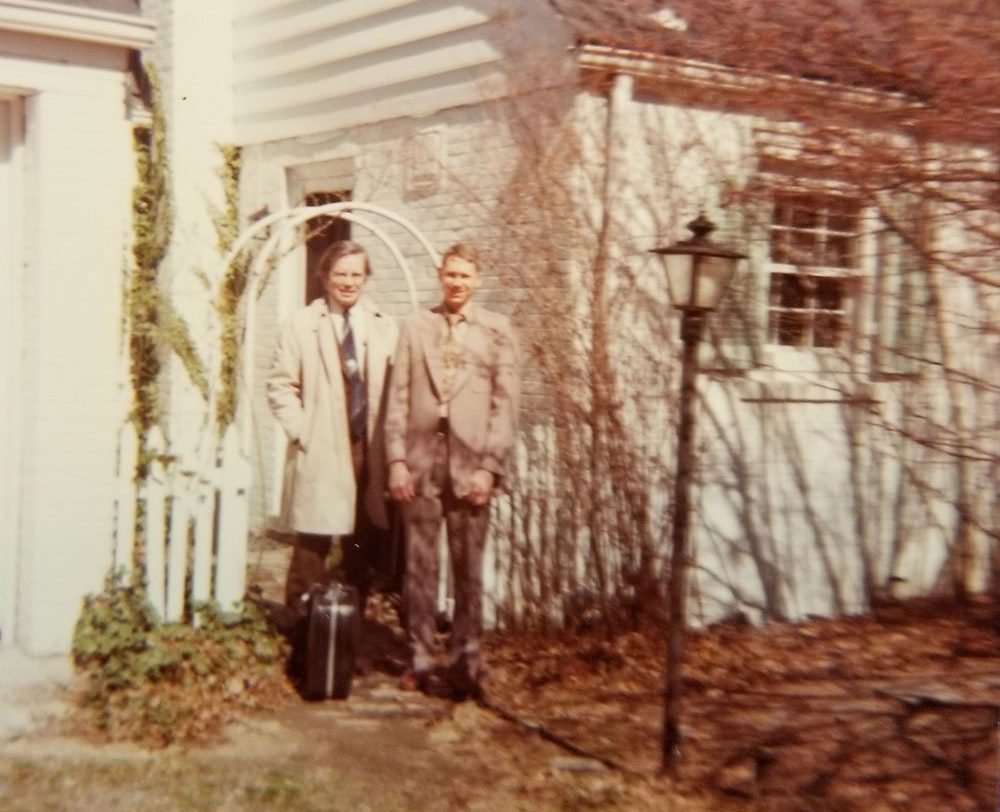
I first met John Whitmore in January 1972, six months after returning from service with the US Army in Vietnam. I vividly remember our first meeting, in John’s office. As we talked, the disorientation that had followed me out of the army began to ease. I understood that here was a scholar who was also a gentle, patient, sincere and kind person. We discussed my program of study, and I started to imagine that I had a future. I left his office that first time with a sense of peacefulness at having found a place to rest my mind. John made me feel as though I belonged where I was. He constantly stimulated my thoughts by giving me things to read or posing questions. He taught me that it is alright to change one’s mind and that one should ignore the crowd and simply follow one’s own way.
During the next four and a half years, my world mainly revolved around John and the graduate library. I distinctly remember his lectures on Vietnamese history, which sometimes so excited me that I had to restrain myself from jumping up and clapping when the class was over. He never pushed me one way or another but was content to open doors of thought for me to consider. I learned to feel the weight of his comments on my work, to see how he wrapped his insights in layers of reflection and to love his respect for careful textual study.
The Ann Arbor years passed quickly. When I left, it was a time of no jobs, especially in Vietnamese studies; the war had just ended and everyone wanted to forget that Vietnam even existed. John did everything he could to assist me on my way. He conveyed to me that scholarly work is worth the effort, even without an academic career. Thanks to the mental momentum I acquired from John, I was not subdued by the fact that for five years I had no job in my field and for two of those years no job at all. John inspired me to believe in the importance of scholarship despite the vicissitudes of an academic career. His encouragement repeatedly made a difference in my life. The trajectory of my life is indebted to having found myself in John’s office forty-eight years ago.
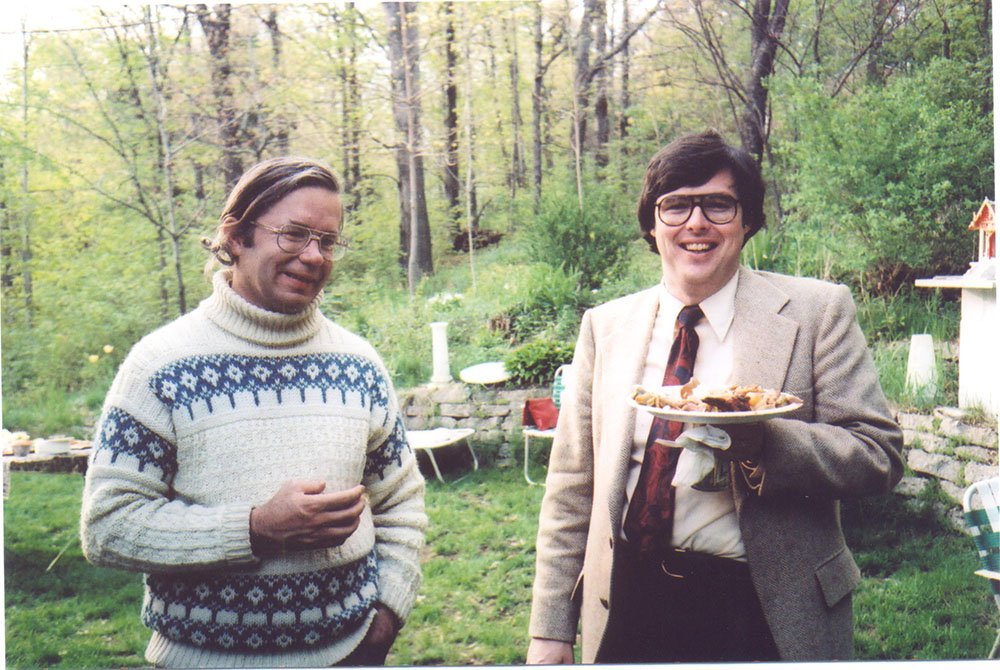
in Ann Arbor
John K. Whitmore published nearly fifty books and articles. Less quantifiable, but at least as important, he remained active in Vietnamese studies, participating in conferences and collaborating with younger scholars in publishing ventures, serving as a mentoring presence among new generations of specialists on Vietnam that have transformed Vietnamese studies into the lively landscape of today. His interdisciplinary perspective has influenced people working in all areas of academic endeavour. He was deeply committed to the classroom, and his collaboration with Jayne Werner and George Dutton to produce Sources of Vietnamese Tradition (Columbia University Press, 2012) opened possibilities for students at both undergraduate and graduate levels.
John’s career spanned an era in which the question of Vietnam’s place in an organisation of global knowledge, whether in East Asia or Southeast Asia, became less important, and his work advanced this trend. He was alert to both sides of the question, and in his holistic way of thinking, the academic boundary that seemed to mean something to other scholars did not represent anything fundamental. He saw Vietnam for what it was, not for what it might be for regional distinctions. It was the genius of his scholarship that allowed him to fully inhabit both sides of the question and to render it irrelevant, and also that made it possible for his influence to spread widely across disciplines and generations. For him, there was no contradiction built into Vietnamese history between Sinitic and Southeast Asian realms. Being Vietnamese does not depend upon membership of one or the other of these academic abstractions. I believe that this attitude is one of John’s most important contributions to Vietnamese studies.

More from Mekong Review
-
Vietnam as seen from above and below
-
Readers respond to our review of Ken Burns and Lynn Novick’s The Vietnam War
-

Thanks to the pandemic, Tet in Vietnam won't be quite the same this year
- Tags: Asian studies, Free to read, obituary, USA, Vietnam
