



When he was a boy, Nguyen Ky was already famous for his intelligence. Unfortunately he lost his mother at a very young age. His father remarried and the second wife was very hard on her stepson: she ordered him to give up his studies, to take care of the oxen, then to work in the fields like a man, even though he was only fifteen: to drain the water, to carry manure, to harrow the fields, to work hard. He endured all these tribulations, not to mention the innumerable insults and blows he received.
His father was too weak to control his young wife and dared not defend his son. Things eventually became so bad that, malnourished, poorly dressed and severely abused, Nguyen Ky ran away from his family home.
Eventually he had to beg in order to provide for himself.
One day he stopped at the door of an old scholar in the town of Dich Vong (in the province of Ha Dong). The man was impressed by his character and asked him if he knew how to write. Nguyen Ky asked for a brush and a piece of paper and improvised a poem, using various classical styles. At one glance the scholar admired the elegant writing, which blended grace with firmness; but he especially appreciated the discrete references to the young man’s situation and the circumstances of their meeting. Enchanted by the eight verses, which displayed not only solid learning but also a mature and delicate spirit, he immediately invited Nguyen Ky to lodge with him in a shelter attached to his house and offered to give him lessons.
Being talented, Nguyen Ky made extraordinary progress: in a few years he had not only made up for the time he had lost, but he was even more famous than before.
One day in spring, he allowed a friend to take him to a feast held in honour of the genie of the village.
Our young and poor student wore an old patched robe. When he came into the presence of so many well-dressed young men, he felt a certain sadness. He looked for a corner in which to hide, and was almost completely hidden between a wall and one of the pillars in the temple.
However, the crowd had eyes only for the amazing beauty of the singer. She was not just beautiful; she sang wonderfully. When she parted her lips, she spread precious jewels and scattered gold. All the men seemed intoxicated, mad, and competed with each other in generous recognition of her talent. Money and rolls of silk piled up on a table as tokens of their appreciation.
Suddenly, in the middle of a lantern dance, the young singer, turning as lightly as a butterfly, passed near the corner of the temple and noticed Nguyen Ky pressed against the pillar. She was so overcome that she stopped singing and dancing. She stared, unable to resume.
The next morning Nguyen Ky was busy reading when the singer appeared. She touched him on the shoulder in a friendly way and said: “How could a man of such talent be treated so badly by fate?”
The singer begged Nguyen Ky to accept two coins and some pieces of material. He politely refused, but she was so insistent and she withdrew so quickly that he could only thank her. After she left, he felt a little ashamed, but he also had to admit that he had needed her unexpected assistance.
After a while, she returned again. She began to visit him often, busying herself cleaning his room, mending his clothing, cooking meals for him, encouraging him in his studies, just as if she were his wife.
That was as far as their intimacy went. Nguyen Ky respected her as a dear friend and, in his words and actions, never failed to adhere to the proper rules and highest propriety.
As he came to know her better, however, he grew bolder and, at the same time, increasingly aware of her beauty. One day he was unable to stop himself touching her.
He immediately regretted what he had done: her expression changed and she reproved him severely.
“Oh! If I were the sort of person you think me to be,” she said, “I would have a multitude of choices among the rich and happy men who live along the banks of the rivers and the fields of mulberry trees. Don’t you understand why I sought you out? I was thinking about my future. Usually, persons of my age do not know how to prepare themselves for what is to come, and when they finally come of age they know only people of similarly lowly lifestyles. That is why I wanted, during these difficult years, to learn to know a superior person, so that I might later take his protection throughout the rest of my life, until the day I die. And now you have treated me like a flower on a wall or a willow by the road. It seems that I must never come near you again.”
Nguyen Ky understood. He apologised, and from that day on treated her with absolute respect.
A little more than a year later, as the examinations approached, he decided to go back to his father and ask him to cover all the costs involved in his candidacy.
When it was time to say farewell, he took his friend’s hand and said to her: “On my path of poverty, I had the chance to meet you. My debt to you is very large; I can never forget that. Before we part, please tell me how I can find you again one day.”
She replied: “Later, if you do not forget me, I will be the one to find you. And if we do not need to meet each other, what use will it be to you to know my name and my village? For my part, I do not dare ask you to promise anything; the world will judge on our behalves.”
When Nguyen Ky reached the house in which he had been born, his father was overjoyed because he had never expected to see his son again. Even his stepmother was full of solicitude for the young scholar, who soon achieved the most outstanding success: after passing the preliminary examination in his province, he was then ranked first in the triennial exams for his region.
His father thought that it was time his son was married and recommended a young girl from an excellent family. Nguyen Ky made every effort to escape, then decided to speak of his benefactor, declaring that he would rather die than disappoint her expectations. But he explained himself badly and his father was unconvinced by what he said, deciding that this was merely a trivial adventure and that his son would quickly forget a woman of such a low estate. He decided that it would be right to firmly oppose his son’s wishes, and insisted that he would never accept a singer as his daughter-in-law.
Obviously Nguyen Ky suffered a great deal: his love for the young woman and his high opinion of her remained unaltered. He especially felt that he should not abandon her, even though they had not exchanged any vows. But these considerations did not allow him to forget that a man also has other duties — less sweet perhaps, but more demanding — which not even a scholar could ignore. So he obeyed his father.
The following year he went to the capital to undertake the doctoral examination. The young woman found him there and brought him various appropriate gifts.
Observing his embarrassment, she said: “I can see; there is no need to tell me anything. Ultimately it is a matter of destiny: each of us has a different path to follow, in very different worlds …”
She said goodbye to him forever.
During that same year, Nguyen Ky received his doctorate, was appointed a mandarin in the imperial cabinet and then made ambassador to China.
On his return, he undertook the highest duties at the provincial level and in the capital for ten years. There were disturbances in Hai Duong, stirred up by an agitator called Cau. Sent to fight against him, Nguyen Ky pacified the region and was awarded the title of duke for his services.
He was then at the height of his career. Riches, honours, a large family — there was nothing more he could want. But each time when he was among his friends, he recalled his difficult youth, and then was overcome by emotion and secretly reproached himself for his actions. Several times he asked his confidants to look for the singer, but they were never able to find her.
One night, during a feast at the house of Marquis Dang, our minister noticed, among the singers and musicians seated below him, a woman playing castanets. Her features strangely reminded him of a face he had once known. He was informed she was indeed the friend to whom he had been obligated long ago. Although her beauty now bore nuances shaped by dust and the wind, her voice and her gestures had lost none of their charm or freshness. For his part, Nguyen Ky was sure he was witnessing an apparition from his youth.
He learned that she had married a soldier from Thai Nguyen ten years earlier. When she became a widow, she did not remarry; she was able to use her small funds to look after her mother. Unfortunately, her unworthy younger brother had squandered her resources, and she had been obliged to bring her mother with her to the capital so that she could work to earn a daily bowl of rice for each of them.
Visibly moved, Nguyen Ky invited them to come and live at his house. She accepted, for the sake of her mother. He placed part of his house at their disposal and made sure they lacked nothing.
A little over a year later, the old woman died. Nguyen Ky had the appropriate funeral rites conducted.
When the ceremonies were finished, the woman came to thank him and to ask his permission to leave. Unable to convince her to stay, Nguyen Ky begged her to at least accept some money: she refused. He wanted to say something about what had happened a long time ago, but it was difficult, and he hesitated. As he watched her go, without having spoken to her, he felt a sadness such as he had not felt in a long time.

More from Mekong Review
-
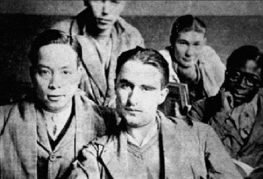
Pham Duy Khiem embodied two cultures in conflict
-

Inspired by the portraits of the deceased
-

Vietnam as seen from above and below
