


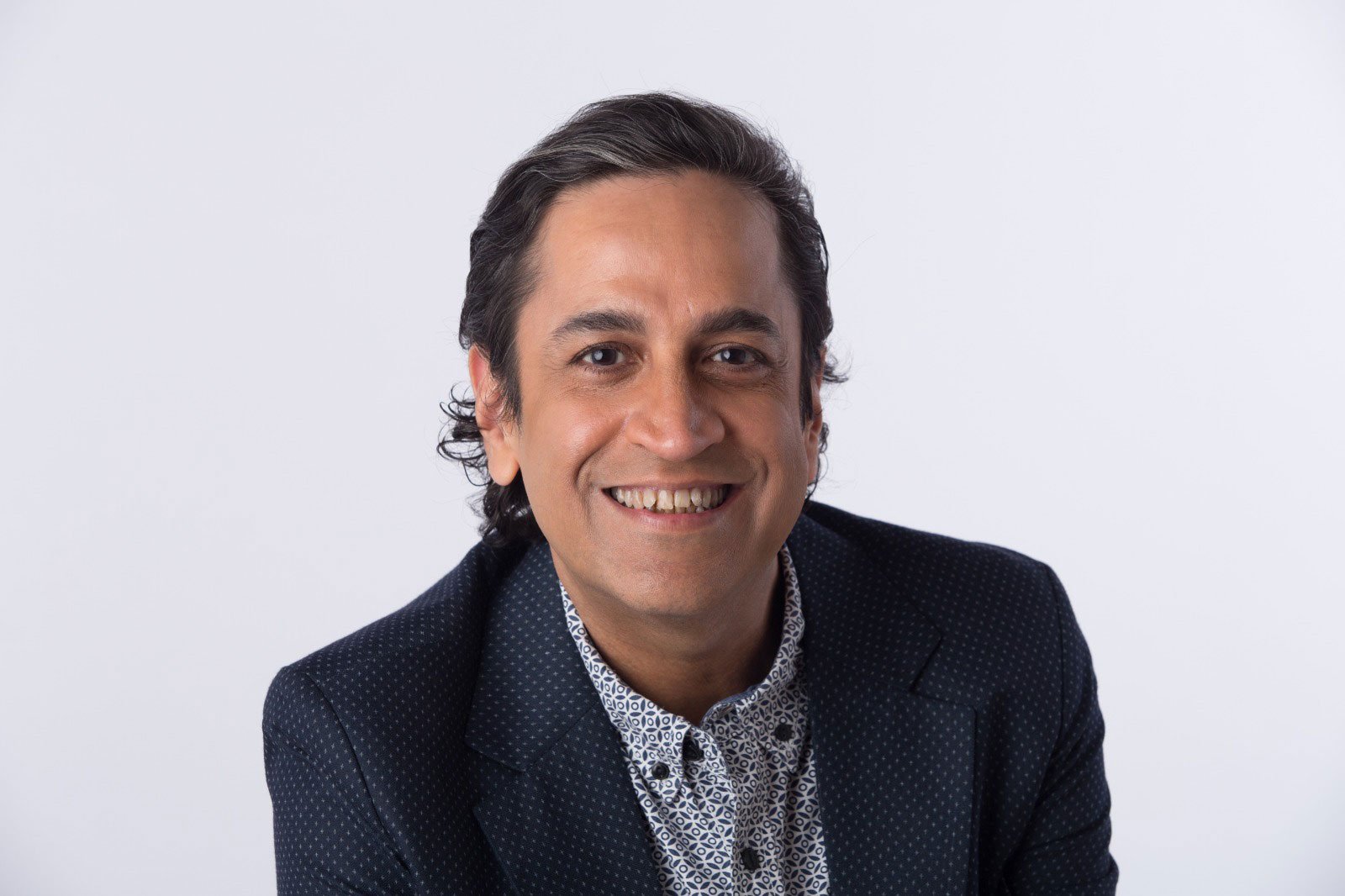
Photo: The Pond Photography
In 1996, I was asked by a local university to teach a playwriting course with the eminent playwright and director Kuo Pao Kun. I’d just returned from Birmingham with a master’s degree in Playwriting Studies—a rarity in Singapore in those days—so Pao Kun asked me to handle the theoretical aspects of playwriting.
A few days before the course was due to begin, I still hadn’t received an approval letter from the university that would clear me to teach. I recall having meetings with Pao Kun and the lecturer who’d invited us to teach. After much discussion, it was decided that Pao Kun would conduct the course on his own.
Two things about that episode still stay with me. One is that, while I never received the necessary approval, I wasn’t officially rejected, either. I’d applied for a teaching job and was told that my application had been received… then nothing. When I was asked to re-apply a few months later, I was hesitant because there’d been no closure from the previous application. I ended up doing it anyway. The result was the same: “received with thanks”, then silence.
The second thing is a comment someone I’d shared this incident with had casually made: “Oh, you’re still on ‘the list’!”
Let’s go back a couple of years. In February 1994, the Straits Times ran almost a full page on how Alvin Tan, The Necessary Stage’s founder and artistic director, and I had attended forum theatre workshops in New York. The workshops, organised by the Brecht Forum, were conducted by Augusto Boal, a Brazilian theatre practitioner who founded the Theatre of the Oppressed, a theatrical form aligned with leftist politics. “Two pioneers of forum theatre trained at Marxist workshops,” the headline read. Later in the article, the journalist posed the question: “Is The Necessary Stage, which went professional only in 1992, using theatre for a political end?” It was strongly implied that, because Boal and the Brecht Forum identified as Marxists, Alvin and I had sinister intentions to stage interactive theatre in Singapore for Marxist ends. “Schools the target of group’s forum theatre,” another headline on the same page stated ominously.
The timing was unfortunate for artists. Just months before, in December 1993, there’d been another furore when Josef Ng, a performance artist, presented a piece that involved him turning his back to the audience, partially exposing his buttocks and trimming his pubic hair in protest of a police sting operation during which gay men were arrested at a known cruising ground. (Twelve men were sent to prison; six of them were also subjected to three strokes of the cane each.) Ng’s performance, Brother Cane, led to his arrest and bans on performance art and forum theatre. It was years before such artistic practices saw the light of day in Singapore again.
The reason why the Straits Times’s article on Alvin and I generated such controversy and concern was because it triggered memories of the last time theatre practitioners were accused of being Marxists. In 1987, Chng Suan Tze and Wong Souk Yee, leaders of the theatre company Third Stage, were detained by the Internal Security Department, Singapore’s domestic intelligence and security agency. They were, alongside twenty other socially conscious Singaporeans, accused of being involved in a “Marxist conspiracy” to “subvert the existing social and political system in Singapore” and detained without trial under the Internal Security Act. Suan Tze spent a total of fourteen months in detention, Souk Yee fifteen.
Their arrests highlighted the state’s wariness of theatre’s potential. I’ll make one more jump back in time to 1976. In that year, Pao Kun, along with many others, was detained without trial for his activism and political theatre work. He was stuck behind bars for more than four years. His citizenship was revoked and only reinstated in 1992, two years after he was conferred the Cultural Medallion, the highest award for arts and culture given by the state.
In 1996, Pao Kun got the green light to teach at the university. I did not.
Whatever ‘list’ it was that I might have been on in 1996 appears to have been reviewed. The state gave me a Cultural Medallion in 2015 and I’d been lecturing part-time at a local university for a few years. Each semester, the university would invite me to teach a playwriting module, which I enjoyed very much. Every year, with feedback from students, I’d try to change up the lesson plan, including elements on using improvisation, incorporating code-switching and different language registers and assigning group presentations on playwriting and social issues.
I thought it’d be the same this year but, five days before the start of term, I was told that my appointment had not been approved. The email said that “the university’s decision is unrelated to issues of qualifications, experience or teaching abilities”. No other reason was given. I was flabbergasted. I waited a few days to let the news sink in. It was the National Day weekend and not a good time to be difficult.
I made up my mind on Monday, the first day of the new semester. Instead of writing a strongly worded email to the university higher-ups, I decided to take a more ‘brat’ approach: I shared my experience on Instagram.
I wasn’t prepared for the outcome—hundreds of ‘likes’ and comments, calls and text messages from reporters, direct messages from other artists and educators sharing similar experiences at different institutes of higher learning, students reaching out to say they were looking forward to my course and were unhappy with the last-minute cancellation. They said they’d been told the course was cancelled due to “unforeseen circumstances”.
The Straits Times reported that two other part-time lecturers had suffered the same fate. The official response from the university about dropping me was that they “lacked sizeable numbers to conduct the playwriting course meaningfully”. I was sceptical: If that was the real reason, why couldn’t they have said so in the first place?
For a whole week I went to bed at night reminding myself to unclench my jaw. I attended that university as a student from 1987 to 1990. That was the period in which I got involved with The Necessary Stage and began my playwriting life. My plays have been taught there. I’ve lectured there. They even gave me an award for being a distinguished member of their alumni a few years ago. And suddenly—was it a sudden decision? I have no idea—I’ve become an outcast.
Am I back on ‘the list’? Is there really even a list to begin with?
Tommy Koh, an ambassador-at-large at the Ministry of Foreign Affairs, said in 2019 that “we should… not blacklist intellectuals, artists and writers just because they are critical of the government or hold dissenting views… What Singapore needs is not sycophants but loving critics and critical lovers.”
Yet, as Cherian George, a Singaporean professor of media studies who’s had his own troubles with local tertiary institutions, pointed out in 2020: “There are many shades of grey, and individuals are constantly moving between swatches. Even if you are neither radical enough to be black-listed nor conservative enough to turn white, your precise position on the grey list is always fluid. If you become too political, you will receive a polite reminder of your dependent status. If you persist, you could get turned down the next time you need something from the state.”
Some years ago, I decided to only speak publicly about my plays and nothing else. I didn’t want to get involved in events or interviews where I had to comment on local issues. I told myself that whatever I wanted to say, I would say in my plays. I was happy not to have the ‘political playwright’ label that had been assigned to some of my friends. I was ‘safe’; I just did ‘social plays’. I believe I stayed on the lighter side of the grey list because of that. I was rewarded with major awards, even though I was still enduring censorship behind the scenes.
How do artists negotiate this strange monochromatic spectrum? Unfortunately, there’s no answer. The fact that I posted online about my experience with the university probably means I’ve pushed myself towards the darker shades of grey. I might be able to sneak back to the lighter range after some time. Or not. It depends on what I choose to do or not to do. Who I align with and who I keep away from. Or it might not. I’ve spent more than thirty years trying to second-guess how to be a ‘model artist’. My conclusion is that I’m just not model material.
I knew Suan Tze and Souk Yee before their detention—I’d acted in a Third Stage play in 1986—but didn’t get in touch with them again until years after their incarceration. I never apologised for not reaching out when I could easily have done so. (Recently, I read Souk Yee’s harrowing description of detention without trial in her novel, Gardens at Phoenix Park.) I didn’t get in touch with artists and activists who’d had their own encounters with authority—those who protested outside the Ministry of Education against discrimination against LGBTQ+ students, those who fight tirelessly for the abolition of the death penalty, those who now face criminal charges for delivering letters asking the government to end ties with Israel.
This is the helplessness of inaction. A mind control technique, a looping of doubt: I should say something / But I don’t want to get into trouble / But why should I get into trouble / I can’t just think about myself; I have a company that gets public funding / But I should still say something / Why can’t someone else say something / Get involved / Don’t get involved / Just write something / Nobody cares what I think / Reach out / Don’t reach out / Say something / …
The loop produces inertia.
A failure to create meaningful and long-lasting connections highlights the success of a divide-and-rule strategy, where solidarity is limited and allyship hazy. Unless we get our act together, we’ll constantly be playing checkers—except all the squares will be black and grey.

More from Mekong Review
-

A poem from Eileen Chong
-
Poetry from Brandon K. Liew and Daryl Lim Wei Jie 林伟杰
-
A focus on Singaporean authors, coupled with the fact that bookstores in the city have found it increasingly difficult to survive, makes Book Bar feel like an anomaly.
- Tags: Free to read, Haresh Sharma, Issue 37, Kuo Pao Kun, Singapore
