

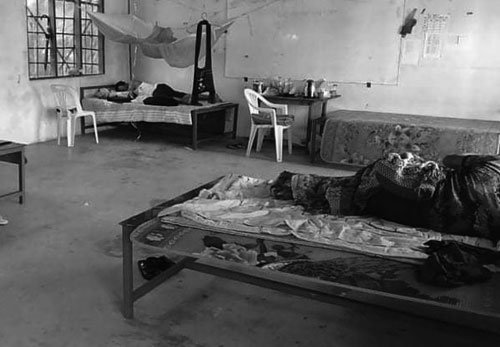
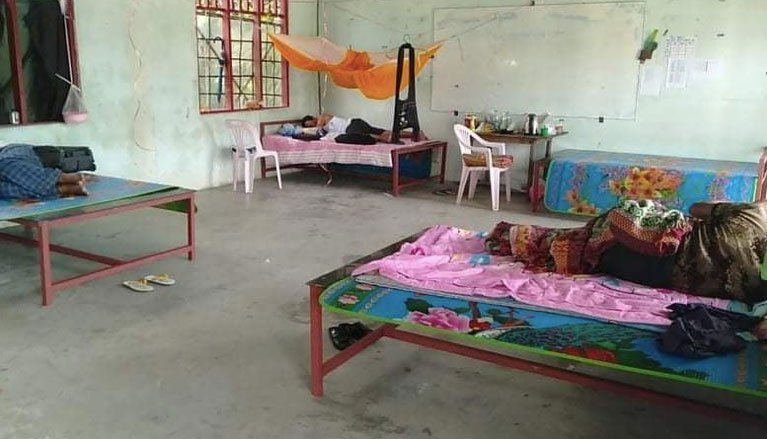
The people of Myanmar are facing a Covid-19 crisis, estimated to have killed 5,281 people and climbing. The international Covid-19 data collection organisation Worldometer calculates, as of 20 July, Burma’s Covid cases reached 234,710. As testing is non-existent and most hospitals are turning people away without a test, these figures are likely to have underestimated the real numbers.
The reality behind the statistics is brutal. The health system has been under-resourced and driven into the ground for decades by the military, which adds to the problem now by listing doctors, nurses and health workers for arrest.
Humanitarian groups have reported at least 200 attacks on health workers and facilities that have left at least 17 people dead. It is estimated that more than 400 arrest warrants for doctors and 180 for nurses have been issued for violating Section 505 (A) of Myanmar’s penal code.
Insecurity Insight and an alliance of international organisations working in health and human rights, released a paper that found between 11 February and 11 May, 157 healthcare workers were arrested, 32 wounded and 12 killed.
The independent Assistance Association of Political Prisoners reported, as of 19 July, 919 people have been killed and 6,828 arrested by the military.
A health worker, Hnin Hnin [a pseudonym] explained the difficulties: ‘Public hospitals can’t treat people, private hospitals will do so for as much as USD$12,000. You can’t fight a pandemic in these conditions; the situation will only get worse.’
Hnin Hnin told Karen News, ‘We are willing to help people, but the military has made it impossible to work effectively. Oxygen suppliers are under orders to prioritize the military, this places ordinary people at the back of the queue. In Yangon, we hear the military has shot at people queuing to buy oxygen or to refill cylinders. People are on their own.’
Many city-based people under threat from the military fled to regions under the control of ethnic armed organisations for safety. In retaliation, the military increased its attacks on ethnic villages, resulting in 70,000 people being displaced into jungle hideouts. These people are now at risk of dengue, malaria, dysentery, respiratory and Covid-19 infections.
Covid-19 Emergency Response Committee officials of the Karen Health and Welfare Department (KDHW) under the Karen National Union said they are putting in place Covid-19 prevention programs such as health education campaigns, and setting up clinics in populated areas.
Padoh Saw Diamond Khin, department head of the KDHW said, ‘We are facing many challenges. We’re trying to step up our Covid-19 responses, but we’re short of medical supplies to effectively carry out our programs.’
Padoh Saw Diamond Khin explained the difficulty in getting tests: ‘In all seven districts, there is only one PCR test in Klo Yaw Lay. As a result, our PCR machine can no longer read when the virus changes strains. This is difficult for us to cope with.’
He said that, despite the shortfalls, the KDHW committee is working to improve protection in each district.
‘We will increase health education campaigns, including going from place to place with loudspeakers providing prevention messages to the community. Burma is now facing oxygen shortages to help treat Covid-19 patients and we also will have a similar situation if cases continue to increase. For now, we don’t have many patients with severe symptoms, so we are still able to cope with our current capacity.’
Hnin Hnin said they have worked throughout the hospital system in Burma, and this is the worst it’s ever been.
‘We know there’s valuable medical equipment and urgent medicine that’s needed to help treat the virus, but we’re unable to get it processed through customs because of military orders. I think many more people will die unnecessarily, unless there is international intervention.’
International help is available and willing, but unable to access the country. The military coup leaders are unwilling to lift their restrictions on the country, its citizens and political opponents.

More from Mekong Review
-

A military coup in Myanmar
-
As violence mounts, journalists in Myanmar face growing risks
-
In Myanmar, many have taken salvation into their own hands.
- Tags: Free to read, Myanmar, Notebook, Phil Thornton
