
Preserving Cantonese
Chong Ja Ian
Simin Li’s book is a reminder that continuing assertions about the singularity of Chinese culture and politics belie the pluralism and diversity of the Sinophone tradition.


Simin Li’s book is a reminder that continuing assertions about the singularity of Chinese culture and politics belie the pluralism and diversity of the Sinophone tradition.
Shifting Horizons: The Generation of Emancipatory Architecture in Taiwan is a unique exhibition including the many aspects that make up architectural production and attempting to locate the formation of contemporary Taiwanese architecture.

Ava Chin’s memoir is a story of roots dismissed and homes denied.

A poem from Julienne Maui Castelo Mangawang

Nature provides expressive backdrops for Han Kang’s fiction; while she chronicles human frailty and barbarity, she also allows the light to seep in through the foliage.
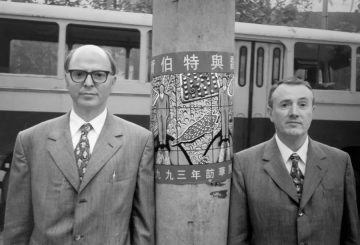
Among a post-Tiananmen flurry of activity, Gilbert & George, the British duo who’d been a dominant force in the UK’s 1980s art scene, made a trail to China and inspired many looking to break free of their constraints.

How does one save the world against evil with little more than one’s own imagination? When faced with hopeless nonsense from the political leadership, what can one do with their writing?
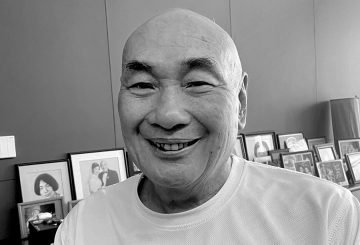
Singaporean actor Lim Kay Siu on the differences between acting in Hollywood and in Singapore, the power of theatre to raise public awareness of important issues, and getting political on live streams while playing a ukulele.

We’re all just finding ways to relieve the anxieties of living in a world that’s spinning out of control.

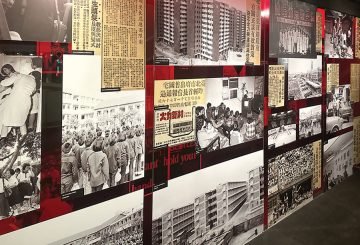
Walking through a new exhibition on national security in the Hong Kong Museum of History.

Scenes and reflections from Bohol.
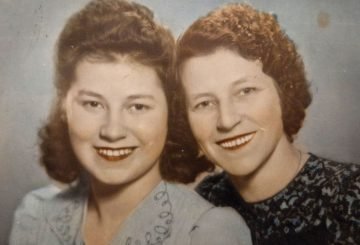
Cousin Merle’s abscission from the family tree didn’t elicit any great feeling on my part, but the fact that there was no Chinese blood in the family was a little more complicated.
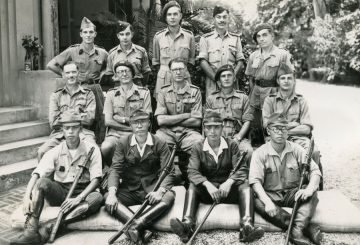
Lieutenant Colonel E.D. Murray—“Moke” to friends and fellow officers—knew nothing about Cambodia, but for a few brief weeks towards the end of 1945, he was, in his own words, its “uncrowned king”.

Both Patricia Evangelista and Neferti X.M. Tadiar’s books question what it means to be human. While some are valued because of their contribution to capitalism, those who are less productive in the profit-making sense are treated as disposable.

Some ghosts aren’t vengeful spectres waiting to shock or scare in the night. Even so, it might still be unbearable to think of them.

Few who encounter Pas-ta’ai, the ritual to the “little people”, and the complex, sometimes contradictory, folklore associated with it are unmoved. Some even become obsessed with unravelling the ceremony’s mysterious origins.

While the bulk of the book focuses on diplomacy, Living the Asian Century can also be read as an introduction to the governance style of Singapore’s first generation of leaders as seen through Mahbubani’s eyes.
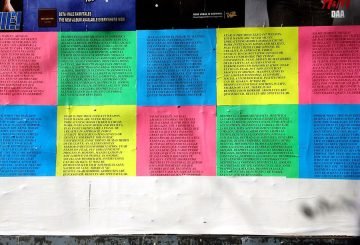
Instead of asking what is or how to be one’s authentic self under capitalism, Peripathetic is curious about whether capitalism leaves us with any room for authenticity at all.

For a relatively slim volume, Lio Mangubat’s Silk, Silver, Spices, Slaves: Lost Tales from the Philippine Colonial Period, 1565–1946 covers a broad swath of Philippine history.

A poem by Leigh Doughty

The adoption of chữ Quốc ngữ, the Vietnamese alphabet that has officially been in use for over a century now, was a notable part of Vietnam’s effort to pull itself out of China’s orbit.
A poem by Alvin Larida, translated from Kinaray-a.

Matt Pottinger doesn’t much like the term “China hawk”. Even so, he’s become one of the most prominent voices in the United States pushing for a tougher line against Beijing.
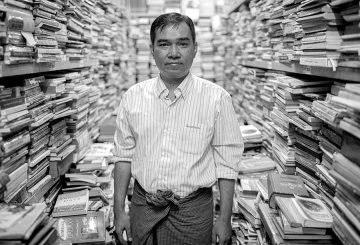
For San Lin Tun, writing about Myanmar in English is a way for Myanmar writers to take control or ownership of the country’s narrative.

Indonesia’s National Library may not contain a lot on West Papua, but five books, reviewed by Andreas Harsono, describe its tormented history.

Theroux’s Burma Sahib is a novel about awakenings: sexual, political and literary. Filling a historical void with fiction, Theroux invents and probes every nook and cranny of Orwell’s life in Burma.

Thae Yong-ho’s book, a must read for the dedicated band of North Korea watchers, reminds us of the millions still struggling to survive between the 38th Parallel and the Yalu River.

Zhou Enlai might have attempted to temper some of Mao Zedong’s worst excesses, but he did not have the courage to defy Mao when it counted the most.

Taiwan is constantly forced to assert its own identity and presence. Yet this struggle hasn’t made it impervious to colonial hangovers.

Gankhuugiin Purevbat was never keen to claim credit, but his contribution to the rebirth of Mongolian Buddhism and the decolonisation of Mongolia cannot be denied.

Poetry from Brandon K. Liew and Daryl Lim Wei Jie 林伟杰

Hai Fan’s Delicious Hunger doesn’t focus on major historical milestones, but it doesn’t mean that the experiences described in this collection of short stories are inconsequential—quite the opposite.

Like many in Singapore, artists exist on a strange monochromatic spectrum—the lighter side provides access to opportunities and awards, the darker potentially leading to loss of employment. How should one navigate this space?

The rich traditions of Adat Perpatih in Negeri Sembilan demonstrate how deeply rooted customs can evolve while maintaining their core values.

Creating Feeding Ghosts, a graphic memoir, was the only way Tessa Hulls could think of to repair her relationship with her mother and make sense of the responsibilities borne by each generation.

Using the photographic archive to rethink Myanmar’s past.

She Wanted to be a Beauty Queen is a good read for anyone, but, together with supplementary material like George Quinn’s comprehensive afterword, is an especially terrific resource for students of Indonesian or Southeast Asian literature.

A focus on Singaporean authors, coupled with the fact that bookstores in the city have found it increasingly difficult to survive, makes Book Bar feel like an anomaly.

“Whenever I think of a family member, I always think of A-ma. Her life tells the story of the Chinese diaspora in Southeast Asia.”

That animals and plants have been inserted, in increasingly powerful ways, in historical narratives represents a powerful challenge to human-centred accounts that have long been dominant.