
To traverse the unbearable
Liesl Schwabe
“As Freud has said, if we don’t mourn, we’ll be trapped forever in melancholy as a violent site. That, to me, is a worldwide symptom”


“As Freud has said, if we don’t mourn, we’ll be trapped forever in melancholy as a violent site. That, to me, is a worldwide symptom”

In Bengali culture, ilish is deeply intertwined with identity, memory and celebration. But the fish has also been caught up in questions of trade, diplomacy and politics between India and Bangladesh.

A look into the lives of Vietnamese workers in Myanmar’s scam centres.
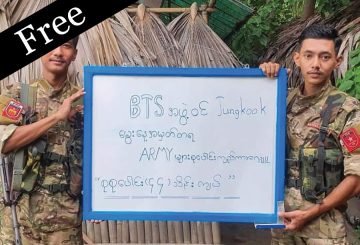
In a world that often overlooks the power of young people online, fan communities have emerged as an unseen engine of revolution in Myanmar

A conversation with Saigon Soul Revival, a band “on a mission to bring back the raw, live sound of 1960s and 1970s Vietnamese rock and soul music”.

In the face of funding cuts and growing oppression, Cambodian reporters cling on to hope through memories of a golden age of journalism.

The Miss Universe franchise has been dismissed as a chauvinistic relic, but Thailand’s long-standing fixation with such pageants suggests that there are deeper implications.

Neighbourhood conversations, sights and sounds in Shivajinagar.

Attempting to rebuild their relationship after her coming out, a daughter finds a momentary connection with her mother over Sanmao’s Stories of the Sahara.

Far from dismal or desolate, Lingga mornings reveal the everyday intimacies borne through connections near and far.

While Y2K’s SM Town artists reflected a new era and hopeful future, the K-pop artists of 2025 have been positioned as soft power cultural pawns.

Waves Rising beautifully commemorates Ho Poh Fun’s life’s work, perhaps feeling like it needed to smoothen out some things bubbling just under the surface.

A comic by Juliette Yu-Ming Lizeray, reflecting on her shifting relationship with hope.

Banning books might bring the Malaysian government short-term political gain, but this restriction of access to different perspectives could have serious long-term repercussions.

On not coming to terms with the past in Indonesia.

Dina Zaman brings a lot from her past to Malayland, but she’s also firm in looking forward and seeking the humanness in Malaysia’s obsession for categories and othering.

A historian journeys to České Budějovice in Bohemia in search of the archive of Filipiniana left behind by Ferdinand and Friedrich Blumentritt.

If history is written by the victors, then literature is the rebellion of the defeated.

David Graeber’s notion of “total bureaucratisation” isn’t just a fitting analytical tool for global contemporary life; it also mirrors, with uncanny accuracy, the paradoxes of Singapore’s cultural policy.

A poem from Domar Batucan Recopelacion

Two group shows staged in Bangkok question mainstream Cold War narratives through contemporary art.
Poetry by Aisha Khalid.

When families affected by extrajudicial killings in the Philippines speak and shed tears of sorrow and anger in front of legislators and flashing cameras, they’re finally able to transform shame into outrage.

Khieu Ponnary, once called the “mother” of the Khmer Rouge, had seemingly vanished from history while the regime was at its height.

Forty years after the world’s worst industrial disaster in Bhopal, activists and survivors are still struggling for justice and accountability.

Andrew Lam had never set out to be the preeminent chronicler of the global Vietnamese diaspora, but realised that “when I spoke up for those that couldn’t, I found my tongue”.

Dorothy Wai Sim Lau undertakes a nuanced interrogation of how fame, altruism and regional identity intersect in Asia’s transnational mediascape.

Rebecca Toh, the founder of Casual Poet Library, on carefree wandering and taking one’s time.

Publishing in Cambodia is still a fledgling, fragile industry, but it’s growing fast.

A review of two books on finding—or perhaps ‘freeing’ is a better word—one’s voice through acts of creation, whether it’s prose, poetry, painting, drawing or cooking.

You Must Take Part in Revolution combines powerful imagery with a compelling plot to convey the political turmoil we’ve experienced and might face in the near future.

“Apart from illustrating how invested the authorities still are in shaping the official story of Vietnam’s wars of liberation, my experience at Thế Giới also revealed an almost religious faith in the power of the written word.”

Did the man who inspired a character in Joseph Conrad’s novels leave behind a fortune in a Swiss bank?

While the voices and expressions in Chinese rock have come from Chinese musicians, outsiders have consistently injected know-how and resources into the country’s marginalised underground musical movements.

In a new banner by Taring Padi and Noongar artists, the Noongar figures and Australian fauna and flora integrate with images from an rebellious Indonesian proletarian class in a bold synthesis, creating a dream-like, political logic.

Despite tofu’s lack of structural integrity, Russell Thomas notes that its versatility has given it the resilience to “stand up in a range of figurative and real-life settings”.

Luise Ahrens, a Maryknoll nun and education innovator from the US, worked with seismic stamina for twenty-six years to build up higher education in Cambodia.

Young people from Myanmar are being forced to choose between survival and service in a conflict they had no say in and strongly object to.

Kornel Chang, a diasporic Korean historian and author, paints a picture of a post-Second World War Korea searching for a singular vision of what independence looks like.

A short story by Lia Tjokro.