In her grey and silent world
Lia Tjokro
A short story by Lia Tjokro.
A poem from Julienne Maui Castelo Mangawang
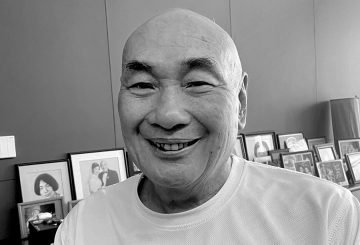
Singaporean actor Lim Kay Siu on the differences between acting in Hollywood and in Singapore, the power of theatre to raise public awareness of important issues, and getting political on live streams while playing a ukulele.
We’re all just finding ways to relieve the anxieties of living in a world that’s spinning out of control.
Scenes and reflections from Bohol.
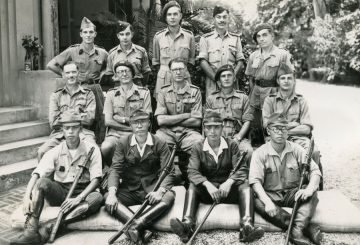
Lieutenant Colonel E.D. Murray—“Moke” to friends and fellow officers—knew nothing about Cambodia, but for a few brief weeks towards the end of 1945, he was, in his own words, its “uncrowned king”.
Both Patricia Evangelista and Neferti X.M. Tadiar’s books question what it means to be human. While some are valued because of their contribution to capitalism, those who are less productive in the profit-making sense are treated as disposable.
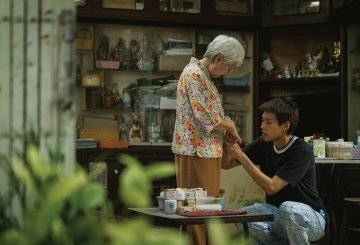
Beyond the reality of family relationships, How To Make Millions Before Grandma Dies paints a portrait of Thai Chinese culture that’s at once singular and relatable.
Despite having held a number of important portfolios as a minister in the city-state’s early years, S. Rajaratnam’s legacy remains largely obscured in Singapore’s public imagination.
Instead of asking what is or how to be one’s authentic self under capitalism, Peripathetic is curious about whether capitalism leaves us with any room for authenticity at all.
The lesson in Ganapathy’s book is salient and applicable to societies beyond Singapore: working class ethnic minorities disenfranchised by dominant societal structures often find themselves enmeshed with criminal justice institutions.
For a relatively slim volume, Lio Mangubat’s Silk, Silver, Spices, Slaves: Lost Tales from the Philippine Colonial Period, 1565–1946 covers a broad swath of Philippine history.
A poem by Leigh Doughty
The adoption of chữ Quốc ngữ, the Vietnamese alphabet that has officially been in use for over a century now, was a notable part of Vietnam’s effort to pull itself out of China’s orbit.
A poem by Alvin Larida, translated from Kinaray-a.
For San Lin Tun, writing about Myanmar in English is a way for Myanmar writers to take control or ownership of the country’s narrative.
Indonesia’s National Library may not contain a lot on West Papua, but five books, reviewed by Andreas Harsono, describe its tormented history.
Theroux’s Burma Sahib is a novel about awakenings: sexual, political and literary. Filling a historical void with fiction, Theroux invents and probes every nook and cranny of Orwell’s life in Burma.
Poetry from Brandon K. Liew and Daryl Lim Wei Jie 林伟杰
Hai Fan’s Delicious Hunger doesn’t focus on major historical milestones, but it doesn’t mean that the experiences described in this collection of short stories are inconsequential—quite the opposite.
Like many in Singapore, artists exist on a strange monochromatic spectrum—the lighter side provides access to opportunities and awards, the darker potentially leading to loss of employment. How should one navigate this space?
The rich traditions of Adat Perpatih in Negeri Sembilan demonstrate how deeply rooted customs can evolve while maintaining their core values.
Using the photographic archive to rethink Myanmar’s past.
She Wanted to be a Beauty Queen is a good read for anyone, but, together with supplementary material like George Quinn’s comprehensive afterword, is an especially terrific resource for students of Indonesian or Southeast Asian literature.
A focus on Singaporean authors, coupled with the fact that bookstores in the city have found it increasingly difficult to survive, makes Book Bar feel like an anomaly.
“Whenever I think of a family member, I always think of A-ma. Her life tells the story of the Chinese diaspora in Southeast Asia.”
That animals and plants have been inserted, in increasingly powerful ways, in historical narratives represents a powerful challenge to human-centred accounts that have long been dominant.
Two Malaysian daughters reflect on the myths of their upbringing, and how these have facilitated and obstructed their sense of home.
A poem from Eileen Chong
What if politicians had to be confronted with all the words they’d threaded into false promises?
A poem by Cassiopeia Gatmaitan.
A poem by Maung Htike Aung.
In his films, Singaporean director Daniel Hui seeks out peripheral figures, tending to them with the kind of attention usually reserved for prominent historical figures.
With little transparency, top-down literary censorship in Vietnam is complex, capricious and contingent upon those implementing the ‘rules’.
Politics, memory, love, obsession and death… all can become fertile material for a writer like Veeraporn Nitiprapha.
The works featured in Joanne Leow’s monograph, Counter-Cartographies: Reading Singapore Otherwise, are examples of (mostly) Singaporeans who refuse to conform to top-down formulations of how to live on this island.
How did the Philippines descend into a demagogic dystopia? How can one explain the rise of the proto-fascist ideology of Dutertismo? And what are the lessons for democracies in the twenty-first century?
Americans like to think that the most cruel excesses of colonialism are reserved for the histories of the British or the French, but Kim A. Wagner draws connections between American behaviour in the Philippines and the tactics of other colonial powers.
Not many Vietnamese books keep track of the experience of living under suffocating communism in the North or keeping up with the get-rich-quick sentiment dominant in the South. Thuận’s Elevator in Sài Gòn captures this with nuance and peculiarity.
An interview with the founder and director of the Ubud Writers & Readers Festival