
Dear Archie
Peixuan Xie
A letter to a friend, on thoughts of ‘home’ prompted by the Thai dream-pop duo, HYBS.


A letter to a friend, on thoughts of ‘home’ prompted by the Thai dream-pop duo, HYBS.

A conversation with Korean queer author and contemporary artist Ibanjiha on their art of humour and succeeding through the heteronormative and hyper-capitalist social order of South Korea.

Decades after the end of Suharto’s New Order regime in Indonesia, a collective nostalgia for the supposed ‘good old days’—driven by historical revisionism and propaganda—is influencing contemporary Indonesian politics.

A piece of flash fiction by Linda Collins and Noelle Q. de Jesus. Commissioned as part of a collaboration between RMIT’s nonfiction/lab and Mekong Review.

The Second Link curates writing that moves beyond the “exhausted metaphors and dusty tropes” of the longstanding rivalry between Malaysia and Singapore.

A renga by Mariyam Haider and Emilie Collyer. Commissioned as part of a collaboration between RMIT’s nonfiction/lab and Mekong Review.

The End of August centres voices rarely heard in English-language fiction—Koreans living in Japanese-occupied Korea and the zainichi Korean diaspora of Japan.

Among the Braves is an attempt to tell the story and struggles of a city, through the lives of the people who have been active in a decades-long movement for democracy.

The twenty-six films screening in Retrospective: Wang Sha & Ye Feng are a testament to the legendary comedians’ breadth both as solo performers and a beloved pair.

In the two novellas, journeys depart from or hope to return to “an eastern port” (Singapore) but instead they both disappear into the obscurities of the seas.
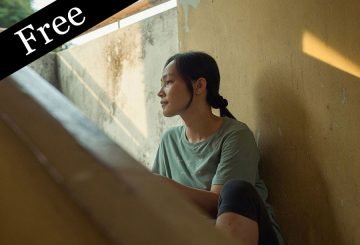
Both Oasis of Now and Tomorrow Is a Long Time are meditations on love, time and space.

In Maymyo Days: Forgotten Lives of a Burma Hill Station, Stephen Simmons does not dwell on the crusty stragglers of the Raj. He chooses to focus on those who made a lasting contribution of some kind, whether tangible, cultural or political.

Both The Sales Girl and If Only I Could Hibernate are contemporary coming-of-age stories set in Ulaanbaatar that thwart most viewers’ expectations of Mongolian cinema.

An interview with Mike Chinoy about covering China for almost half a century, and his new book, Assignment China: An Oral History of American Journalists in the People’s Republic.

The Hong Kong elite are said to be interested only in making money and not in universal values like democracy, human rights and the rule of law. But that’s not true.

Tracing a Khmer-language dictionary’s trajectory across the past century of Cambodian history offers insights into the ways language has been called on to construct—and to challenge—notions of national identity and community.

It had been four years since I last returned to Hanoi. I told myself that I’d never loved this city I had wanted to escape. But time may have helped heal old wounds.
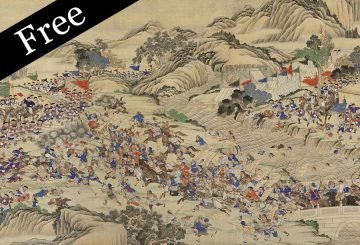
Zhang Daye’s memoir of the Taiping rebellion captures the lived experience of late Qing China.

Law-Yone’s penchant for the telling anecdote, the observation of, and connectivity to, the seemingly incidental, and the insight into the public and private personality makes this book a seminal contribution.

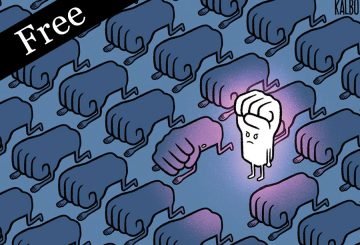
Since participating in a protest in China puts one’s safety in jeopardy, using a blank sign serves as a form of plausible deniability. It’s also consistent with the complex reality of memory and historical events in China.

A short story by Aditya Narayan Sharma

Could distance runner Soh Rui Yong’s absence from Singapore’s national team point to something bigger about how things work? He thinks this could be a “good opportunity” to ask questions.

It is especially important to pay attention to Myanmar right now, but the future of Burmese-language instruction in English is uncertain. Joe Freeman speaks with linguist Justin Watkins about his work.

When Oliver Slow writes that the Myanmar military must return to the barracks, he presumably means they should only be in the barracks. Readers may wonder if they were ever so confined.

What Philip J. Stern offers is a reflection on the nature of power—how organisations created to share risks and raise capital for economic activities ended up becoming a dominant force.

Mak Yong encompasses elements of dance, drama, storytelling, music and ritual, and is a women-centred folk tradition nurtured by community bonds.

Buried in Burma, Clive Branson’s antifascist legacy is found in his letters and a symphony. Arakan (Rakhine State) where he died has continued to be a killing ground.

Having survived a Spanish prison and borne witness to the Bengal Famine, Communist painter/poet Clive Branson becomes a World War II tank commander. A harrowing battle in Burma looms ahead.

A new essay in three parts by Edith Mirante, author of Burmese Looking Glass, about Clive Branson, a British Communist poet/painter who fought in the Spanish Civil War and was killed in Burma during the Second World War. Part 1 includes anti-colonial India and a love story.

While the Myanmar military is responsible for the violence, Kaamil Ahmed points out in I Feel No Peace: Rohingya Fleeing Over Seas and Rivers that more parties are complicit in the exploitation and abuse of Rohingya refugees.

Murong Xuecun fled China after writing his book Deadly Quiet City: Stories from Wuhan, COVID’s Ground Zero. Today, he’s living in exile in Australia. It was never obvious that his life would go on such a trajectory. Kevin Yam chats to him about his writing and his choices.

In Ajoomma, a Singaporean-South Korean co-production directed by He Shuming, an auntie travels to South Korea to visit the shooting locations of her favourite K-dramas… but gets far more than she’d bargained for.
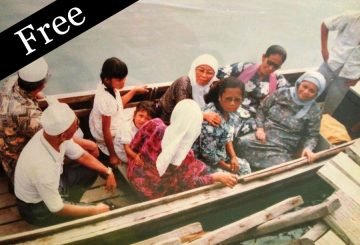
Remembrance of indigenous histories and erasure is painful. But to remember politically and ethically, despite the ways memory has been dismissed or commodified, is to be hopeful and future-focused. Nabilah Husna on the power of indigenous memory.
Amid the bloody war on drugs and the Covid-19 pandemic, political cartoonists in the Philippines, like Kevin Raymundo and Andoy Edoria, have produced hard-hitting work that has struck a chord with their fellow Filipinos.

In Myanmar, many have taken salvation into their own hands.

A friendship forged between an essential and non-essential worker.

Twenty-five years after the death of the great Japanese actor Toshiro Mifune, a re-appraisal of a film that has been unjustly neglected.
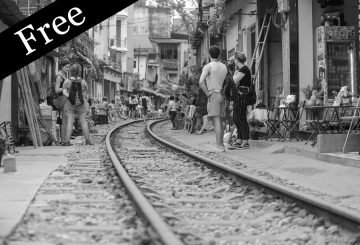
A slice of Hanoi life comes to an end

The magic of Mekong Review lives on

The roadside artist and his subject