



Pulp III: An Intimate Inventory of the Banished Book
Shubigi Rao
Rock Paper Fire: 2022
.
An assemblage of words and images envelops the pages of Shubigi Rao’s Pulp III: An Intimate Inventory of the Banished Book. This volume is the third instalment of Rao’s decade-long, multimedia Pulp series, which includes two previously published books, a documentary entitled Talking Leaves and an installation for the Singapore Pavilion at the 2022 Venice Biennale. For Rao, building the Pulp universe was “to make manageable the unimaginable, and yet retain the unquantifiable, immeasurable nature of loss”. What unfolds in Pulp III is Rao’s process of catalogue-making and annotation, documenting her encounters with texts in varying formats, from printed books to archival records, that, at some point in the past, confronted ‘banishment’.
Rao presents ‘banishment’ as a shorthand for endangerment, resulting from acts of persecution, destruction and abandonment. The “banished book” covers materials that suffered from the more obvious and deliberate acts of censorship, stealing and burning. Represented too are those that survived fire and flood, as well as materials containing endangered languages, marginalised and forgotten along with the cultures they represent. In Pulp III Rao threads multiple seemingly unrelated diasporic and marginalised communities, making their joys and struggles come alive, demonstrating their resilience and commitment to the survival, preservation and accessibility of the endangered materials. Voices of various personalities—librarians, custodians, booksellers, scholars, writers and cultural activists—are given ample space.
More from Mekong Review
-

What sets Rachel Heng’s historical fiction apart is how she moves beyond this understanding of History (with a capital H) by showing how grand events are mediated by everyday interactions.
-

Noise can be a powerful tool of protest but also healing, its cathartic value directly correlated with its loudness.
-
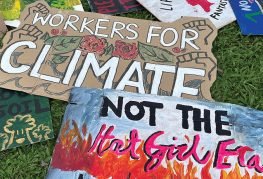
Climate activists are still stumped by the question of how to ensure that public power results in real, meaningful change. At the same time, the climate movement is setting its sights further than ever.