


Ocean, as Much as Rain: Stories, Lyrical Prose, and Poems from Tibet
Tsering Woeser, edited and translated by Fiona Sze-Lorrain with Dechen Pemba
Duke University Press: 2026
.
In the summer of 2008, I had a video call with a friend from Boston and Tsering Woeser in Beijing—the first time I’d ever seen or spoken to her. Tibet was then engulfed in nationwide protests against Chinese rule, and Woeser was one of few voices providing almost daily updates on the unfolding events. While the world was glued to the Summer Olympics in Beijing, the Chinese authorities responded to overwhelmingly peaceful Tibetan protests with brutal force, leading to deaths, mass arrests, and imprisonment—cracking down on anyone who might have brought Tibetan resistance together.
Artists were disappearing. Dhondup Wangchen, a filmmaker, was arrested in March 2008. Jamyang Kyi—a writer and musician, and a close friend of Woeser—was arrested in May, while eighty-one-year-old traditional printer Paljor Norbu was arrested in October. Fearing that Woeser, too, would disappear, I wrote:
Every day when I open the internet
My heart fears that there will be news
Of your disappearance,
Like Dolma Kyab into a cell
Like Jamyang Kyi, taken away unseen
Like that opera master captured in darkness
Before his songs became one with the wind.
Woeser is a product of China’s occupation of Tibet and its grand design to produce obedient, grateful, and Party-praising Tibetans—a project for which thousands of Tibetan youths were educated, trained, and groomed. Born in 1966, she grew up in an army family, reading and writing only in Mandarin, which made her “capable of writing long eloquent speeches about Emperor Qin” and able to “memorize Tang poems and Song verses from back to front”. Yet she chose her own destiny. It took her twenty years to use the colonial language she’d been taught to ‘write back’—“to narrate the stories of Tibet”—and to resist being co-opted and wholly assimilated. The words she writes are in Chinese, which, she says, “will forever sadden me”.
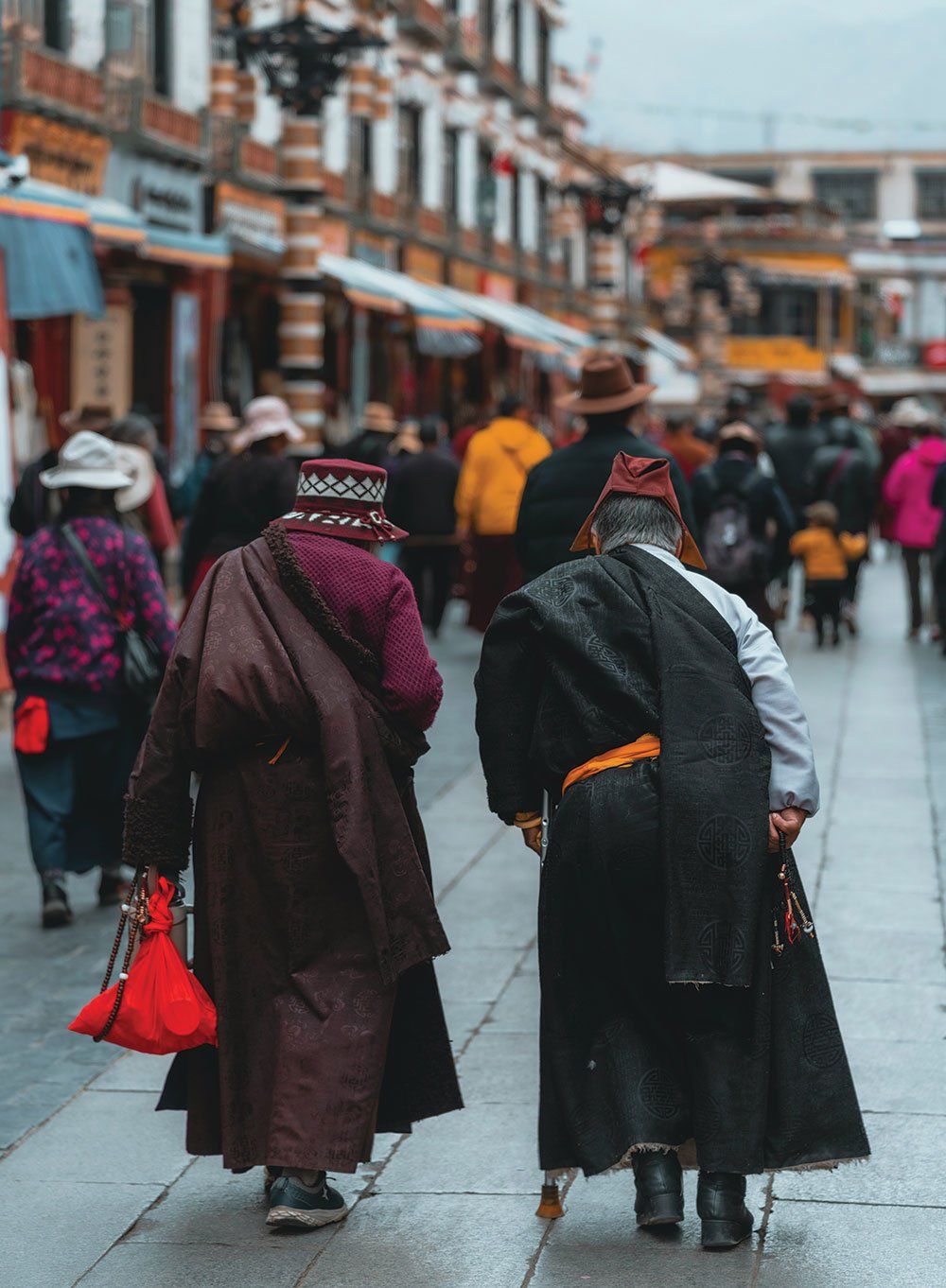
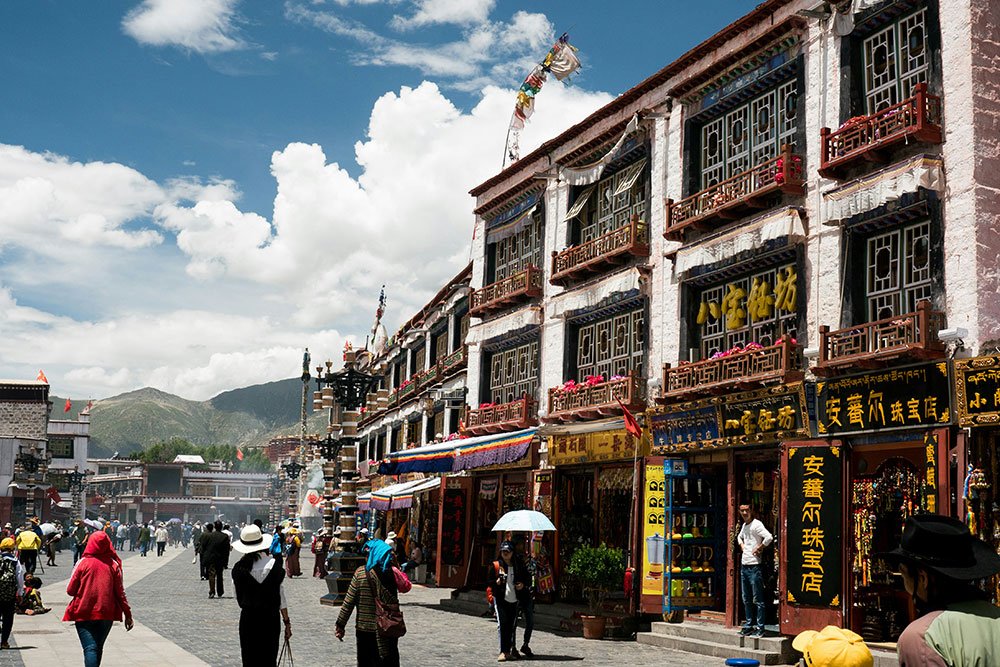
Although Woeser observes that her tongue had undergone a “surgery” that left her unable to speak a full sentence in Tibetan, her heart and mind have remained intact. Lhasa has also been reshaped, stuffed with concrete and glass buildings. Still, the city’s sacred essence endures in its temples, monasteries, and adobe houses in the old quarter. No Tibetan goes to the holy city to see the kitschy malls and tacky bars.
Many Tibetan intellectuals take great personal risks to chronicle life in Tibet. Go Sherap Gyatso is currently serving a ten-year sentence for his writing, and musician A-sang was rearrested for his song ‘Prince of Peace’. Writers Theurang and Shokjang, and language advocate Tashi Wangchuk, each spent time in jail for their work.
What sets Woeser apart is the breadth of her work, which spans poetry, fiction, history, criticism, essays, and blogs. Since being dismissed from her position as editor of Tibetan Literature in 2003 and ordered to undergo ‘re-education’ for her book Notes on Tibet, Woeser has faced constant harassment, travel bans, and surveillance. Yet she has not given up writing—if anything, her words have only grown more incisive. “I know if I don’t speak now, I’ll be silent forever,” she wrote in a poem titled ‘December’.
For Woeser, “to write is to experience; to write is to pray; to write is to bear witness”. Her writing and her voice serve as a bridge between occupied Tibet and those of us in exile, as well as a link with the Chinese people, helping them understand the consequences of occupation.
Much like Osip Mandelstam and Anna Akhmatova—two leading Russian intellectuals who shared literary values and endured severe persecution under Stalin (Mandelstam died in a transit camp while Akhmatova survived as a symbol of cultural resilience)—Woeser chronicles Beijing’s repression of Tibet, driving the Tibetan people, their language, culture, and way of life to the brink of annihilation. In ‘Back to Lhasa, Day One’, a chapter in Ocean, as Much as Rain: Stories, Lyrical Prose, and Poems from Tibet, she writes: “As we were trying to find accommodation, the flashing red lights of a dozen police cars came toward us out of the blue. Soldiers stood on the roadside. A glimmer of light illuminated their shields and guns, as well as their rigid bodies under their coats. I couldn’t tell if they were from the People’s Armed Police or the People’s Liberation Army. When we reached a crossroads, the police—in troops of three to five—were stopping cars and ordering everyone to show their IDs.”
Lhasa—a place that holds many “childhood memories” for Woeser—is now flooded with soldiers and armoured cars rumbling through the streets. “Prayers drowned by deafening party music and dance, Lhasa is no longer the paradise, the sacred and pure land of the immortals.”
Woeser writes about Karma Samdup, a prominent environmentalist and philanthropist who was jailed for fifteen years and deprived of political rights for five; Rinchen, a sky-burial master who kept a record of all the dead he cut and fed to the vultures; and Yakshi Taktser, the Dalai Lama’s family estate next to the Potala Palace—a wreckage under lock and key. “Ruins personify a city within a city, a people within a people, a death among deaths. Much resides within the ruins.”
Nothing escapes her sharp eyes. She notes trivial details: “a dead spider hanging in midair, the remains of newspaper cuttings from the People’s Daily, a torn poster” and “an old mirror affixed to a pillar”. Stubborn weeds struggle through traditional clay walls. Amid these devastations, and the denial of basic dignity, China pushes for unbridled resource extraction and unsustainable economic growth on the Tibetan Plateau. On the road to Lhasa, Woeser sees a giant propaganda poster that reads: “Enjoy Government Special Policy: In This Special Area, All You Have To Care About Is Making Money”.
Ocean, as Much as Rain is Woeser’s testimony of resilience, and of the hope that nearly a million Tibetan children—corralled in Chinese boarding schools, taught only in Mandarin and subjected to ideological education—will one day follow her footsteps to assert their voice and demand their freedom.
This would be a full circle, much like the Chinese silver coins that Woeser writes about. During the Chinese Civil War in the 1940s, the Communist Party confiscated silver heirlooms from the Chinese, melted them down, and produced the coins to give to Tibetans—particularly local leaders and aristocrats—to buy their allegiance and loyalty. It’s possible that hundreds of thousands of these coins were distributed across Tibet. In the early 1980s, after a slight relaxation in the controls imposed over Tibet, the Tibetans melted the coins they’d managed to save and used them to make images of buddhas and bodhisattvas.
For Woeser and exiled Tibetans, Tibet is our dream and aspiration—a place we ultimately long to return to, in freedom and in dignity. It’s a yearning we recognise in the words of other exiles; as the Palestinian poet Mahmoud Darwish wrote: “I belong there. I have many memories, I was born as everyone is born. … I have lived on the land long before swords turned man into prey. … And I cry so that a returning cloud might carry my tears.”
Skillfully edited and beautifully translated by Fiona Sze-Lorrain with Dechen Pemba, Ocean, as Much as Rain offers deep insight into a writer who flourishes, as the Indian author Pankaj Mishra writes, “in profoundly unpromising circumstances” and yet “ennobles the free life of the mind like few writers today”. This is essential reading for all Tibetans and for anyone who wants to understand what it means to live under colonial occupation.

More from Mekong Review
-
Is Tojo Hideki a “Great Man” who single-handedly determined the course of history, or is he merely a character in a bigger story, a reflection of many crashing political and social forces?
-
The Kawa Karpo is one of the most sacred mountains in Tibetan Buddhism. A 250-kilometre circumambulation is completed by thousands of pilgrims every year.
-

Is the twenty-first century an Asian one? According to former Singaporean diplomat Bilahari Kausikan, this is entirely the wrong question to be asking.
- Tags: Bhuchung D. Sonam, Issue 43, Tibet, Tsering Woeser
