

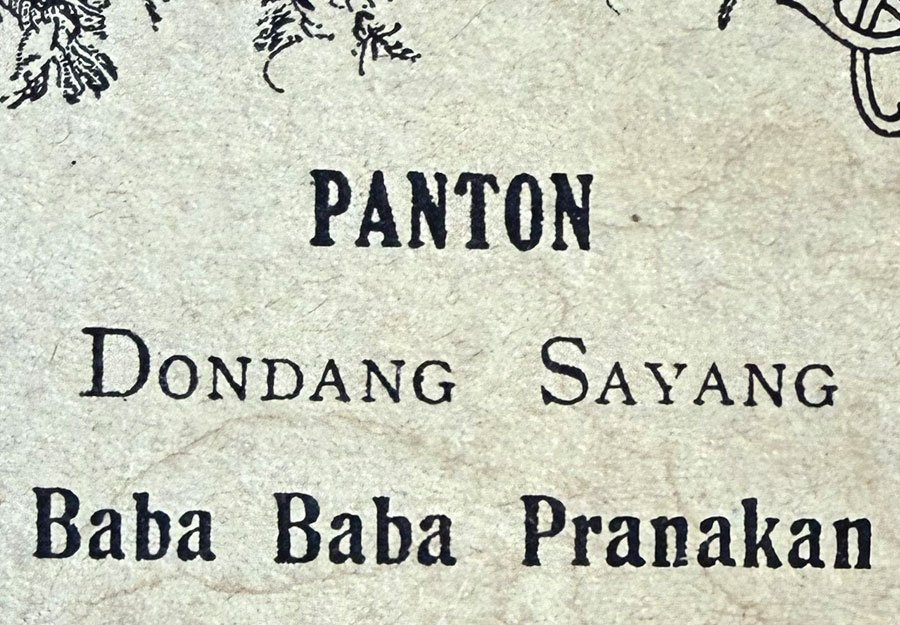
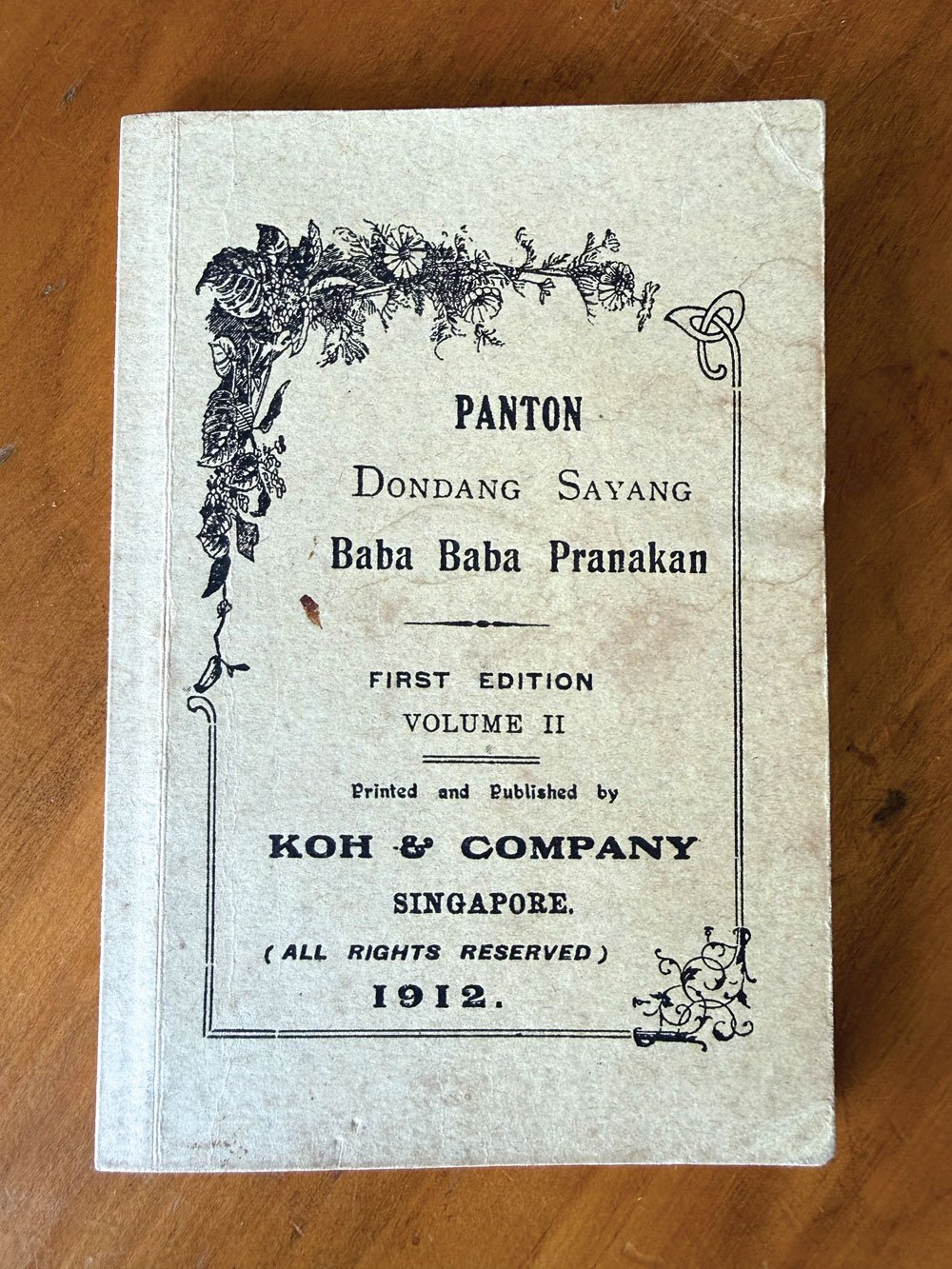
Pantun Baba Chan: The Art and Beauty of Traditional Baba Malay Poetry
Chan Eng Thai
Tuttle Publishing: 2025
.
In a 2021 National Geographic article, the travel writer Rachel Ng explores the intricacies of Peranakan culture—the history, architecture, fashion, and cuisine of a hybrid people descended from Chinese settlers who married local Malay women in southern Malaya.
Ng points out the etymologically intriguing fact that Peranakan women are called Nyonya—from the Portuguese ‘dona’—while the men are referred to as Baba, an honorific with Persian origins. She calls the Peranakan Chinese (or Straits-born Chinese) “the original fusion culture”, noting the group’s wealth and eminence during the colonial era, when their facility with different languages, including English, conferred on them a certain status among British officials.
Ng also surveys the threats to traditional Peranakan culture during Singapore’s post-independence push for economic development—the razing of old shophouses to make way for modern apartments, the replacement of beaded slippers with sneakers. What she doesn’t mention is the Peranakans’ waxing and waning prominence in the performing and literary arts, such as their sporadic efforts in the last century to preserve a musical genre known as dondang sayang, which flourished from the late 1800s to the 1960s.
More from Mekong Review
-
The publication of The Albatross File: Inside Separation is very welcome for those with an interest in the Singapore story—though less for the hitherto secret documents it reproduces and more for the hitherto secret oral histories.
-

A poem from Hon-Wai Wong
-
In Vanessa Chan’s The Storm We Made, a family is undone by a secret betrayal during the British and then Japanese colonisation of Malaya.
- Tags: Chan Eng Thai, Issue 43, Ken Kwek, Malaysia