



Radical: Readings in Rizal and History
John Nery
San Anselmo Press: 2023
.
The Drama of Dictatorship: Martial Law and the Communist Parties of the Philippines
Joseph Scalice
Cornell University Press: 2023
.
Republicanism, Communism, Islam: Cosmopolitan Origins of Revolution in Southeast Asia
John T. Sidel
Cornell University Press: 2022
Half devil and half child”. That was how Rudyard Kipling, arguably the most eloquent poet of empire, described Filipinos in the twilight years of the nineteenth century. First published in The Times on 4 February 1899, the unabashedly jingoistic poem, titled ‘The White Man’s Burden’, sought to justify America’s brutal colonisation of millions of Filipinos. In a classic gaslighting exercise, Kipling spun America’s imperialist project as a new ‘civilising mission’, spreading modernity and Christianity to yet another ‘savage’ nation. But America’s actions faced stiff opposition from Americans themselves, most notably from writers like William James and Mark Twain. For James, America—a nation founded on the principles of liberty—had now “joined the common pack of wolves” and transformed into a source of “fear to other lands”. On his part, Twain, who passionately dedicated himself to the anti-imperialist cause, lamented that “we do not intend to free, but to subjugate the people of the Philippines. We have gone there to conquer, not to redeem”
But while Twain and James were primarily concerned with the betrayal of their beloved nation’s foundational principles, Kipling was a hopeless orientalist who never missed a chance to cheer on the West’s subjugation of Asian societies. As Edward Said famously explained, systematic dehumanisation of non-Western societies—often through cultural, artistic and pseudo-scientific works—was a cornerstone of the European imperialist project.
More from Mekong Review
-

Poetry from John Brixter Tino
-

Poetry from Lawdenmarc Decamora
-
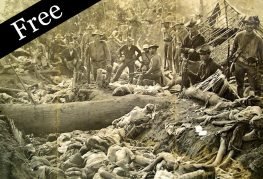
Americans like to think that the most cruel excesses of colonialism are reserved for the histories of the British or the French, but Kim A. Wagner draws connections between American behaviour in the Philippines and the tactics of other colonial powers.