


Further and Further Away
Polen Ly
Anti-Archive: 2022
.
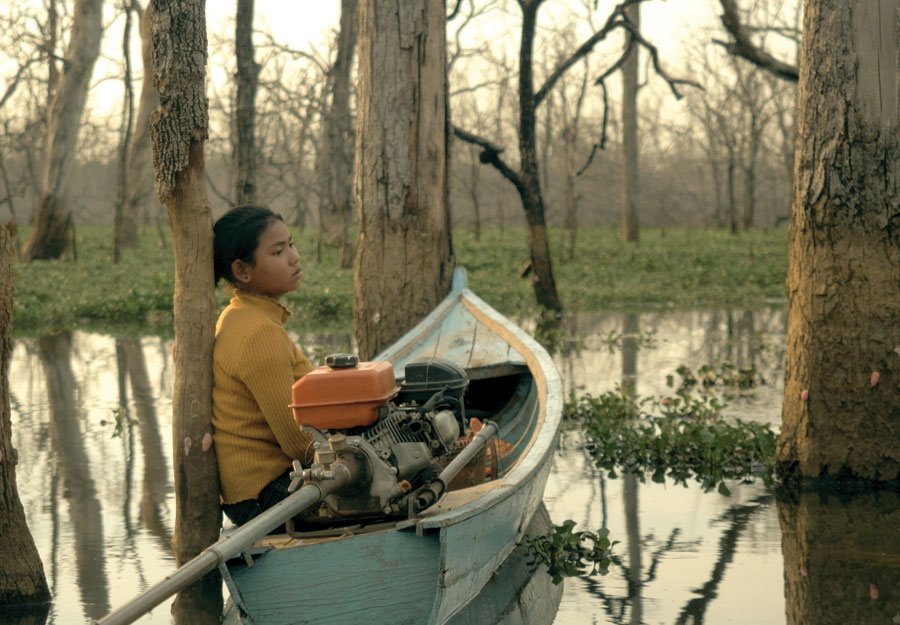
In the dim light before dawn, a woman paddles alone in the forest. As she steers her boat among the trees, the hooting trill of a barbet is heard. Perched in a tree, as if guarding a gate, a family of monkeys watches her pass, a stork crosses the skies high above. The boat comes to a stop. She surveys the place, her concentrated frown betraying a turmoil of feelings and thoughts.
Next to a little roof, she lights cigarettes and incense, tucking them in the bark of a tree. Her parents are buried here, in the land under the water. ‘Here’ is now part of the reservoir of Cambodia’s largest hydropower dam, the Lower Sesan 2.
There are climate disasters and there are development disasters. Both are inherently unnatural, and in several aspects, similar: avoidable, decided by a minority, with impacts felt by many. Built at the confluence of two Mekong tributaries in northeast Cambodia, the Lower Sesan 2 is a twenty-five-year saga that reads like a tragedy in the making. Impact assessments had warned that the dam would lead to the displacement of thousands of Indigenous villagers, the obstruction of fish migration routes and a significant decrease of the fish biomass of the entire Mekong basin, with cascading effects on the diets and livelihoods of tens of thousands of people.
More from Mekong Review
-

Tracing a Khmer-language dictionary’s trajectory across the past century of Cambodian history offers insights into the ways language has been called on to construct—and to challenge—notions of national identity and community.
-

Street 200 in Phnom Penh is where people come together with a common passion for cinema.
-

A poem by Jeric Olay.
- Tags: Cambodia, Issue 33, Polen Ly, Yann Bigant