

Photo: Abby Seiff
Five years ago last Saturday, Kem Ley was gunned down in broad daylight at a Phnom Penh gas station. He was having his morning coffee.
The activist, commentator and analyst had the ear of millions of Cambodians through his popular radio broadcasts. His criticism of the government was unstinting. Just days before his 10 July 2016 assasination, Kem Ley spoke with Radio Free Asia’s Khmer-language programme about a major investigation by the international NGO Global Witness into the nepotism and financial holdings of the family of Prime Minister Hun Sen. In clear, concise language he detailed the findings to those far from the world of INGOs: this is what he excelled at.
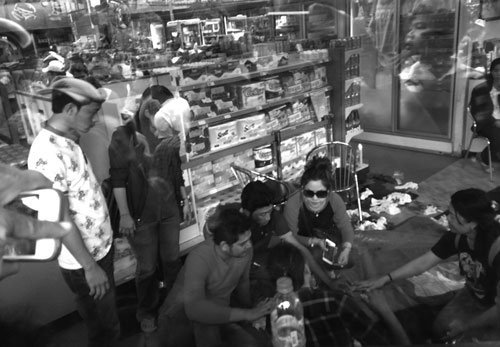
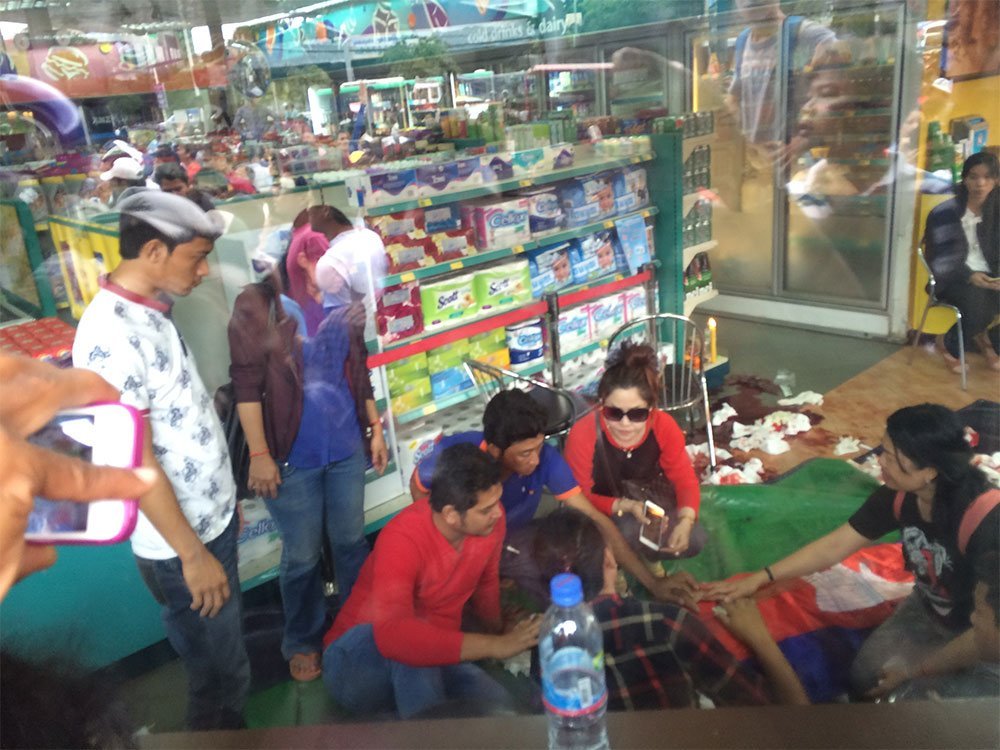
His murder, then, was a public event. Moments after the shots rang out, Cambodians began thronging to the scene of the crime. When the police and ambulances arrived, they blocked them from taking the body. ‘They suspect the police will do something to hide the evidence,’ a bystander told me at the time. ‘This is the same pattern, so everyone knows who is behind it. People who have no power cannot do like that. This is the face of dictatorship.’
The man arrested, tried and convicted as Kem Ley’s killer first gave his name as Choub Samlab, or Meet Kill. He was Oeuth Ang, a poor, former soldier somehow in possession of an expensive handgun. He claimed to have murdered Ley over an unpaid debt of $3000—an unlikely sum of money for someone in his position to have held, let alone loaned. After a four-hour trial, Ang was sentenced to life in prison. As far as the Cambodian government was concerned, the case was finished. The public felt differently.
‘The murder of Kem Ley five years ago constitutes the most emblematic case of impunity in Cambodia,’ Chak Sopheap, executive director of Cambodian Center for Human Rights (CCHR), wrote in a recent blog post. ‘[It] is a constant reminder of the rampant impunity that plagues Cambodian society, especially for crimes committed against critical voices’.
Kem Ley’s killing echoed political murders of years past, particularly that of Chea Vichea, a beloved unionist gunned down in 2004. Two innocent men were convicted for his murder, spending years in and out of prison in a nightmarish parody of justice. Later, a former police chief who had escaped to France, admitted it was a setup.
Nothing as violent as these murders have come to pass in the intervening years, but the repression has continued. One year after Kem Ley was killed, Hun Sen’s government disbanded the popular opposition Cambodia National Rescue Party (CNRP), arresting its president along with scores of other members and redistributing its thousands of parliamentary and local-level seats among the ruling party.
‘The subsequent events—closing down the Cambodia Daily, the arrest of Kem Sokha, and eventually dissolution of the CNRP—proved to be the final blow and much of the fear became reality. The history of these cycles of short periods of crackdowns to be followed by a somewhat re-opening of space is coming to an end. This time feels different and it is different,’ Ou Virak, president of the think tank Future Forum, told Mekong Review.
Activists and journalists report a growing climate of fear.
‘Many have chosen to either stop their advocacy completely, went into exile, or become more “strategic”. More strategic here means self censorship and changing focus away from sensitive topics to those deemed neutral.’
Even the mildest forms of criticism are now sometimes met with shockingly harsh reactions. Three young environmental activists arrested last month face as much as 10 years in prison. Their alleged crime? Filming evidence that sewage had been discharged into the river near the Royal Palace.
And, still, many refuse to be cowed.

More from Mekong Review
-
Photographer Yvan Cohen in Bangkok's disappearing Chinatown
-

A military coup in Myanmar
-
Sand, once inexhaustible, is disappearing faster than ever
- Tags: Cambodia, Free to read, Kem Ley, Notebook
