


When I write, I try not to create something new, but to redact from what’s already said, to transcribe what my many ancestors have given me. What I’ve written springs from my tanah air, the earth and water I’m derived from. To portray the peoples, histories and lands I love.
I must admit I don’t yet trust personal creativity or authenticity. Authenticity is a white myth, as my activist mentor Sue-Ann Shiah says. But I do trust in passing on what’s been passed to me.
In the Malay and also the Malaysian tradition of writing hikayat, with its deep Sufi roots, a book’s quality is reckoned not by the writer’s skills, but by the quality of the characters the story depicts. The wisdom, the piety, the sacrifice, and insight of the heroes in a story are worth more than the person writing it. The portrait supersedes the portrayer. The writer instead is often anonymous: Malay readers see God as the true author, the unseen force that calls potentials, images, letters, peoples, out of the jar of ink and onto the page. What was written could soothe the soul, could heal a torn spirit, could perhaps re-enchant a world so often disenchanted by colonialism, oppression and alienation. It is a world where brothers could quarrel and make up, where you could be enthralled by trees that grew in an eyeblink or bottles of water that taught you unknown languages.
In the same way, the Chinese Malaysian religious tradition sees in all human bodies the potential of becoming saints or little gods — people who by their courage and patience and love of justice could die and so graft themselves into the land. It’s these spirits and gods we venerate, alongside the indigenous spirits of wood and water, which the Orang Asli knew before there was a settler state known as Malaya. This is not our land, and to acknowledge this while firmly calling it our home is perhaps the tension of every non-indigenous Malaysian.
It is this hikayat tradition and this Chinese pattern of worship and belief that I have drawn on to craft this work. I’ve sought to riff off family histories and literary traditions to try to tell their stories well, including the uncomfortable stories.
I’ve tried to portray women who fought capitalism in the Emergency, and before that the Japanese colonisers, to portray the besieged but thriving LGBT underground in Kuala Lumpur. I’ve attempted to join the collaborative storytelling so central to the Malaysian hikayat tradition to the other traditions I know.
In borrowing from those myriad Malaysias, I’ve attempted to suggest one form hope might take in an age of capitalist doubt and climate despair. We in the global south will be hit first and hardest by this rising sea while having done the least to cause it. This tide will eat islands and peninsulas. It has already begun in places like Jakarta, where the floods eat up slums while hotels hover untouched above the ground. It has claimed wetlands and the homes of indigenous Southeast Asians, and it will hit all our silver cities. The work that the judges have selected reflects one attempt to glimpse a world that outlasts capitalism, that does not give in to nihilism. I do not suggest to import this hope from colonising powers who started this mess in the first place but to draw on the homegrown Sufi prophets, Chinese Malaysian folklore, Hindu Malaysian tradition and indigenous spirits to envision this future. To all these figures, who are not only mine but whose words I have borrowed, I owe a debt.
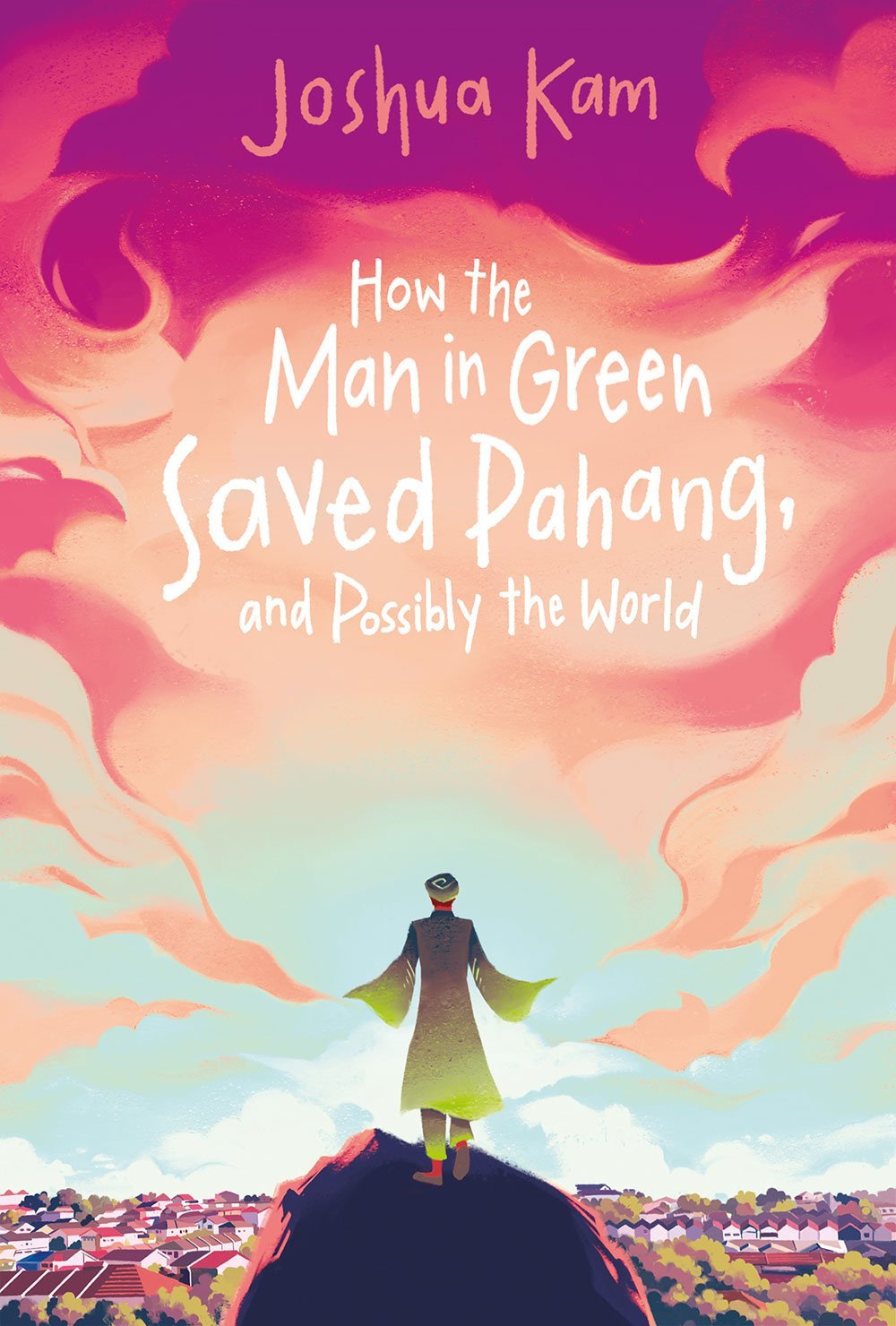
Clearly then, I’m in the uncomfortable place of receiving this honour on someone else’s behalf. These are not my words but a quilt work of quotes from people before me.
And so, on behalf of all my matriarchs, who crossed oceans, planted their roots after wartime, worked with their calves planted in the water of deep river currents, working down bamboo until arthritis turned their bones to water inside them; on behalf of all those men loving men and women loving women and trans and non-binary Malaysians, who fought for our place under this sun before me, who are fighting now; and perhaps too on behalf of the complex, mottled, striking rebels of the ’50s who wanted a world outside of capitalism, who, valid critiques aside, introduced me to hopes I did not expect, whose voices are not heard often, I am grateful. With their leave, I gratefully accept what has been presented to me tonight. May what I’ve mis-transcribed be forgiven, may what I’ve said be tolerated. May all thrones and borders be broken. May there be for each of our homelands peace, not gun, not fire, not bank, not army, not king, not coloniser, not hurricane, not rising sea.

More from Mekong Review
-
Malaysia's opposition delivered a startling victory in May's elections by going house-to-house.
-
For 60 years, racial politics demarcated Malaysian society
-
A generation of Malaysians have grown up on a rotten law
- Tags: Free to read, Joshua Kam, Malaysia
