

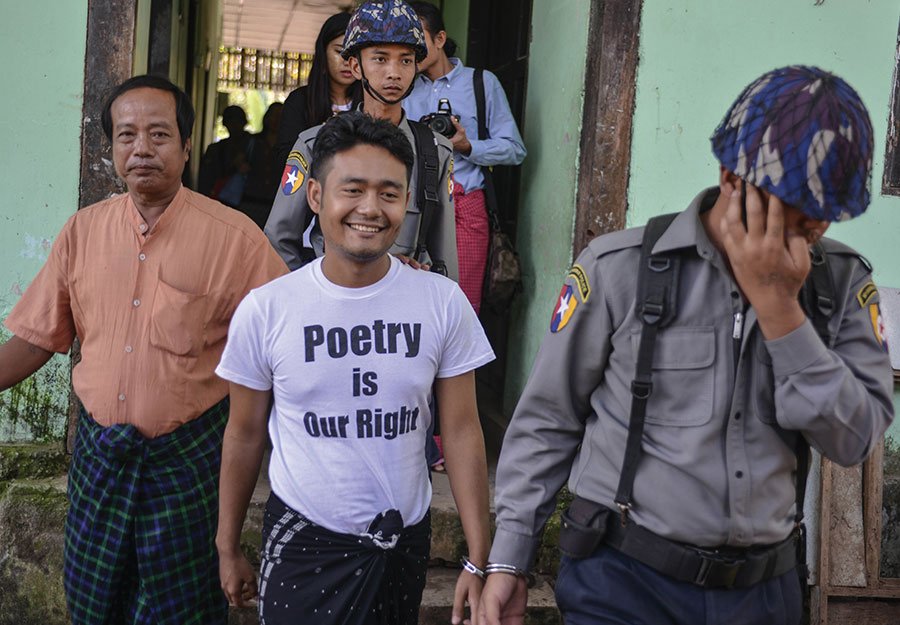
Frontline Poets: The Literary Rebels Taking on Myanmar’s Military
Joe Freeman and Aung Naing Soe
River Books: 2026
.
Poets have long held an exalted place in our imagination, and the soldier-poet is especially revered. There’s poignancy in the idea of artistic ambition sacrificed for something as fundamental as war—of trading words for bullets.
History is full of such examples. We may think of Lord Byron, who, consciously embodying the romantic spirit, died for the cause of Greek independence in 1824; or Wilfred Owen, who immortalised the horrors of the First World War and died, aged twenty-five, a week before the armistice.
These are prominent examples from Anglophone poetry, though every culture has its own. I once visited the Chinese birthplace of Yun Dong-ju, an ethnic Korean imprisoned for his poetry of resistance against the Japanese empire. In Japan, poetry has long been intertwined with the warrior tradition: samurai would compose ‘death poems’ before heading into battle.
More from Mekong Review
-
The Myanmar military hopes that an election will give their rule a veneer of legitimacy, but a vote largely rejected by the people as a sham will hardly soothe tensions.
-

A poem from Maung Day
-

When Aung San Suu Kyi stopped supporting US sanctions against Myanmar, it changed everything.
- Tags: Aung Naing Soe, Issue 42, Joe Freeman, Myanmar, Oliver Raw