

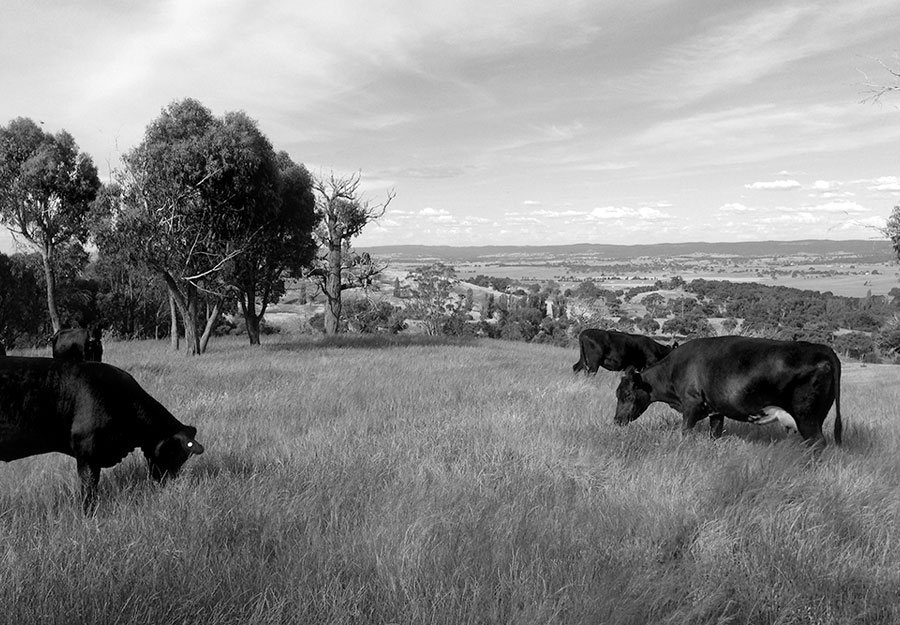
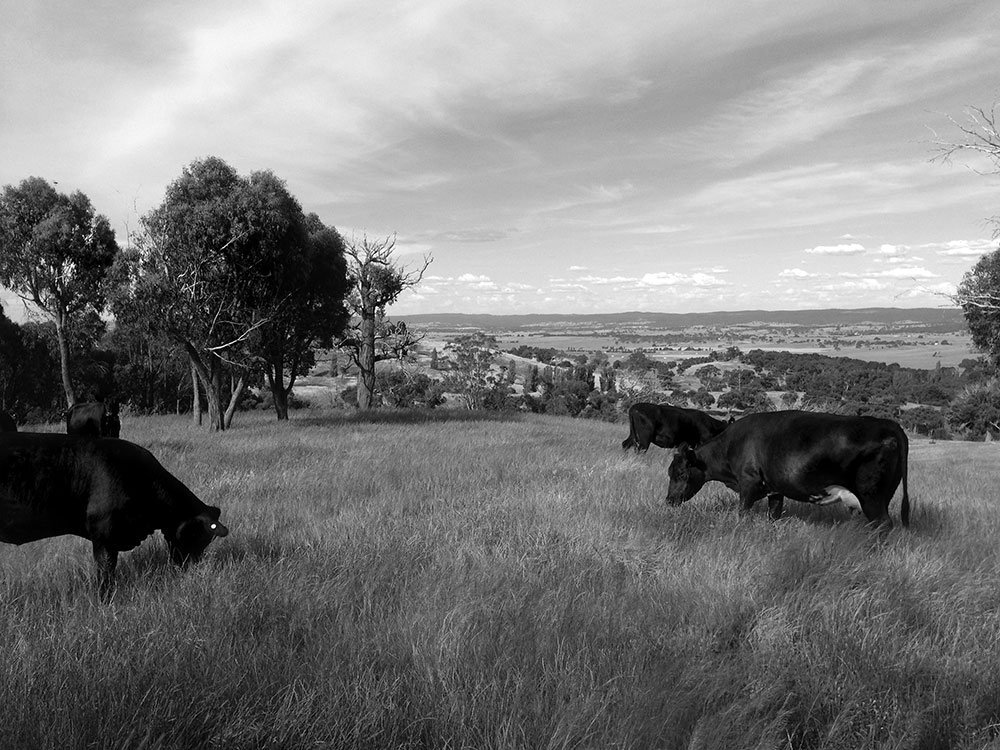
In 1964, Australian scientists coined a word for the smell of rain on dry earth: ‘petrichor’, from the Greek petros (rock) and ichor (the blood of the gods). Petrichor is an oil, formed when the haze released by some trees in hot weather reacts with alkaline rocks, into which it seeps until blasted free by raindrops. In Australia, where rain often comes via electrical storms, petrichor is joined by the odour of ozone (from lightning), as well as geosmin, the musty whiff of soil microbes.
During the seven years we worked together on my family’s farm, which is called Gollion after an ancestral village in Switzerland, my father would speak of cold rain and warm rain, driving rain and soaking rain, sowing rain (to plant a crop) and finishing rain (to ripen it). From childhood I already knew that a sudden fall in air pressure accompanied by fat, sparse droplets on the homestead’s tin roof were precursors to downfalls that would soon make conversation impossible. But until 2020, the final year of my farming apprenticeship, I didn’t know that you can smell a drought break.
More from Mekong Review
-

The end of an affair
-
Australia’s summer from hell
-

Foreign policy and the making of Australia
- Tags: Australia, Issue 27, Sam Vincent