


Cambodia 1975–1982
Michael Vickery
Silkworm Books: 1999 (1984)8
.
Three weeks after signing the Paris Peace Agreement in 1991, Norodom Sihanouk flew to Phnom Penh to take up residence at the Royal Palace for the first time since he had been held there as a prisoner of the Khmer Rouge. Expecting a triumphant return to the stewardship of his “children”, the king would instead find himself with only the trappings of power for the second time in his life, forced to pay regular obeisance to Cambodia’s real sovereign.
Among many of those with a sense of the moral squalor that has accompanied Hun Sen’s thirty-four-year rule, the prime minister’s deft sidelining of the king in the following years denied the Cambodian people a better future than the one they have inherited. In this telling, Sihanouk’s arrival was supposed to herald a peaceful, democratic conclusion to a dozen years of civil war; instead, he lived out his final years on the margins of public life as the country’s entrenched power structure ruthlessly co-opted or crushed its competition.
Sihanouk himself encouraged this sense of lost opportunity in regular missives from the palace. He nostalgically evoked his post-independence government with beguiling vintage photographs of daily life in the capital while maintaining a running commentary on the corruption of Hun Sen’s regime under a transparent nom de plume.
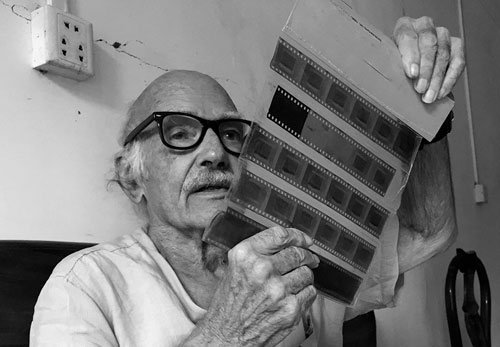
For Michael Vickery, the scholar who would ultimately distinguish himself as Sihanouk’s most vituperative foreign critic, this exercise in royal myth-making was grotesque — in fact, Hun Sen’s victory in this power struggle had averted another national catastrophe, at a time when a fragile country was scrambling to recover from years of war and international isolation. Soon after the king’s return, Vickery warned in the Phnom Penh Post that Sihanouk risked leading the country down the road to the kind of “disaster” that had ushered in the Khmer Rouge. Some weeks later it prompted a wounded reply from the palace, alleging a conspiracy of Westerners seeking dishonestly to undermine the prestige of the monarch, who had led the country during the “only honourable and constructive period for Cambodia in the twentieth century”.
More from Mekong Review
-

Two poems by Rory Harris
-

The sounds and smells of Phnom Penh
-
Inspired by Yin C.H.
- Tags: Cambodia, Issue 17, Michael Vickery, Sean Gleeson