

Vigil: Hong Kong on the Brink
Jeffrey Wasserstrom
Columbia Global Reports: 2020
.
A senior international diplomat was recently asked what he thought was the tipping point between a country being dissatisfied with its leaders and general direction, and the country as a place on the brink of turmoil or collapse. The answer was: when large numbers of people start seeking alternative passports. This has certainly been the case in Hong Kong, where a higher than international average number of people hold multiple passports and the notion of “astronauts” (whose principal family breadwinner shuttles between Hong Kong and a family home in Canada or Australia) is commonplace. For those whose viewpoint is at odds with China, who fear extradition bills and encroaching mainland influence in the special autonomous region, alternative nationality has become as hot a topic in 2019 as it was in 1996, just prior to the handover.
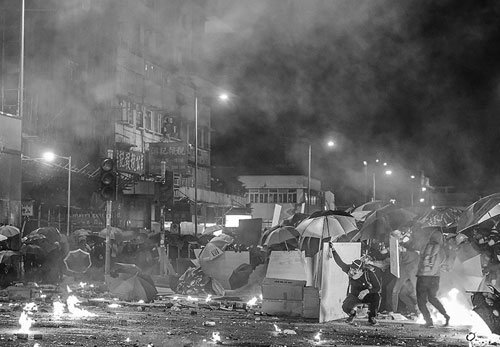
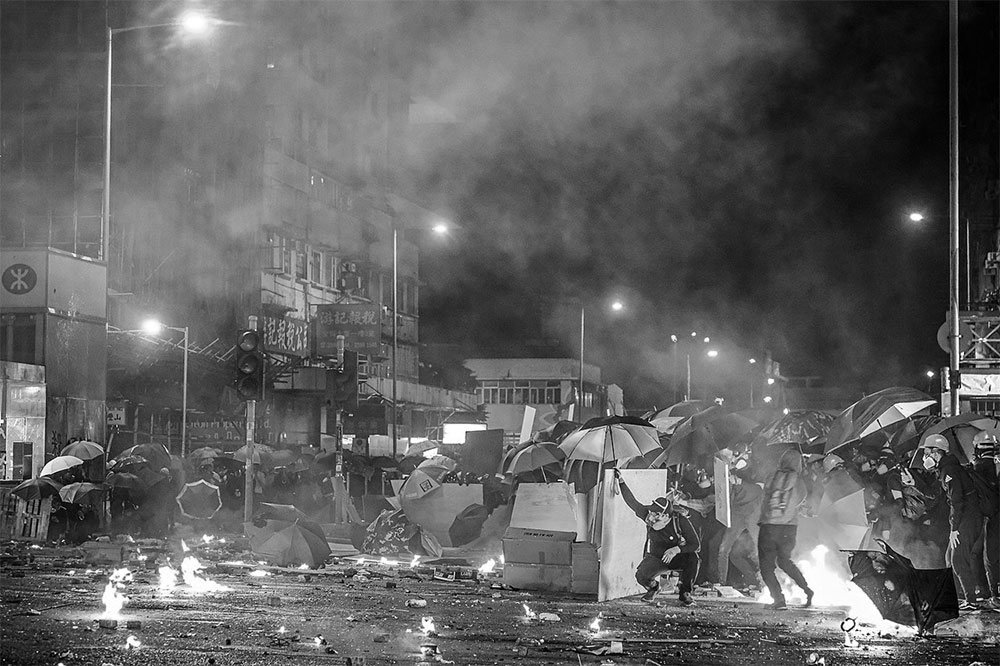
Famously, journalists and newspapers provide the first rough draft of history. But it is the historians who give us the subsequent analyses of events and place them in context. In Vigil: Hong Kong on the Brink, Jeffrey Wasserstrom, a China specialist and professor of history at the University of California, Irvine, looks back at Hong Kong’s past as prized colonial possession and, more recently, Chinese adjunct region, to understand why the city is still being rocked by constant and large protests that have continued for months.
Work on such a rapidly moving target as the 2019 Hong Kong protests that, as yet, have no final conclusion is bound to be frustrating to the historian, but less so to the reader. We have the BBC, CNN and all manner of formal and informal instant news outlets. What Wasserstrom and good rapid-response books provide is context: what led to this? How did we get here? And, for the percipient commentator, what happens next?
History is where Wasserstrom performs best. There is no other way properly to comprehend Hong Kong’s specificity, or its place in the Chinese Communist Party’s current narrative of historical justification, without retracing the Opium Wars, the “unequal treaties” and Hong Kong’s annexation as a British crown colony. Much of Wasserstrom’s previous work has involved Shanghai and, importantly, he notes how Hong Kong’s pre-1949 history was lived largely in that city’s vast shadow. He also walks us through the lead-up to the handover in 1997 and those tortuous negotiations, led on the British side by Sir Percy Cradock, which resulted in the Sino-British Joint Declaration of 1984. The whole thing looked enormously rickety in the face of the Tiananmen Massacre in 1989, and then Chris Patten turned up. In Hong Kong, though he has many fans (especially among foreign commentators), he is also seen by many as having been a mischief maker rather than the progressive force many claim. Patten got rid of some of the more draconian colonial laws, but it was too little, too late.
More from Mekong Review
-

A poem by Jennifer Eagleton
-
Can Hong Kong remain a global financial centre?
-

A poem by Leung Rachel Ka Yin
- Tags: Hong Kong, Issue 18, Jeffrey Wasserstrom, Paul French