


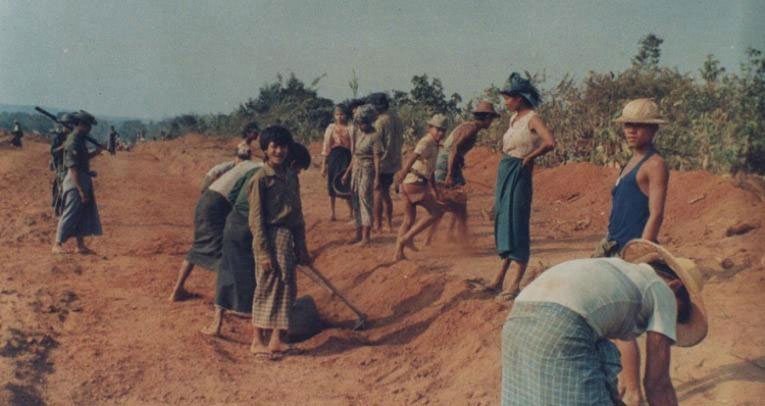
Photo: Karen Human Rights Group
On the Shadow Tracks: A Journey Through Occupied Myanmar
Clare Hammond
Penguin Random House: 2024
.
People who write books about railways usually love trains. The railways of Burma enticed Paul Theroux, who wrote about the Mandalay Express, the Local to Maymyo and the Lashio Mail in his 1975 book The Great Railway Bazaar: By Train Through Asia. By the twenty-first century groups of hardcore engine-fanciers materialised in the renamed Myanmar, sharing videos on YouTube with titles like “world’s most scariest railway bridge!!” and (my rickety favourite) “Burma Mines Railway, Railtruck to Namtu”. In 2013, Anthony Bourdain caught a night express north from Yangon—with seventy-five stops, it took twice as long as the scheduled ten hours—watching the scenery become “more pastoral, more beautiful” and anticipating derailment during the “kidney-softening” acceleration. It was an ordeal but he obviously relished it.
Clare Hammond, author of On the Shadow Tracks: A Journey Through Occupied Myanmar, didn’t love the trains she rode on her three-month adventure in 2016 as a twenty-something British expat journalist. Her main interest was how and why the British colonial Burma Railways system, dating back to 1877, was extended under Myanmar junta rule in the 1990s. These extensions were built on seized land with shoddy spurs and connectors, the manpower provided by forced labour.
More from Mekong Review
-
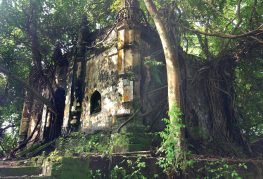
The Buddermokan shrine in Sittwe is said to have been built in 1756. It has since survived colonialism, war and Nature—a stubborn relic of history in a hostile environment that wanted it gone.
-

Bertil Linter’s book on the Wa isn’t merely a fascinating look at a little-penetrated hermit kingdom; it’s also a case study of how China manipulates the politics of its border zones in pursuit of global ambitions.
-

A poem from Maung Day
- Tags: Clare Hammond, Edith Mirante, Issue 36, Myanmar