

Welcome to the Mekong Review Weekly, our weekly musing on politics, arts, culture and anything else to have caught our attention in the previous seven days. We welcome submissions and ideas and look forward to sparking lively discussions.
Thoughts, tips and comments welcome. Reach out to us on email: weekly@mekongreview.com or Twitter: @MekongReview
To sign up for the newsletter, click here
c
NEW WAVE
c
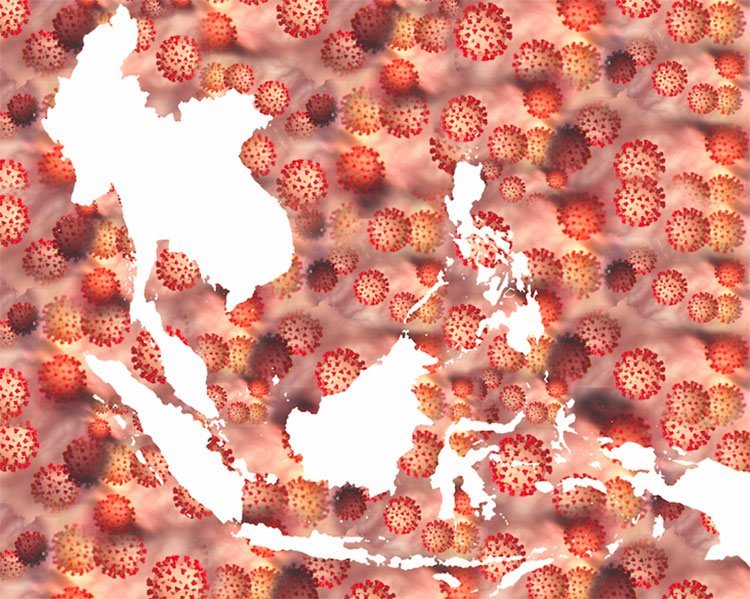
As India struggles with its devastating second coronavirus wave, the impacts are being felt well beyond its borders. Singapore announced tighter restrictions, after community cases of COVID-19 increased sixfold, to 60 cases, in a single week. Ten of those cases involve the highly contagious B.1.617 variant, which originated in India. In the Philippines, the government said last week it would likely fall far short of its 2021 vaccination goal, with vaccines purchased from or manufactured in India expected to be reallocated domestically.
Meanwhile, much of Southeast Asia is contending with its own new waves of the virus. Laos just announced its first ever COVID-19 death, as it battles the spread. Vietnam, Thailand and Malaysia have imposed tighter restrictions in recent days. Indonesia is reporting new surges. In Myanmar, where the pandemic response appears to have entirely stopped since the 1 February coup, health experts warn of a looming disaster.
On Thursday, most of Phnom Penh reopened following a three-week lockdown. Since late February, Cambodia has been battling a rapid spread of an outbreak linked to a single event. After more than a year without a single death, Cambodia has now recorded 120 deaths and more than 19,000 cases. On Tuesday, the government logged a record 938 cases—nearly three times the case count at the start of the lockdown.
Though new infections remained high, the government announced it was sticking with its plan to lift the citywide lockdown. On Thursday, hundreds of thousands of garment workers—the backbone of Cambodia’s economy—returned to their factories. Will new protective measures be enough to keep the virus in check?
The pressure to revive an economy battered by global forces is no small thing. Food shortages plagued the ‘red zones’, areas that faced especially strict lockdown measures and which tended to have poorer populations. Even when the government stepped in with food aid, residents have struggled to pay rent and utilities. Though many say they fear returning to work amid the pandemic, they have little choice. Even before lockdown, a huge portion of society already faced a debt crisis, due to microfinance loans most often paid down through internal remittances from garment workers (and from external remittances from migrant workers no longer able to work abroad).
The government has fast-tracked garment workers for the vaccine and is likely hoping its inoculation campaign will slow the spread. Unlike most of its neighbours, Cambodia has had real successes with the vaccinations. The country was the first in Southeast Asia to receive donations from Covax, the WHO facility set up to ensure poor countries get vaccines. And Prime Minister Hun Sen was far savvier than many of his neighbouring leaders, arranging purchases and donations from China early on, and rolling out campaigns in a responsive, strategic way. Cambodia had no chance of making a vaccine domestically—something that likely contributed to both Vietnam and Thailand’s snail’s pace roll out. It also has a relatively small population and land mass to contend with.
But should a nation’s success in vaccination come down to luck or savvy? The world is averaging more than 13,000 deaths each day—twice the rate from one year ago. Unlike then, however, we now have vaccinations. Since last year, India, South Africa, and scores of poorer nations have been pushing for temporary intellectual property protection waivers, which would allow far wider production and distribution of the vaccines and lifesaving treatment drugs. Pharmaceutical companies, as well as wealthy nations have pushed back, even as millions continue to suffer—as eloquently elaborated by Rin Chupeco here.
The movement got an unexpected boost last week when US President Joe Biden announced support for the waivers. Waivers are no silver bullet: technical, logistics and supply challenges remain. But the mRNA vaccines are far easier to produce than traditional vaccines; and the waivers could be a big step forward in ramping up a global inoculation campaign. Interconnected as our world is, we need solutions that benefit all—not just the lucky.
FOR OUR READERS
Click here and enter the code MAY21 to get your offer. Offer expires on 26 May.
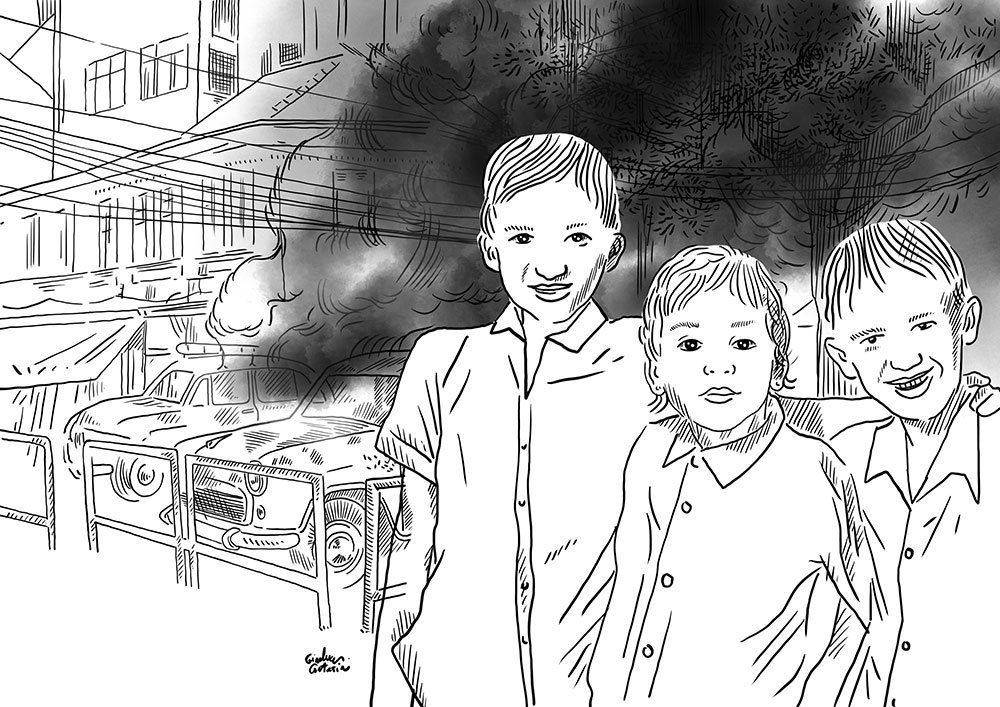
Unmade lives
A short story by Vikram Kapur
I wake up to a voice; a voice so low that I can’t tell whether it’s in my ears or in my head. Is it a remnant of a dream that I’ve forgotten? I can hear it even after I’m wide awake. Its hoarseness suggests it’s been calling for a while. I don’t recognise it. Yet it repeats my name in the intimate manner of a close friend.
I can hear other voices now. My wife Anita is calling out to our eleven-year-old daughter Reena. She is telling Reena to come, they’re getting late. Reena answers, ‘Coming, Mum.’ The digital clock on the bedside table informs me that it’s seven thirty. I’m usually up well before then to drop Reena at her school. Anita let me sleep in today, because I came home late last night after putting the final touches on the news magazine I edit.
I shove my feet into a pair of rubber slippers and hurry to the drawing room. Reena is there in her blue school uniform. Her school bag dangles from her shoulder. Anita has the car keys in her hands. I mouth a silent thank you in Anita’s direction as I bend down to kiss Reena goodbye.
I forget about the voice as I stand by the front door and watch them disappear inside the lift. It returns after I go back inside. Now it has a face—Neeta’s face.
It’s not the Neeta I remember. This Neeta has weary middle-age etched everywhere. Her skin is besieged by little lines. Her hair is a tired grey. Her eyes cower amidst dark shadows. I sink in a chair. This isn’t my memory serving her up. This is her calling out to me after twenty-five years.
Read the full story here.

More from Mekong Review
-
Who makes up Myanmar’s rightful government? The officials elected by the public? Or those who are currently ruling, having deposed the civilian leadership in the 1 February coup?
-

In May 2018, the mood in Malaysia was jubilant. One of the greatest get-out-the-vote drives in history had resulted in an overthrow of a party that had ruled Malaysia for 61 years.
-

Five years ago last Saturday, Kem Ley was gunned down in broad daylight at a Phnom Penh gas station.
- Tags: Newsletter