

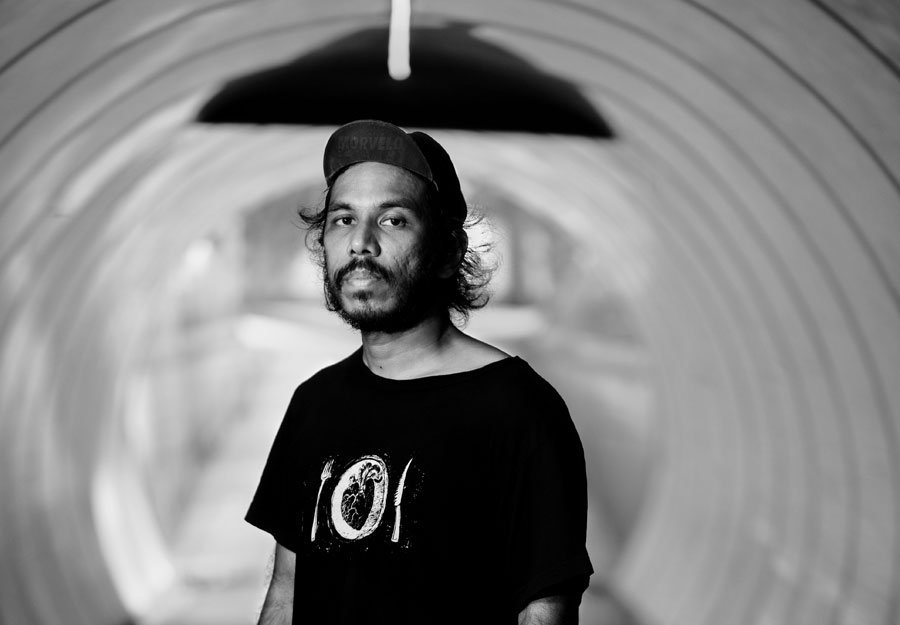

The bicycle is ’s preferred mode of transportation. Cycling is a great way to keep fit and it’s environmentally friendly, though it isn’t always safe or easy on Singapore’s roads given its few bicycle lanes. Similar to walking, cycling can be meditative and a way to notice and know a city. Also like walking, it is labour. Propelling the bicycle forward, wending through traffic, getting lost, finding one’s path again.
In the subcutaneous layers of things that appear to be spit-shiny and aspirational are mess, chaos, tension; and it is these deeper spaces of discomfort that haykal invites us into. Like his cycling, haykal’s work embodies durational labour, which culminates in serial ruminations on topics that keep him awake at night—the expired plus-points of capitalism, environmental protection, widening inequality divides.
More from Mekong Review
-

In the two novellas, journeys depart from or hope to return to “an eastern port” (Singapore) but instead they both disappear into the obscurities of the seas.
-

In Southeast Asia, the short story has perhaps been more significant than the novel: it is portable, more easily translated and it also migrates.
-
The taste of home
- Tags: bani haykal, Carolyn Oei, Issue 34, Singapore