

The late King Bhumibol Adulaydej, who died on 13 October 2016, is often referred to in Thai as the duang jai or heart of the country. No other leader in recent Thai history has attracted such widespread devotion, and he was perceived by many to be a moral compass for the general population. In the acute vacuum left by his death, The Way Thais Lead: Face as Social Capital by Larry S. Persons presents a timely forensic study of the sustaining attributes of Thai leadership.
The Way Thais Lead can be read as a field guide to the seemingly opaque nature of Thai leaders. Adapted from research conducted for a PhD thesis at the School of Intercultural Studies, Fuller Theological Seminary, in the United States, the book is also deeply informed by the author’s own background. Persons was born and raised in Thailand, and also spent some twenty years working in the country. As such, he is a foreigner uniquely qualified to explore concepts of face. As he rightly points out, “Scholars have written curiously little about this pervasive and potent part of Thai culture.”
Persons defines face in the Thai context, and in its most basic form, as a human desire for acceptance and significance. Face is posed by each individual through “claims to worth” and acknowledged by others, and society at large, with “judgments of worth.” As anyone who has spent an extended period of time in Thailand will know, it is of paramount importance to Thais. Indeed, Persons cites one of Thailand’s leading intellectuals, Thirayuth Boonmee, as stating that Thais “believe the maintenance of their faces to be [the] most important thing in life.”
The cultivation and protection of face, or a person’s public persona, is both the scaffolding and glue that hold Thai social relations in place. While there is an extensive vocabulary to describe face and its loss (sia na, or broken face), Persons delves deeper than the standard colloquial offerings to dissect the structural and etymological elements of face. During the interviews he conducted for his research, he found that five key words were used repeatedly when Thais discussed or tried to explain the concept. Perhaps predictably, these words have no easy or direct English translation, but they can be roughly summarised as follows: na ta (literally “face-eyes,” or prestige), kiat (honour), chue siang (public acclaim), barami (accumulated goodness) and saksi (endogenous worth). It is symptomatic of a society in which self-worth is generated through a collective rather than individualist impetus, that only one of these elements (saksi or honour) is intrinsic. The other elements have to be earned and are perpetually assessed through the eyes of others.
Successful Thai leaders need to be adept at juggling this complex cocktail of essential elements. Face is not static; it cannot be attained, accumulated and safely stored away. Rather, it is in constant flux, dependent on a wide variety of actions and events linked to any given leader, and even — in some instances — people associated with them. Leaders need constantly to adjust their cache of face by repairing damaged face, topping up depleted reserves and actively shoring up as much face as possible. This is no easy task and results in leaders deploying a vast array of often unwholesome means. “Leaders in Thai society compete intensely for face,” writes Persons. “They contrive and implement strategies to manipulate patrons, undermine competitors, and dominate subordinates. Their facework is rife with stealth, chicanery, rancour, and envy because all contestants are in hot pursuit of social capital [or face] …”
In Persons’ analysis, there are three types of power available to leaders in Thai society. First and most straightforward is amnat, or authority based on an official position. This type of power can be easily understood through an analogy with the Thai theatrical arts: it is, writes Persons, like “slipping on a mask in traditional Thai theatre, something Thais refer to as sai hua khon. Classical Thai actors perform scenes from the Ramayana wearing intricate, colourful papier-mache headpieces. The masks are meaningful for the duration of the drama, but as soon as they come off, actors no longer lay claim to that persona.”
The second type of power identified by Persons is itthiphon or influence, which can extend beyond the legitimate realms of legal and official amnat, and is often related to dark forces — specifically, mafia bosses or corrupt government officials. Persons describes itthiphon as being derived from a powerful combination of money and force. Leaders who access this kind of power usually instil fear in their followers and use intimidation as a tool to maintain their public persona and standing.
The third, and hands-down most potent, type of power listed by Persons is also one of the more elusive constructs of face: barami, or “accumulated goodness.” Barami accrued over time through selfless behavior and numerous acts of generosity and kindness. By definition, barami implies a disinterest in reward or recognition, yet, while leaders with barami have no interest in face, they have the capacity to attract enormous and long-lasting reserves of it. Writes Persons, “This approach to face gain is winsome in the eyes of followers. They respond with true devotion and an inside-out motivation to comply and meet the needs of the leader. They grant him or her generous amounts of face in increasing measure.”
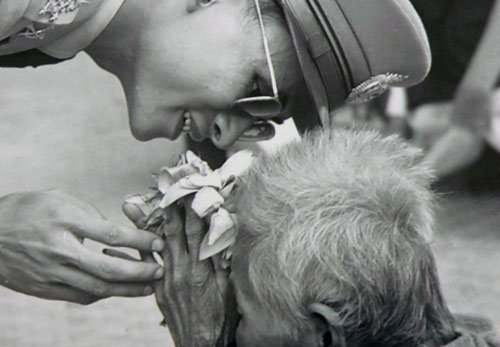
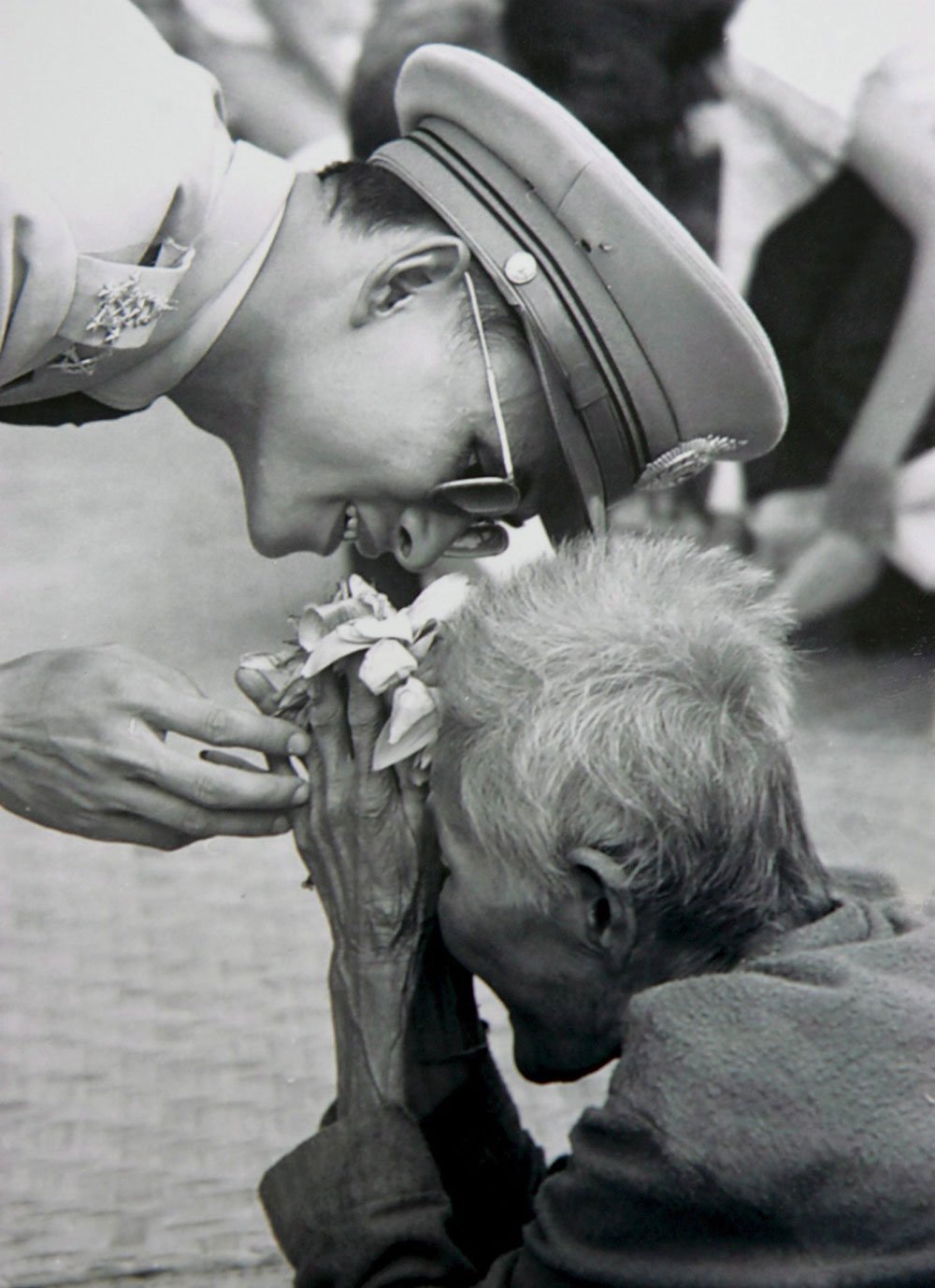
Of all the terms in this book, the one most often used to explain the widespread and enduring allure of King Bhumibol is barami. Throughout his reign and in the immediate aftermath of his death, images projected online and on television show him as a physical embodiment of barami leadership. He is often depicted in casual dress, working without fanfare on development projects he has instigated in the countryside: striding across paddy fields, examining maps in flooded areas and consulting with farmers. The most popular images show the king leaning down towards a subject who is either kneeling at his feet or looking up at him with adoration. In Thailand’s fiercely hierarchical landscape, the appeal of such images is perhaps best elucidated by the Thai proverb, “When the sky is adjacent to the earth, the earth supports the sky.” As a district police chief tells Persons, “If the sky successfully stoops down — in other words, if that leader comes down and spends time with the lowest levels of society — those common people will ascribe virtuous benevolence and barami to him for the rest of their lives, wholeheartedly.”
But this analysis raises a fundamental conundrum: although barami is upheld as the ultimate form of Thai leadership, it is, in actuality, seldom practised. Persons has no satisfying explanation for this discrepancy. He writes, “In Thai leadership circles far and wide, this selfless approach is very much the road less travelled. It is risky because it is less competitive. At times, virtuous leaders simply cannot keep pace with the beguiling manoeuvres of the power-hungry.” The implication is that, in the cutthroat world of Thai leadership, it is hard if not impossible for good men to thrive. Persons and some of his interviewees concede that responsibility for this does not rest with leaders alone and must also be shared by their followers, who, while admiring the giddy heights of barami, are willing to settle for far less. Persons himself settles on the hope that studies such as his — which shed more light on methods of obtaining and wielding power in Thailand — will filter back into the body politic to generate more transparency, dialogue and, ultimately, demand for virtue and accountability in leaders.
But Thailand is now dealing with a royal succession overseen by an unelected military-installed government, and face politics highlights a pressing concern about legitimacy. The barami accumulated by King Bhumibol over his seventy-year reign does not automatically pass down to his son and heir apparent along with the throne. This could have ramifications for the future of the monarchy as the crown prince, who has yet to demonstrate the same barami-generating dedication to the Thai people shown by his father, will have to rely on other iterations of power. In The Way Thais Lead, a respected nun interviewed by Persons sounds a note of caution that is especially resonant in these uncertain times. “In this world we will always have true value and counterfeit value, but most people in today’s world are interested in counterfeit value,” she says. “Whenever a society concedes honour to the wealthy and the powerful — overlooking those who do what is right — that society becomes fragile and very dangerous.”

Larry S. Persons, The Way Thais Lead: Face as Social Capital, University of Washington Press/Silkworm Books: 2016
More from Mekong Review
-

The enigma of Thailand's King Bhumibol Adulyadej
-

The past is ever-present in Bangkok’s neighbourhoods
-

Poetry from David Chandler