

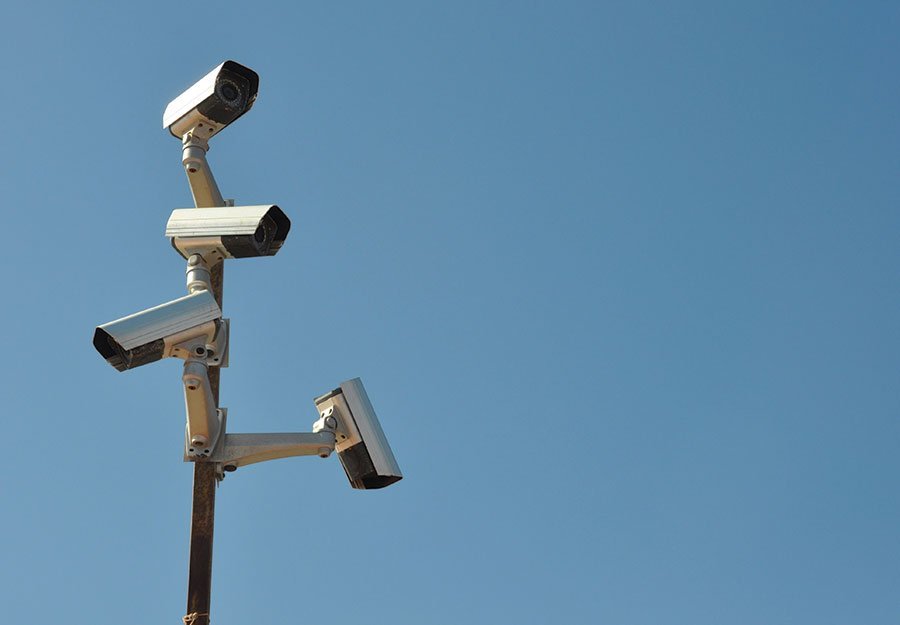

Surveillance State: Inside China’s Quest to Launch a New Era of Social Control
Josh Chin and Liza Lin
St Martin’s Press: 2022
.
It all began with a big idea, conceived in the wake of a sliding doors moment: the return of the wunderkind mathematician Qian Xuesen from the United States to his native China in 1955, having fallen under suspicion of spying for the communists.
Detained for weeks and later surveilled for years by the FBI, the professor of jet propulsion ensconced himself at home and turned his sights to a new field of study: cybernetics, or the relationship between information and control. It culminated in the notion of what Qian called meta synthetic engineering: a system that he envisioned would solve complex economic and social problems by integrating human knowledge with computer modelling.
Given Qian’s scientific acumen, Dan Kimball, undersecretary of the US Navy, would later call his expulsion “the stupidest thing this country ever did”. Today, Qian is effectively the father of the modern-day surveillance state in China, one that has found its apotheosis in the dystopian nightmare of Xinjiang as well as the utopian wonders of Hangzhou.
More from Mekong Review
-
While his predecessors chose to downplay China’s power, Xi Jinping has led an overhaul of China’s domestic political landscape and foreign policy. A review of Beijing’s Global Media Offensive: China’s Uneven Campaign to Influence Asia and the World by Joshua Kurlantzick.
-
The repressive era of Xi Jinping is often contrasted with the 1980s, when the question of what China could become seemed remarkably open. But it is during the fourteen years between 1978 and 1992, delineated in Julian Gewirtz’s Never Turn Back: China and the Forbidden History of the 1980s, that the foundations for Xi’s rule were laid.
-
Murong Xuecun fled China after writing his book Deadly Quiet City: Stories from Wuhan, COVID’s Ground Zero. Today, he’s living in exile in Australia. It was never obvious that his life would go on such a trajectory. Kevin Yam chats to him about his writing and his choices.
- Tags: China, Issue 30, Josh Chin, Liza Lin, Nicholas Yong