

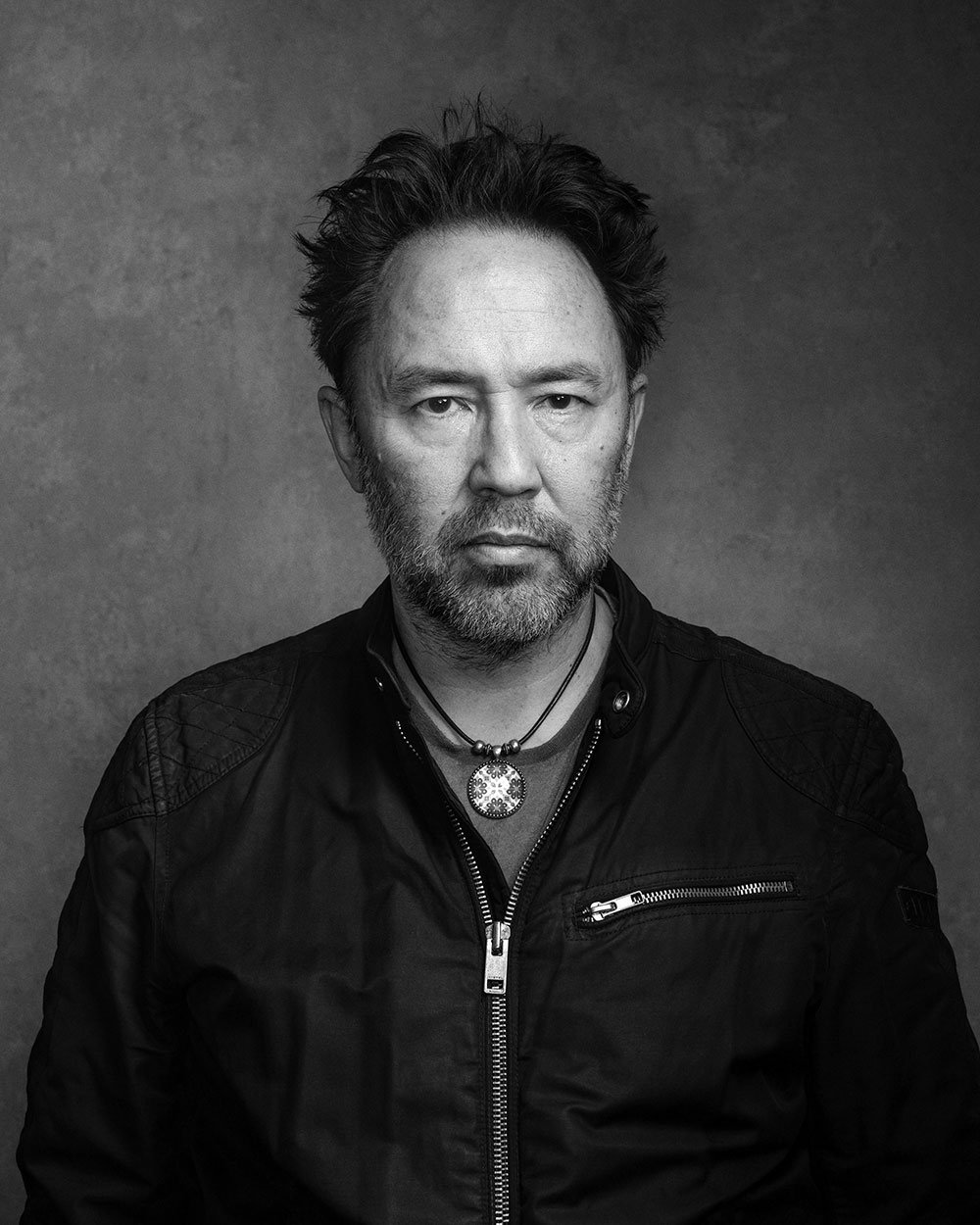
The day I interviewed Daniel York Loh, there was news of anti-immigration protests—some of which turned violent—erupting across Belfast, Northern Ireland. The BBC reported that people had been targeted simply for having “a different skin colour”.
In recent years, xenophobic and racist rhetoric has been on the rise in the UK. This has manifested alongside right-wing politicians and political parties (such as Nigel Farage, leader of Reform UK, and Tommy Robinson, a far-right activist) moving from fringe entities into mainstream influence. For Loh—an actor, writer, and filmmaker of Singaporean and British heritage who has been a vocal supporter of left-wing causes—these developments have been equal parts alarming and maddening.
Based in London, Loh has been working in the performing arts in both the UK and Asia for more than forty years. In that time, he’s become increasingly invested in working to improve Asian representation on stage and on screen. He was a founding member of BEATS (British East and Southeast Asian in Theatre and on Screen), a not-for-profit, volunteer-based advocacy group for British East and Southeast Asians working in theatre, film, or television. He’s also a member of the Race Equality Committee of Equity, the trade union for performers and creatives in the entertainment and performing arts industry. In 2016, he was one of twenty-one contributors to the anthology The Good Immigrant, reflecting on issues of race, immigration, identity, and Othering in the UK. A tenth anniversary issue of the book was launched this year.
More recently, Loh appeared in the true crime drama I Fought The Law, a four-part series following the determined struggle of Ann Ming—played by the award-winning British actor Sheridan Smith—a former nurse who campaigned for seventeen years to overturn the UK’s double jeopardy law after the murder of her daughter in 1989. Loh stars as Ming’s mixed-race husband, Charlie, in a story that examines grief and trauma, while not shying away from the racial politics of Britain in the 1980s and 1990s.
I’d like to start with I Fought The Law, which was based on a true story. It received rave reviews and you were nominated for an award at the 2026 Royal Television Society North East and the Borders Awards. What was it like taking on this role and playing a character based on a real person?
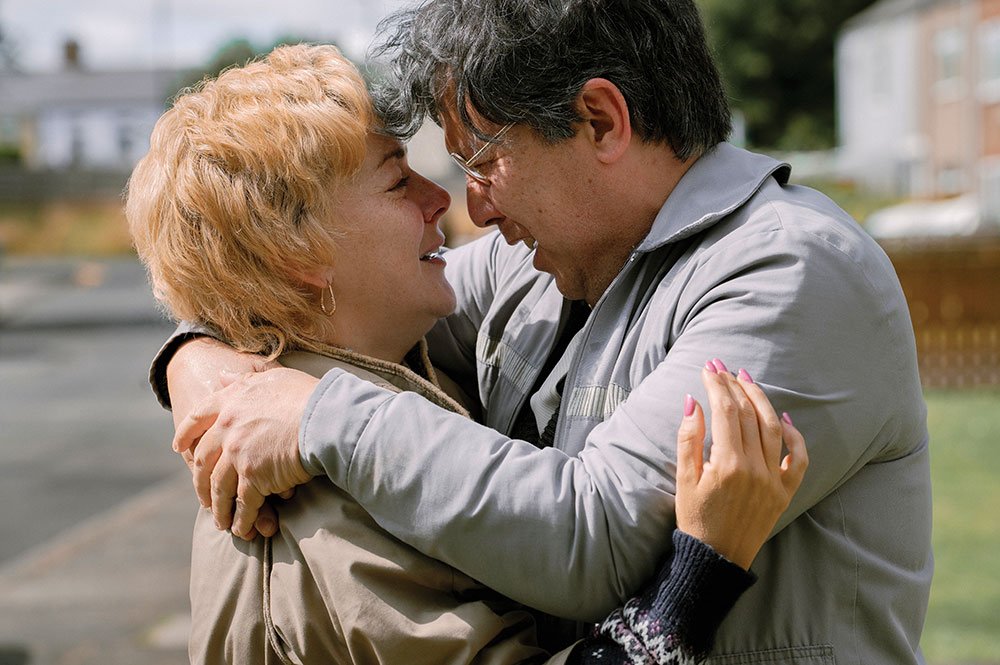
Charlie Ming, he was like me. He was mixed race but, essentially, very, very British. Very, very Middlesbrough [a town in North Yorkshire, England]. Ann Ming was kind of an advisor on the series, but [Charlie’s] not around anymore.
I Fought The Law was based on Ann Ming’s book [For the Love of Julie, published in 2009]. It was a real privilege to do it. It was such a good script and an amazing story. Sheridan Smith is an amazing actor and we had a great director [Erik Richter Strand]. I can’t speak highly enough of the whole thing, really.
I got the impression that it resonated with people because, right now, there’s a widespread sense of cynicism in many places. But in the series you have an ordinary person who’s taking on a massive system and prevailing.
I’m told the viewing figures were very high for the modern era. I think people were very taken with [the story]; it was a genuinely huge achievement. Ann Ming kept on going, she was very dogged, which I think people really admire… when you win in the end. If you’re very dogged and you don’t win, they kind of think you’re mad.
How do you feel the series dealt with the issue of racism?
There was a scene that flashed back to when Ann and Charlie were younger, and the racist neighbour comes around and there’s graffiti with racist slurs on the wall outside. And there were a few people online going, “Oh, typical ‘woke’ ITV.” But that’s in her book! It’s in Ann Ming’s book, and it was actually much worse. They suffered terrible racism when they first got together. I wanted that stuff in there. It’s important in social history and it resonates with what’s going on now.
There’s always people who want to blame migrants for anything and everything. If you put one foot out of line, your entire ‘community’—in inverted commas, because people don’t know each other a lot of the time—suffers. It reminds me of my own childhood. My childhood was basically [full of] racist abuse and my dad coming up to the school; the teachers and the other kids all thought he was a freak, basically.
There were some harrowing scenes in the series, but as an actor, I kind of look for things like that. It sounds perverse, saying I enjoy it, but that’s what you become an actor to do: tell real stories. Sheridan and I only had to act it; Ann and Charlie Ming had to live through it.
You’ve been acting for a long time now. How has your approach towards acting changed over the years?
I made up my mind about ten years ago that I would stop trying to have it as a career at all, because it would drive me insane. I look at it as something that I can do when I get asked and if I want to do it, if I think it’s going to be meaningful. I diversified my practice: I became a writer, I became a filmmaker, there were a lot of things I did—so acting kind of slots in there.
The problem is, a lot of actors—particularly actors of East and Southeast Asian heritage, and most particularly mixed-race ones—they’re kind of faking it to make it. Then you read about the rate of mental health difficulties in the profession and it is ridiculous. [A report released by the charity Actors’ Trust in March 2026 stated that 78 per cent of actors surveyed had struggled with their mental health in the last three years.]
There was once a TV series that a lot of people were asked to audition for. It was set in China and the head of the series at the BBC told me, “This is great, I hope the East Asian acting community sees this as a great opportunity.” I said, “But it’s not, though. You’re asking people to pretend they live in mainland China. That’s not a great opportunity for people of East and Southeast Asian diverse heritages in Britain.”
I’ve never lived in China, but you’re asked to pretend that you’re a person in China, who’s Chinese. And you’re often dealing with a script and a set of character parameters that aren’t recognisable to people who are Chinese and from China.
What about outside of the UK? Are there places you particularly enjoy working in?
I did a play in China once. It was quite strange. The audience was quite restless, you know, they were on their phones a lot. I’m going out there next week to run some drama workshops, which is going to be quite interesting.
I’ve really enjoyed working in Singapore. Wild Rice [a Singaporean theatre company], when they celebrated their twenty-fifth anniversary, they had this huge coffee table book. There’s a bit where they interview me and there’s pictures of me. I’m very grateful to be part of that whole Singapore theatre story. Theatre in Singapore feels uniquely exciting at times because it’s a relatively—in the English-speaking sense—young art form, and young people go a lot. And it feels very exciting. Obviously, there’s certain stuff the government won’t let you do, but it’s kind of getting like that here [in the UK].
Are you noticing more censorship in the UK?
There was a time, just before the Covid-19 pandemic, when I felt the industry was kind of a vibrant place. There was a whole conversation about—and I hate the word in a way—diversity. We were able to have a conversation about that, and you felt like the industry, the people who ran the industry, were sort of listening. But since Covid-19, I feel like they’ve shut up shop. It’s much more gatekeeper-orientated now.
There’s also a thing with money: it’s difficult to get, there’s less work. I know this from working with Equity, the trade union. Funding is not rising with inflation. It’s very difficult.
In terms of subject matter, I have to say what really tanked us is the Israel–Palestine situation. A couple of years ago, [Arts Council England] issued directives about ‘reputational harm’, like, if anyone connected with your organisation is engaged in activity that is overtly political or activist, then this could affect your funding. There was kind of an industry outcry about that, so they rolled it back pretty quickly.
I went through Equity and said, “Can we get a freedom of information request about how that came about?” And we did. It’s heavily redacted, so I’ve got no juicy quotes, unfortunately, but the one thing they could not redact was that the guidelines came about as a result of a meeting with the Ministry of Culture, Media and Sport, and the words that triggered it were ‘Israel’ and ‘Gaza’.
That was 2024. But this is the thing—two years before that, when Russia invaded Ukraine, Nadine Dorries [the former UK culture minister] and the arts council put out a statement saying, “we believe that the cultural sector in this country can play an important role in putting pressure on the Putin regime to end the invasion of Ukraine”. They lit the National Theatre up in the colours of the Ukrainian flag. The Royal National Opera House played the Ukrainian national anthem before each opera. Okay, you go forward two years. Gaza… no mention of Palestine. It’s actively discouraged.
So we’re in this kind of situation where we’re being actively shut down. And interestingly, I don’t think the theatre really fights back on that. The industry, generally, is kind of sleepwalking. I feel like the whole country is moving into fascism, and the theatre industry is kind of going, “Oh well, let’s just try and pretend that’s not happening.” Then, I think, as an art form we lose all credibility, because we’re not engaged in the world.
I grew up in a world where people wrote about things that happen in the world. You know, June Fourth, Tiananmen—people wrote about that. The Berlin Wall coming down—people wrote about that. I remember when I was young, when I was out of drama school going to audition for a play and the director was going on about Bosnia. And now we’re being told “this is too political”, which is crazy, really. And, I have to say, for people of colour in the theatre, I think there’s a whole thing now where we can’t platform our trauma. Everything is, like, trying to look joyful and happy. Meanwhile, there are people who actively want to deport all of us. It’s kind of insane.
You work with Equity, and also groups advocating for performers of Asian heritage. Tell us a bit more about that.
In terms of the representation of East and Southeast Asian people, statistically, pure numbers, it’s probably the best it’s ever been. To a certain extent, the gatekeepers are now a different generation, so I don’t think the kind of twee exotica is the same anymore. You’ll turn on the TV and see a supporting character who happens to be of East Asian descent, but they look and sound British. But I don’t think we’re in the centre of dramas very much. There’s very, very little of our presence in Britain; we’re very peripheral.
When you asked about I Fought The Law earlier… I feel very, very privileged, to be honest. It was a very earthy, gritty role. It was a huge emotional arc. It called for a certain kind of suburban Teesside accent. It was a gift. And in the drama, we have three children played by three mixed-race, Asian heritage actors. That was an amazing thing—we were playing naturalised northern, working-class, mixed-race Asian characters.
So there’s more visibility onscreen, but stories from East and Southeast Asian communities in the UK aren’t getting out there as much as they should?
No, I don’t think so. Steve McQueen did that series, Small Axe. It’s an anthology of stories [about West Indian immigrants in London]. There was so much social history, it was an extraordinary series. There was a documentary series—Defiance: Fighting the Far Right—which was about South Asians standing up to racism in the 1980s. And when it comes to British East and Southeast Asians, what we’ve got is food and lion dances…
What do you think needs to change?
There are so many things, really. The government needs to put more money into culture and I don’t think they realise [that]. Or maybe they do realise that; they just don’t care.
I think we need to get back to valuing the vibrancy and the political expression of artists. That makes it sound like I want everything to be ‘political theatre’. But it’s not. It’s literally about being able to do something like The Sound of Music, that’s based in a certain era, that has some sort of social awareness. It’s not about a political lecture, which is what people mistake it for.
In terms of East and Southeast Asians, I think we have to be a lot bolder, a lot more ambitious. We have to value our own stories here in Britain. We have to appreciate each other’s work more.
Far-right rhetoric and positions have been making inroads into mainstream politics in the UK. How have you observed it affecting British Asian communities?
Oh, some of them are hugely affected by it. There’s no doubt that there are people who’ve had racist graffiti daubed on their Chinese takeaways. It’s a terrifying climate at the moment for so many of us. But in the arts, I think a lot of us just carry on like it’s not there.
I hate to say this, but some of us are… you know, East and Southeast Asians can be quite popular with white supremacists. There’s an essay by Frank Chin and Jeffrey Paul Chan called ‘Racist Love’. Basically it says that when a stereotype is imposed on an ethnic minority group and they fight back against it, white supremacists hate that and that’s when you get racist hate. But if the ethnic minority group embraces the stereotype, like East Asians often do—yes, we are industrious, yes, our food is very nice, yes, we are far more reasonable as an ethnic minority, we’re high-achieving—then everyone’s happy and there’s racist love.
There are two shows with ethnic minority people that could go on forever and I don’t think anyone would ever be disturbed by them. One of these shows is Miss Saigon, and the other is probably My Neighbour Totoro. I don’t think those two—I would have to say banner shows, big employers of East and Southeast Asian heritage actors—I don’t think any racists would object to their presence. They don’t ask any pertinent questions. They don’t disturb anyone. And that’s like a lot of East or Southeast Asian presence in Britain—I don’t think it’s particularly disturbing. And I hate seeing this. I saw it the other day in a Facebook group, a bunch of racists going, “Look, these horrible Muslims, this and that, these horrible Africans. Look at our Chinese community, so well-behaved, lovely people. We’ll keep them…”
Historically, we East and Southeast Asians in Britain haven’t been very vocal. In the US, ‘Asian American’ is actually a political identity, they live in communities there. If you go to Chinatown in New York or Chinatown or Koreatown in Los Angeles, you see they are absolutely communities. Whereas in London, if you take London’s Chinatown, it’s more or less a restaurant hub. And apparently it’s in the top ten tourist attractions in London… though they keep jacking the rent up, I don’t know how much longer it’ll exist.
Generally, I think we’re of the mindset where, if we just act nice, keep our heads down, and don’t be awkward, we will be fine, we’ll get along okay. But there’s no doubt that—and that’s what upsets me, really—there are isolated East and Southeast Asians who are affected [by the increasing presence of far-right politics] and probably living in fear right now.
You kind of think this should be our moment, as people of colour in theatre. This should be our moment, where we should be doing really bold work that kicks back against [far-right politics]. But it’s not really happening. And I think it’s because a lot of it is filtered through a kind of arts council–funded gatekeeper network. As we’ve seen—and I’ve been in one of those organisations—the pressure on you to be compliant, to be a ‘reasonable’ voice is so huge. That doesn’t allow for vibrant art. And if you haven’t got vibrant art, you won’t get much in terms of a voice.
This is just my opinion. Maybe people think differently. Maybe people think we can be ‘sensible’, we can ‘sensible’ our way out of rising fascism. But I don’t think we can. I think sooner or later we have to stand and fight them.
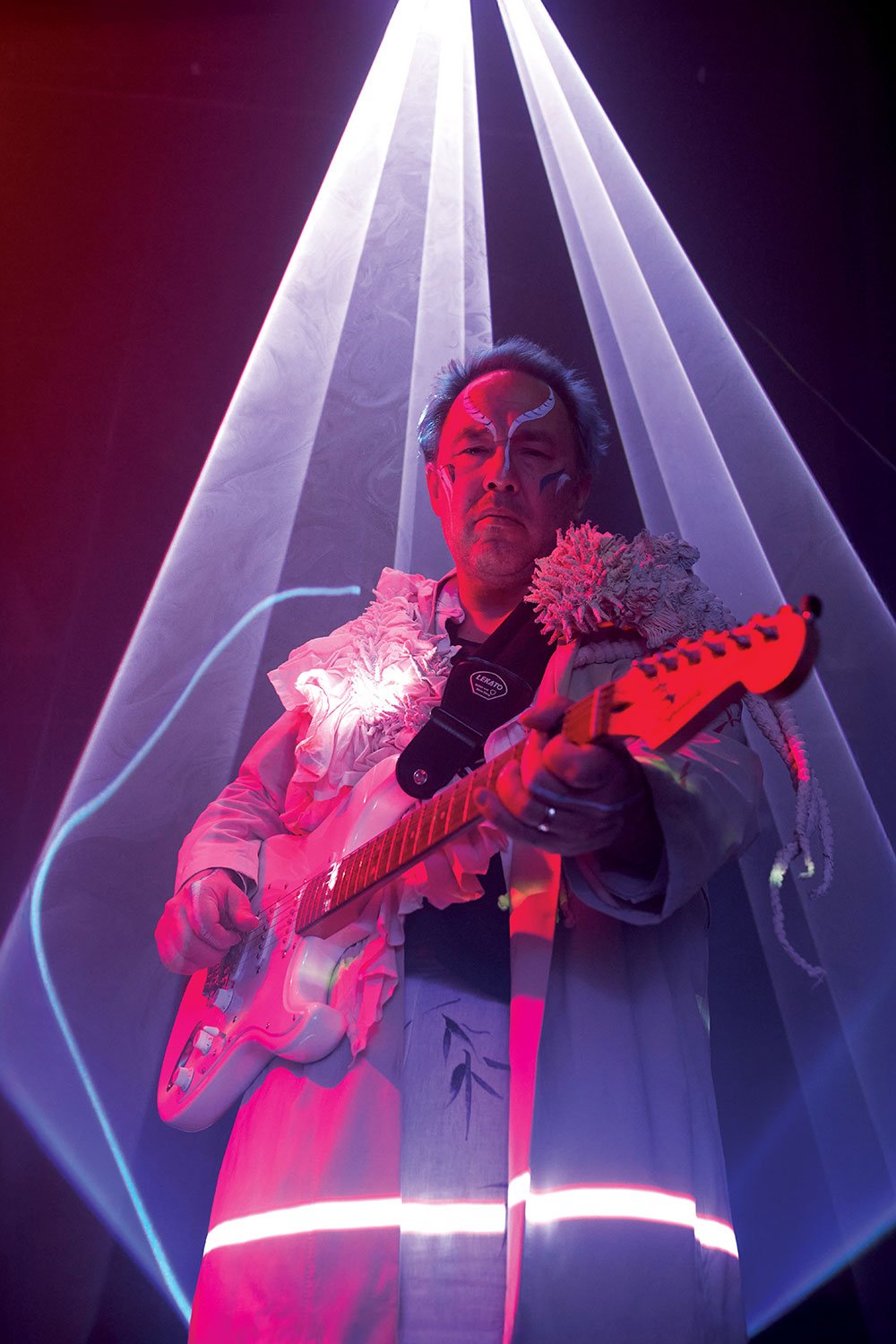
Do you worry that taking a stand might affect your work and your professional life?
Before 2013, I was just an actor for hire. I’d get hired or I didn’t get hired, and I had no ownership over what I did particularly. But as soon as I became a writer, as soon as I became a creator, as soon as I became a trade unionist, then I [took a stand].
The only thing that will happen is my platform will get removed, I suppose. That’s very possible. I just won’t get any outlet to do any work, I’ll get effectively blacklisted. Which definitely has happened in a few places, but not in places that have really hurt me up until now. The only positive thing is, the older you get, the less that stuff affects you. I think if I was thirty now, trying to build a career, it would be very daunting and very dark and very scary.
To wrap things up, is there anything you’d like to finish with?
I said some stuff earlier that was very pessimistic, but you would hope… Within the arts industry as a whole, there’s a kind of pro-Palestine movement, which is very inspiring—and that’s writers, actors, and creators. That’s very inspiring. There’s been a push towards more trade unionism. Equity as a trade union has never been as politically engaged as it is now, and that’s very exciting. So, you know, in among all the pessimism, there’s threads of hope.

More from Mekong Review
-
The taste of home
-
There is only one place to eat this
-

A poem from Eileen Chong
- Tags: Calum Stuart, David York Loh, Issue 44, Singapore
