

On a balmy afternoon in June, Lim Ji-soo was in an editing studio at the Korea National University of Arts. The twenty-nine-year-old’s first feature-length documentary, Kintsugi, was going to premiere in less than two weeks. During a final stretch of post-production, Lim replayed the same clip dozens of times to perfect a pivotal scene.
“Whenever I laid down to sleep, I could vividly remember how he touched me,” her voice narrated over a shot of her standing in the halls of her university department building.
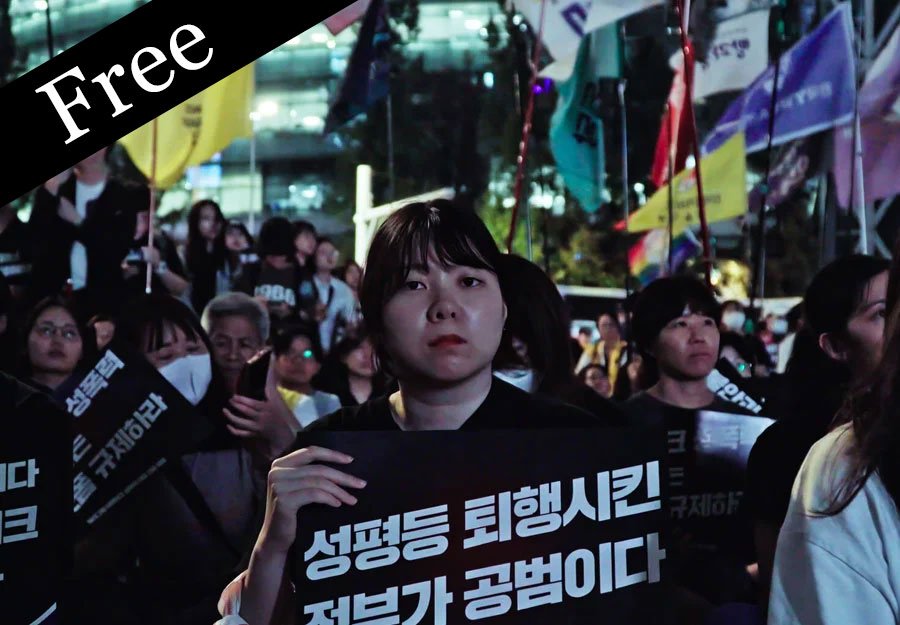
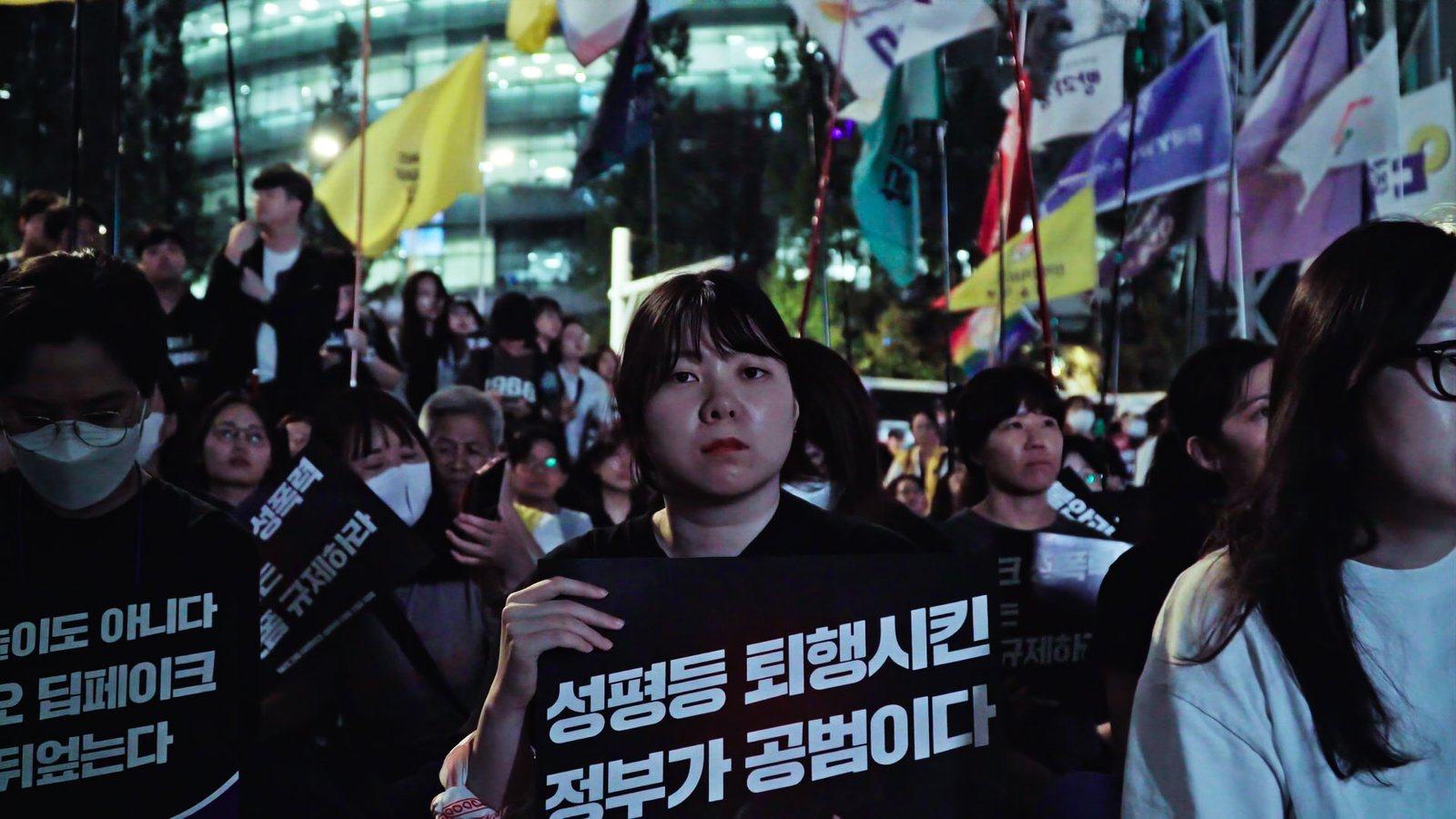
‘He’ was a member of the faculty. Almost six years after her sexual assault, Lim was completing a film tracing the year in its aftermath, when she and other victims, through protests and vigils, called for the removal of the perpetrator from the institution. This unfolded at the height of the #MeToo movement in South Korea, when women in every field—from politics to entertainment—spoke out about sexual abuse and harassment by men in positions of power.
Despite the heavy material, Lim directed with a clinical tone, sliding the voiceover track across frames with Kil Min-seo, the sound director. “I know this sounds a bit odd,” said Kil, “but I could feel that she had kept gnawing at the incident, gulped it down, an d processed it.”
Like many children of working parents, Lim grew up glued to the television. This sparked ambitions to become a TV producer and she attended a high school, on the outskirts of Seoul, that specialised in media and technology. A graduate of the school told her about documentary filmmaking, and when a ferry sinking killed hundreds of students and staff from a nearby high school—many of whom were friends, teachers, and family of Lim’s friends—she thought more deeply about how documentaries could lay bare unspoken sorrow and rage. “I intuitively knew that this was what I wanted to do,” Lim recalled.
On her second try, Lim was accepted to the premier university in South Korea for filmmaking and arrived on campus in 2017. She describes the environment as bleak, almost industrial, with drab buildings and students dressed in black school jackets. Still, Lim found her tribe. Along with like-minded peers, she’d cut class to attend rallies against the displacement of nearby residents living in areas designated for redevelopment; some professors even supported their activism. Then, in a required class on the basics of camerawork, she met the man who assaulted her.
Kintsugi doesn’t actually detail the assault. Lim told me it happened at an afterparty in the autumn of 2019, during her sophomore year. Lim could have pressed charges but decided not to, after receiving legal advice that a lawsuit could become protracted and overly burdensome. Instead, after several months of quiet processing, she wrote out what had happened on a large piece of paper and plastered it on a wall in her department building. Others with similar experiences soon put up more posters, accusing the professor of sexual harassment and misconduct. The claims kicked off a year of protests demanding his removal. But the university meted out what the protesters considered a mere slap on the wrist: a three-month suspension and two-year teaching ban on administrative leave.
In 2021, Lim was hired by the Korea Women’s Hot-line, a nonprofit that supports survivors of sexual violence. She’d previously received counselling at a local branch of the organisation near her parents’ home in Anyang. One of her earlier tasks as an employee was to put together an annual film festival focusing on women’s narratives. Sitting in empty movie theatres for early-morning test screenings, Lim imagined sharing her own story.
A mentor, the filmmaker Ryu Mi-rye, told her to start by writing. Essay after essay, Lim unspooled her experience—an exercise that was triggering at times. She treated her anxiety with medication and steadied herself with thoughts of why her story needed to be told. In the following months, she cast a handful of peers who’d joined the protests as characters in her film and collected protest footage that’d been taken with a smattering of cameras for archival purposes. Three film festivals awarded her production grants—beyond the money, these gave her a confidence boost and strengthened her conviction that this could turn into something powerful.
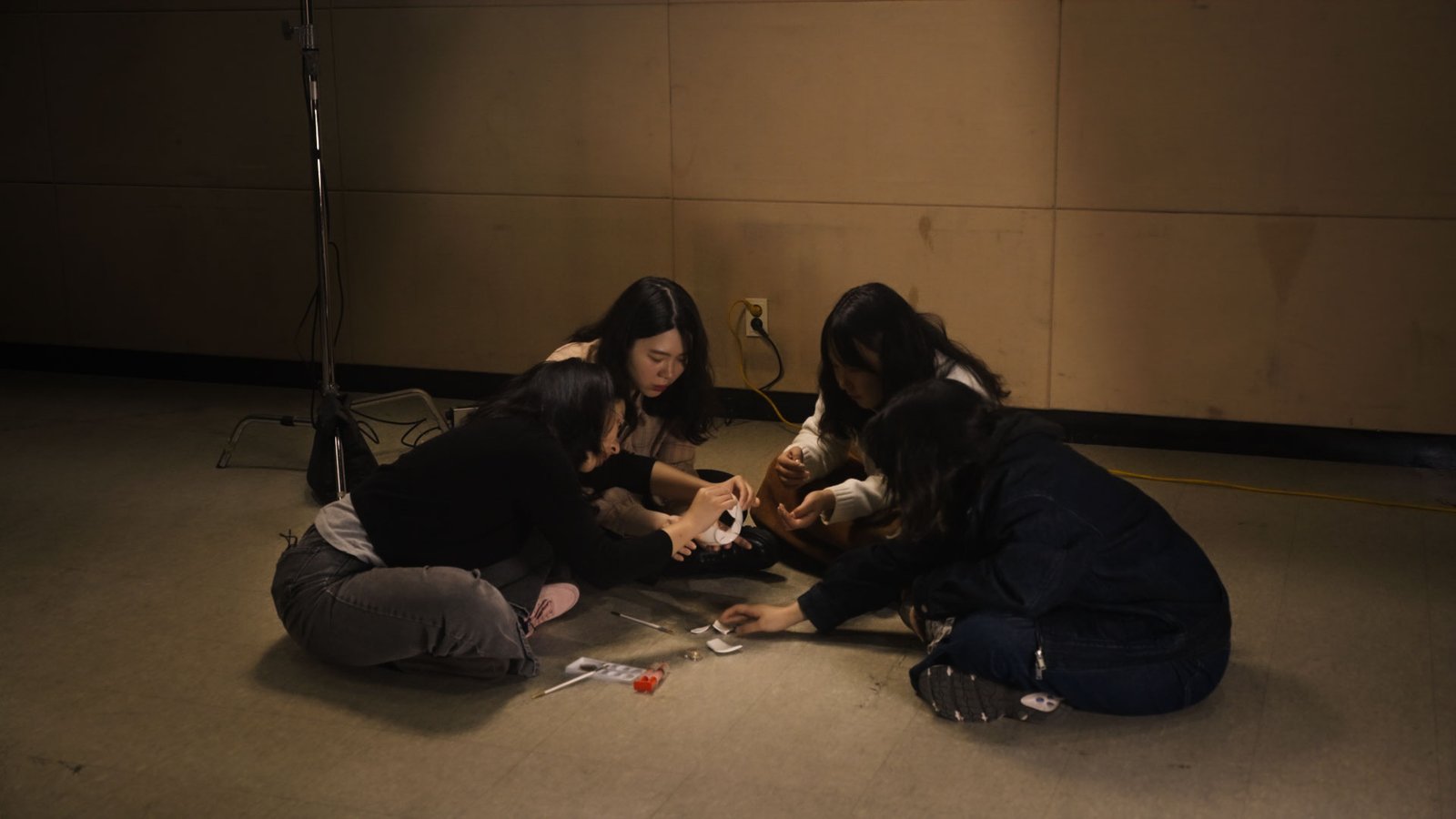
Kintsugi was the first film to sell out at the 2025 Film Festival for Women’s Rights. After the screening, three cast members accompanied Lim in a question-and-answer session. Compared to their jokey onscreen selves, they seemed more self-assured and pensive in person. Lim explained that the film’s title came from one of the books she’d picked up while mulling over storytelling. In the afterword of Recollections of My Nonexistence, Rebecca Solnit muses about kintsugi, a Japanese method of repairing broken ceramics with gold lacquer. “It’s a way to accept that things will never be what they were but that they can become something else with a different kind of beauty and value,” writes Solnit. The line struck a chord.
At the festival, the audience was mostly made up of women. A row of chairs in the back were set up to accommodate additional guests who wanted to watch the film but didn’t have tickets. One such person approached Lim at the festival’s closing ceremony with a handwritten card, thanking her for making the film. The card said that she’d studied acting at an arts school before the #MeToo era, and that her closest friend had also been sexually assaulted by a professor. After that professor died by suicide, the case was closed, but there was no closure for any of the survivors.
“Before that, I hadn’t considered other victims besides me watching the film,” Lim said. She hopes that the screenings will serve them the way making the film has served her. She’d started the project to process painful memories that had been buried without being properly parsed. If audience members with similar experiences could revisit their own pain from a safe distance, in a safe space, it could perhaps bring them closer to healing.
When I met up with Lim in October, she’d left the Korea Women’s Hot-line to focus on filmmaking. She says Kintsugi capped a chapter of her life. She’d since started working as a producer on a friend’s film and was getting ready to submit her graduation thesis, which would finally end her connection to her school. She no longer seemed to hold any of the rage that had built up in her when she pictured her attacker’s unscathed career and future. (His teaching ban had been extended until he retired in August.)
“He’s now an insignificant part of my life,” she said. “That’s a huge accomplishment for me.”

More from Mekong Review
-

Baek Sehee writes: “The world tends to focus too much on the very bright or the very dark.” She steers clear of both extremes in her book. For this alone, it merits attention.
-

Taeyeon Song reflects on what Glasgow taught her about being Korean.
-

A coffee with a stranger opened up uncomfortable truths
- Tags: Issue 42, Lim Ji-soo, Soobin Kim, South Korea
