


Return to Fukushima
Thomas A. Bass
OR Books: 2025
.
It feels truly complicated to read Thomas A. Bass’s Return to Fukushima in Taiwan in early August 2025, ahead of a referendum that proposed the continued operation of Maanshan Nuclear Power Plant in southern Taiwan, right next to Kenting National Park. The referendum ultimately failed—not because citizens voted to decommission the plant, but because the overall turnout was so low it failed to meet the required threshold for an affirmative result. Figures from the Central Election Commission show that about 4.3 million people voted in favour of the power plant, vastly outnumbering the 1.5 million who voted against it. This was a turnout of less than 30 per cent of eligible voters.
As a member of the community, I was deeply touched by a letter written by Sone Shuntarō, a young man from Fukushima, in support of the anti-nuclear camp in Taiwan. “A single nuclear accident is enough to change everyone’s lives, and its impact will last for decades—perhaps even more than a century,” he wrote. “I sincerely hope that people won’t see what happened in Fukushima as ‘an event that took place in some distant country’. Please see Fukushima as an issue that is closely tied to your own future.”
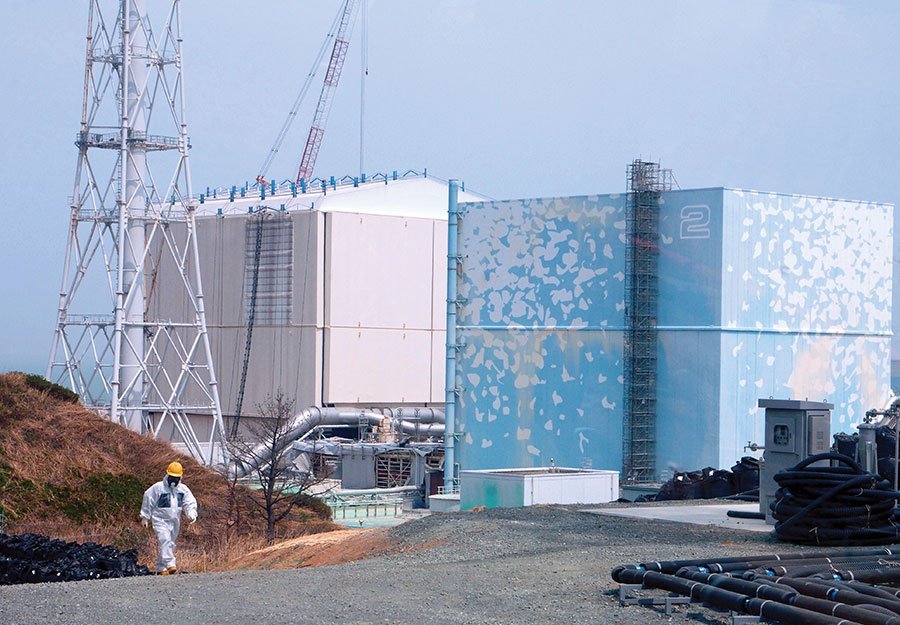
Bass’s book vividly illustrates how billions of dollars have been poured into reactor research and other projects, all with the promise that harnessing nuclear power can be completely safe. But industrial disasters like the one at the Fukushima Daiichi Nuclear Power Plant in 2011—triggered by a powerful earthquake and tsunami—show the exact opposite: that nuclear technology still carries significant risk. While earlier incidents—like the accident at the Three Mile Island Nuclear Generating Station in the US, or the famous catastrophe at the Chernobyl Nuclear Power Plant in Ukraine—could be blamed on human error or outdated technology, the Fukushima disaster was different. It exposed the inherent danger of nuclear power, even when using Western technology in a developed country, and served as a stark reminder of nuclear energy’s destructive potential.
More from Mekong Review
-

A poem by Pannir Selvam Pranthaman.
-
A poem from Jake Dennis
-

A reflection from Mekong Review’s Editor-in-Chief on the occasion of our tenth anniversary issue.
- Tags: Issue 41, Japan, Shu-Mei Huang, Thomas A. Bass