

In 1860, one of China’s greatest modern artists, Wu Changshi, then seventeen, fled to the mountains of Zhejiang province to escape the ravages of the Taiping Civil War. He returned two-and-a-half years later to find that his fiancée had been buried under an osmanthus tree.
Wu’s pining for his lost love coloured the rest of his life, manifesting in his poems and art. “Your former life was the moon,” he carved on a seal almost forty years after her death. Selections of the artist’s work, along with those of his peers, were on display at the British Museum this summer, as part of its expansive exhibition on the Qing dynasty, China’s Hidden Century.
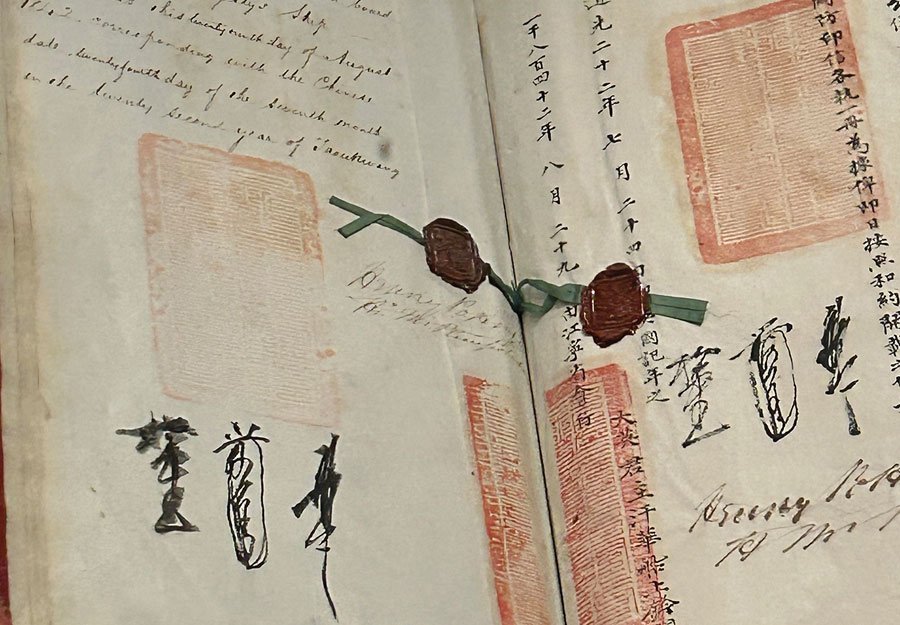
The Qing dynasty, China’s last imperial regime toppled by the establishment of the Republic of China in 1912, has long been associated with decline. Although the Manchus, an ethnic minority from the northeast, rose to rule China in the seventeenth century through their military might, the last century of their reign was marred by humiliating losses to foreign powers—among them the ceding of Hong Kong to the British and the notorious sacking of the Summer Palace near Beijing by Anglo-French forces in the mid-1800s.
More from Mekong Review
-

The story of Hong Kong has long been subject to the whims of outsiders’ imaginations. Almost nowhere in these narratives is Hong Kong a city for the seven million residents.
-
The Hong Kong elite are said to be interested only in making money and not in universal values like democracy, human rights and the rule of law. But that’s not true.
-
One of the interesting ideas thrown up in Hong Kong a few years back has been a certain nostalgia for the late colonial period. But how enlightened was colonial public policy-making?
- Tags: Hong Kong, Issue 33, Rhoda Kwan